
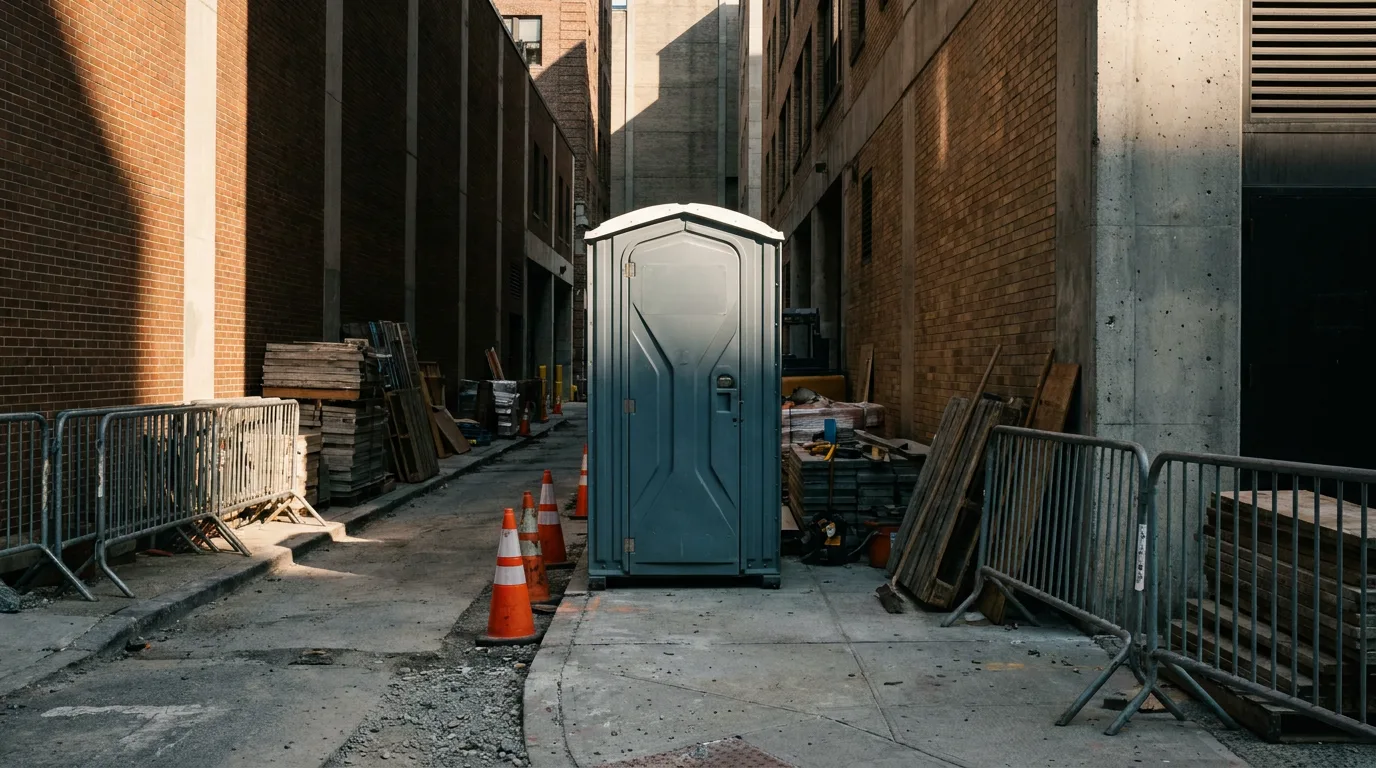
What does it cost to rent a porta potty in New York City?
A standard porta potty in New York City costs $175 to $300 for a weekend and $150 to $350 a month, with delivery running $75 to $200 on top depending on borough and access. Deluxe flushing units and ADA accessible units sit 30 to 50 percent higher. Restroom trailers are priced by stall count and start near $1,000 for a weekend.
Those are typical market ranges reviewed in July 2026, not a quote for your address. The full breakdown, including a fees table and three worked New York jobs, is on the porta potty rental cost page. If you only want the daily or monthly number, we split those out on rental per day and monthly rental.
Which unit should you rent?
Four things get rented here, and the wrong choice is the most common way people overspend.
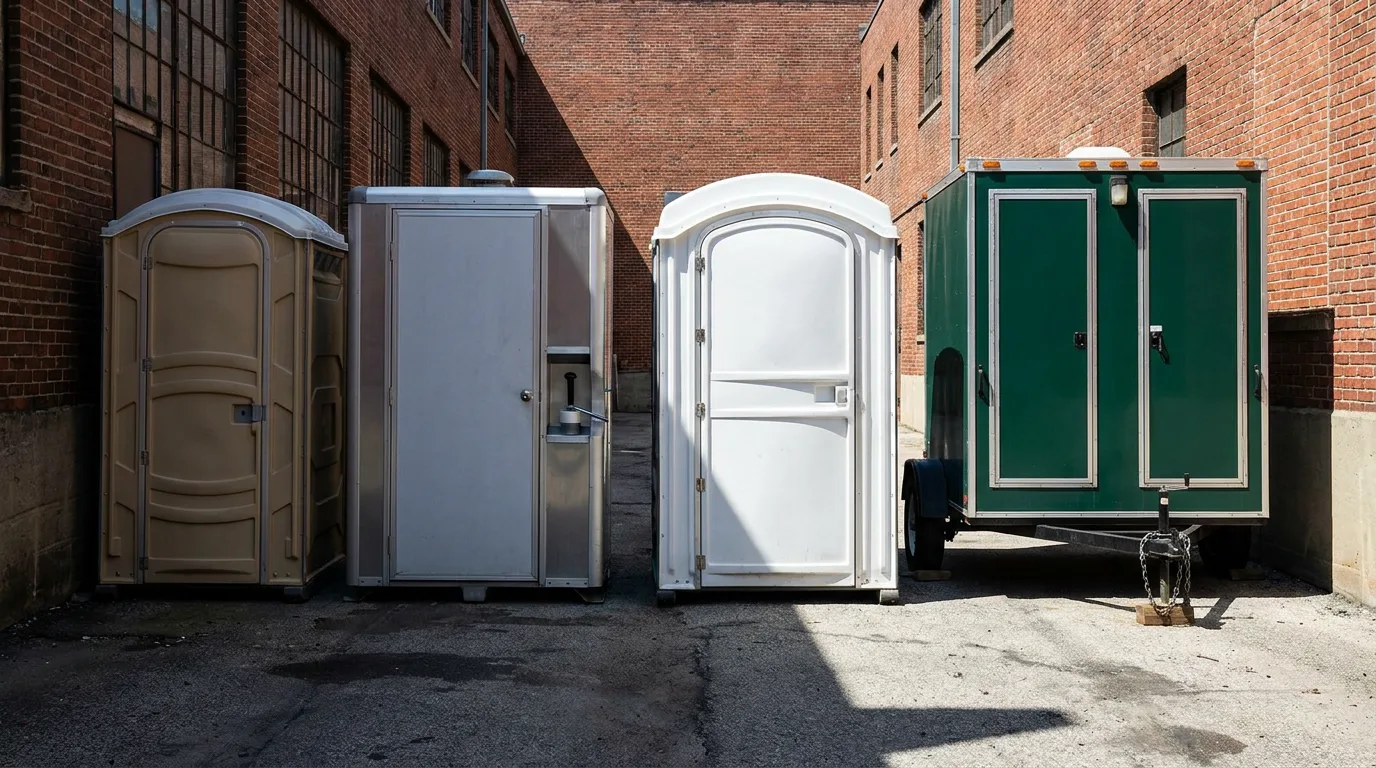
- Standard porta potty. The workhorse. Manufacturer spec puts the holding tank at 60 to 70 gallons and the footprint around 44 by 48 inches, so it fits in a parking space or a corner of a yard. Right for construction, renovation and anything with hard hats. Also sold as porta john rental, portable toilet rental and portable restroom rental, which are all the same unit under different names.
- Deluxe flushable. Foot-pump flush, interior sink, larger fresh water reservoir. The right call for anything a guest, a client or an actor uses.
- ADA accessible. Ground-level entry, no step, and enough interior room for the 60 inch diameter turning space the 2010 ADA Standards specify in section 304.3.1. Required in any public-facing cluster.
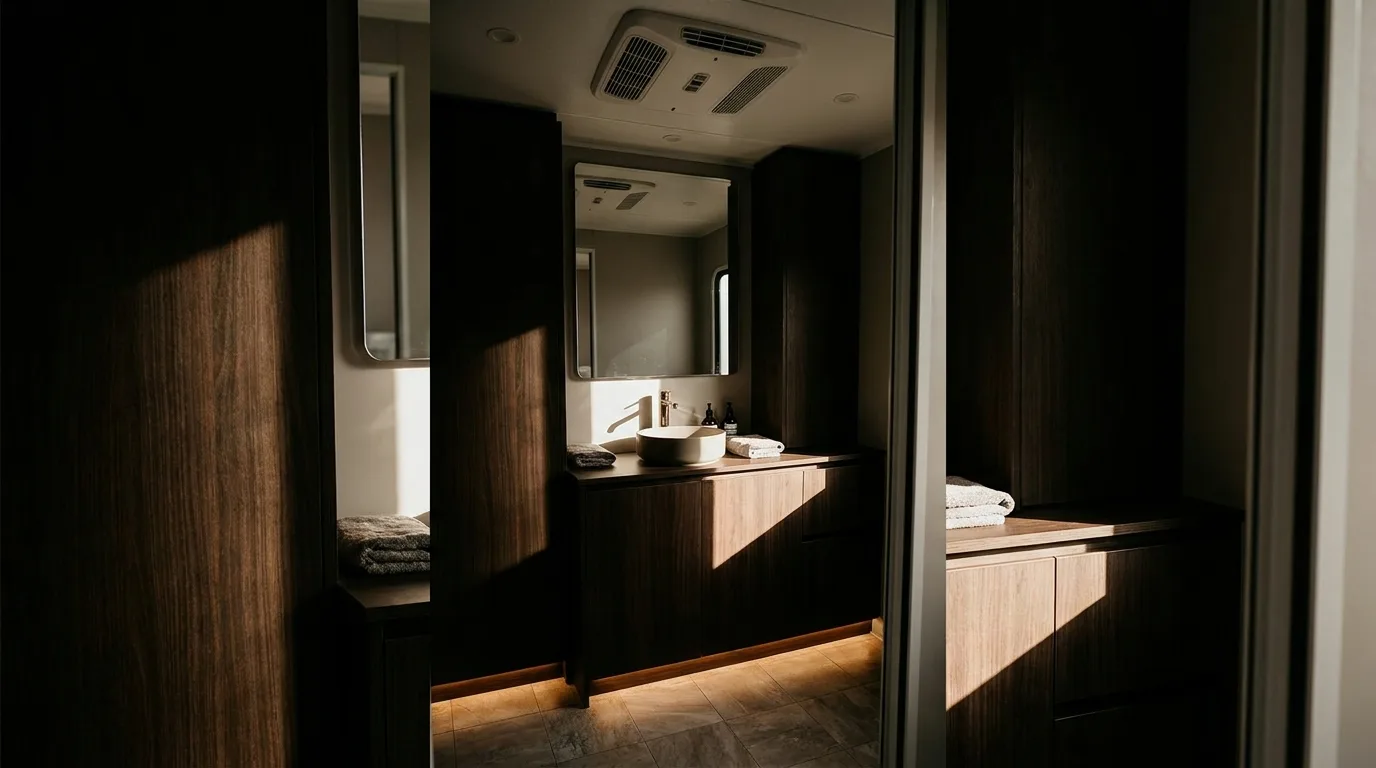
- Restroom trailer. A towable unit with flushing toilets, running water, lighting and climate control. Sized by stalls: 2 stall, 4 stall, 8 stall, plus a luxury build for weddings and a shower trailer for long production days.
Not sure how many you need? How many porta potties do I need runs the ratios for both crews and crowds.
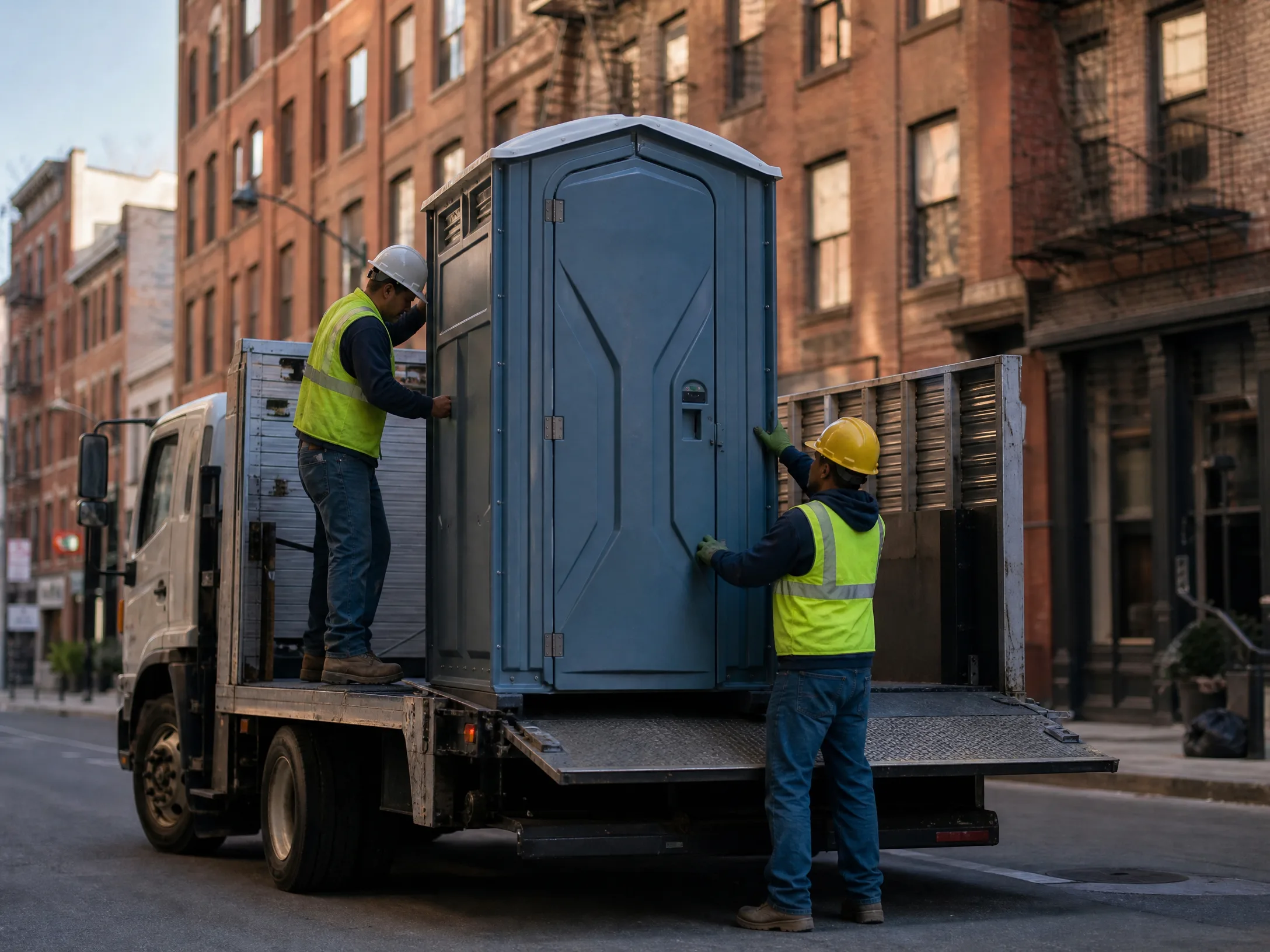
How fast can we deliver in the five boroughs?
Same day and next day are realistic for any placement on private property. Manhattan, Brooklyn, Queens, the Bronx and Staten Island are all inside our normal routing, and so is a good stretch of northern New Jersey and western Long Island. Anything going on a street or a sidewalk moves at the permit's pace, not ours.
Booking a week out is normal for jobsites. Two to four weeks is sensible for a weekend event between May and October, because street fair and race season concentrates demand across all five boroughs into a small number of dates. If something has already gone wrong, emergency porta potty rental is a real service and we run it year round.
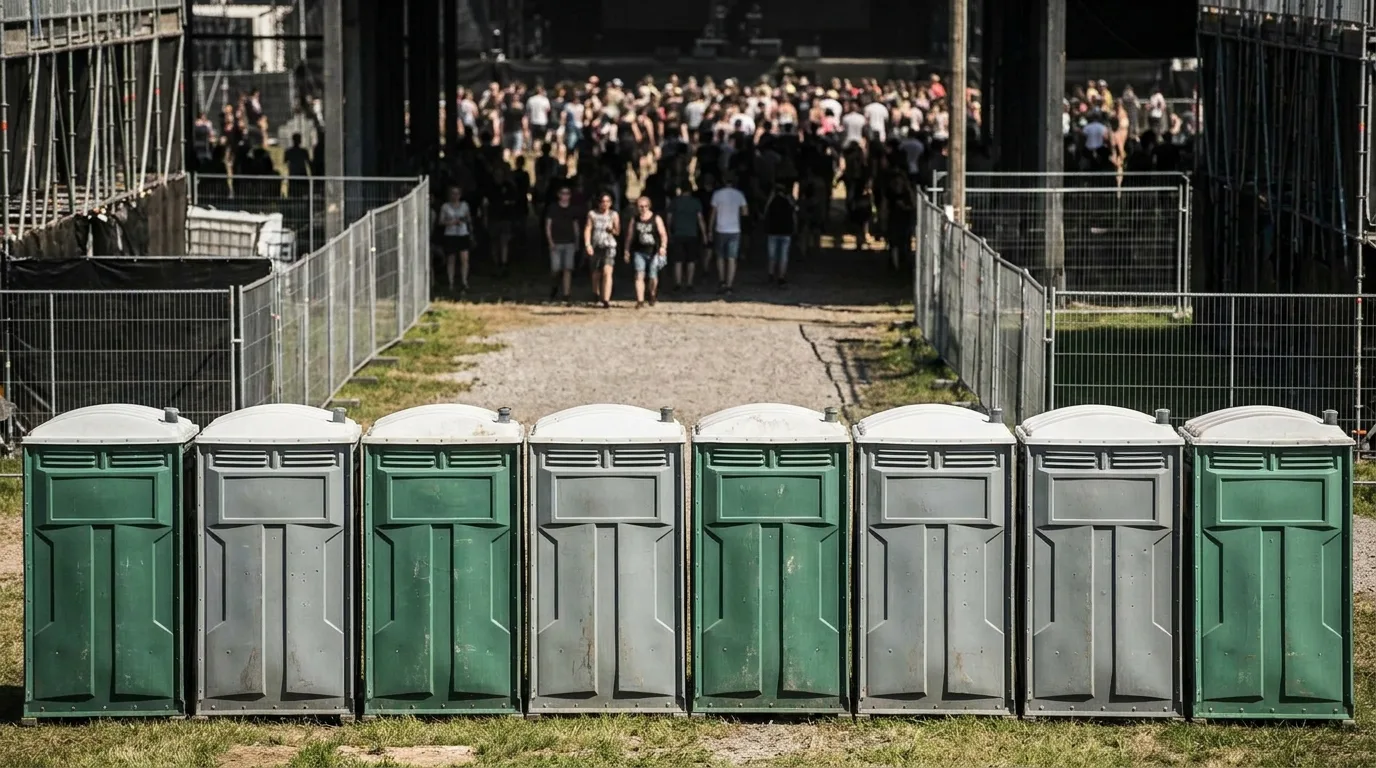
Sidewalk placement and the DOT permit
A unit going on a New York City street or sidewalk needs a permit from the Department of Transportation. Approvals go through borough offices, and turnaround runs from about a day to several weeks depending on the borough and the type of work. The NYC DOT Bureau of Permit Management and Construction Control at 55 Water Street handles it, and 311 is the quickest way to get a straight answer about your block.
Placement is decided by pedestrian clearance before anything else. A unit never blocks a curb ramp, a building entrance, an emergency path or a work-zone route. The 2010 ADA Standards set a 36 inch minimum clear width for a pedestrian access route in section 403.5.1, and a standard unit is 44 inches wide, which is exactly why a lot of narrow Manhattan sidewalks cannot legally take one at all.
On private property none of that applies and we can usually be there the same day. The permit requirements page has the full sequence, and the placement guide covers what our driver needs to see before the truck leaves the yard.
How servicing works
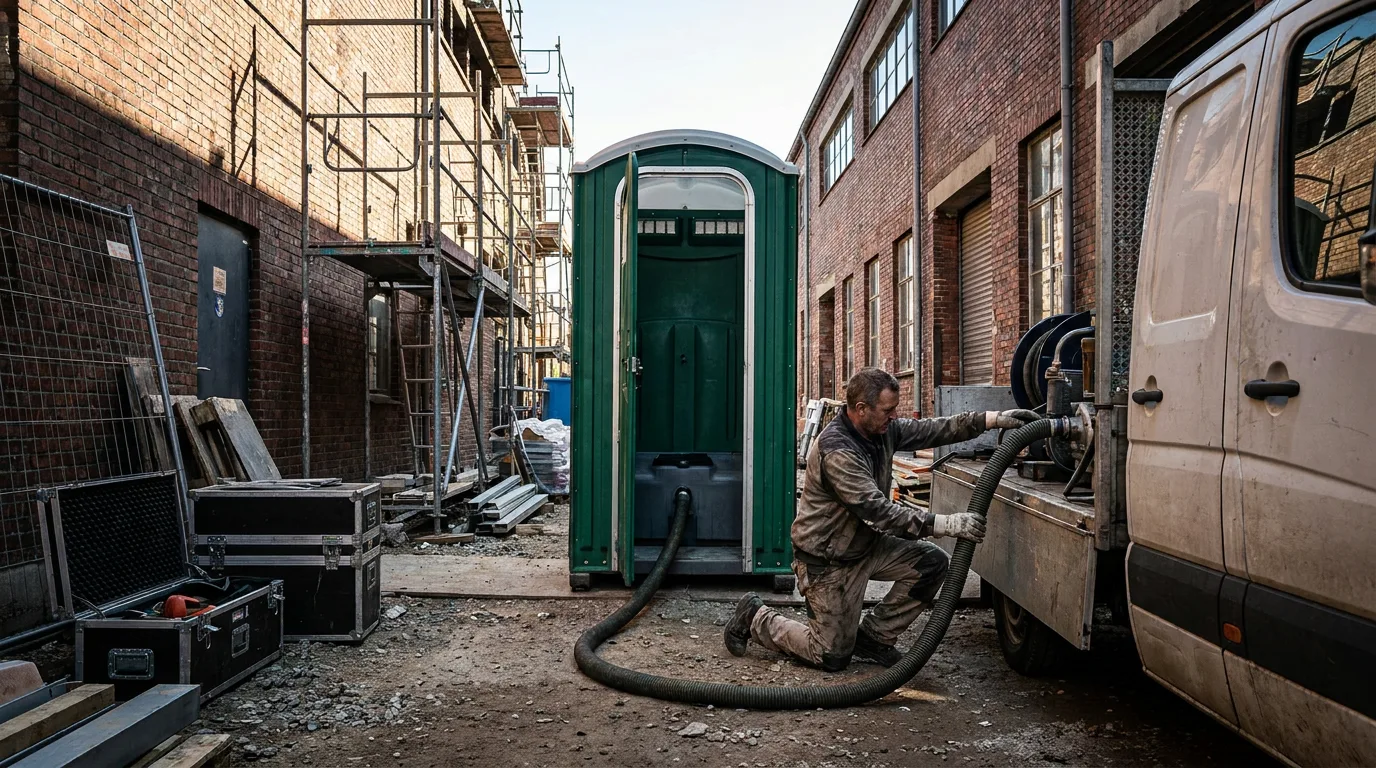
A service visit means the tank gets pumped, the interior gets washed down, the deodoriser gets recharged and the paper gets restocked. ANSI/PSAI Z4.3 sets weekly service as the minimum for a unit in normal use, and that is our baseline on every rental. Busy placements, particularly film sets and street events, get two or three visits a week instead.
What that means in practice: you do not empty anything, you do not clean anything, and you do not need to be on site when the truck comes. With a 60 to 70 gallon tank per manufacturer spec, a standard unit takes roughly 200 to 250 uses before it needs pumping, which is the arithmetic behind whether weekly is enough for your crew. We need a clear approach for the vehicle and about 30 feet of hose reach to the unit. How often porta potties are cleaned explains the visit in detail, and do porta potties smell answers the question everyone actually has. In January, winter placements get a different deodoriser mix.
Do you need a handwashing station too?
Usually yes, and on a lot of New York jobs it is not optional. OSHA 1926.51(f)(1) requires washing facilities where workers handle harmful substances on a construction site, and OSHA 1910.141(d)(2) sets the equivalent requirement for general industry work. A deluxe unit has a small sink built in. A standard unit does not, so the sink is a separate piece of kit.
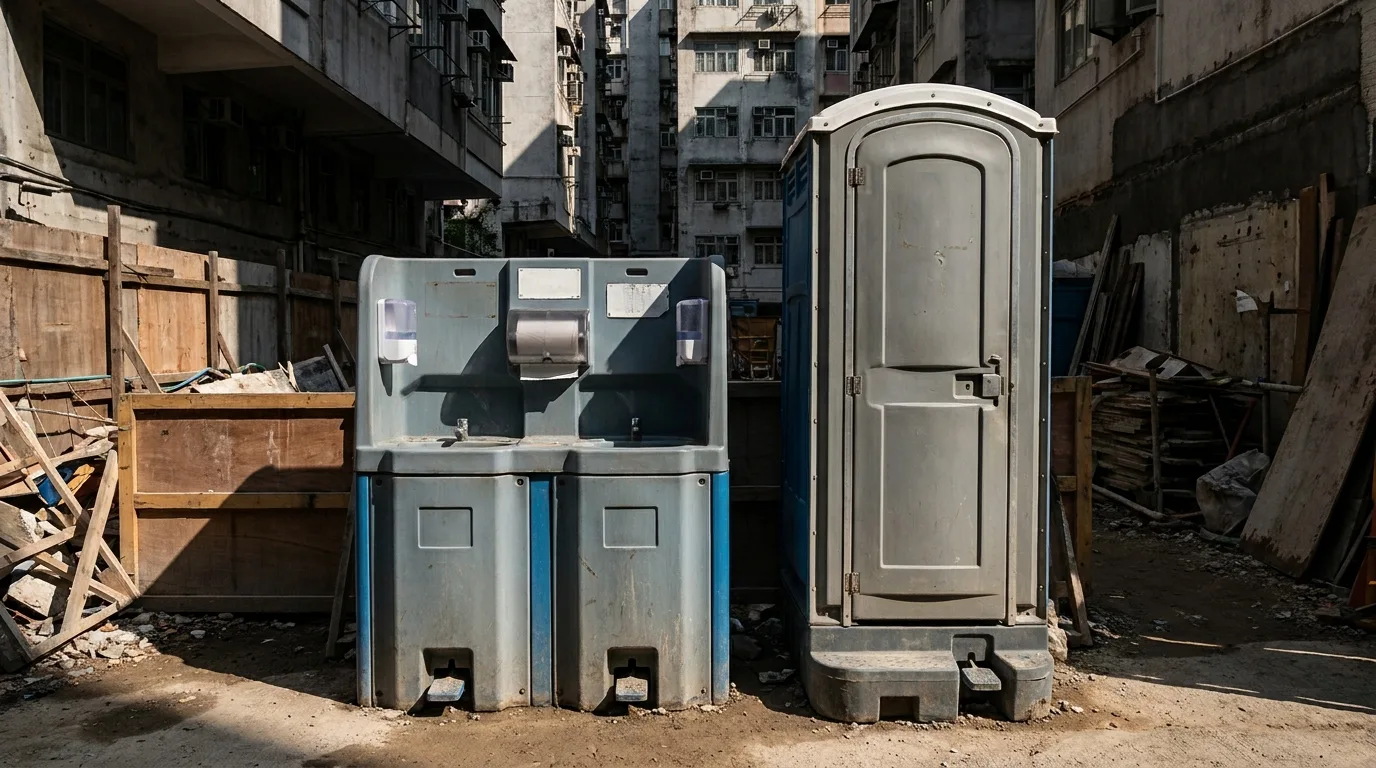
A portable sink is a freestanding two-basin unit with foot pumps and a fresh water reservoir, typically 15 to 22 gallons per manufacturer spec, which is roughly 200 to 300 uses before it needs a refill. A handwashing station is the same idea sized for crowds. A hand sanitizer stand is not a substitute for either one under OSHA, though it is a sensible addition at an event entrance.
For food service at a street fair or a festival, the health rules are stricter than the OSHA baseline, and a sanitizer stand on its own will not pass an inspection. Budget $75 to $150 per station for an event, or $50 to $110 a month on a jobsite. The handwashing requirements guide has the detail, and if you are running a restaurant kitchen anywhere in the five boroughs, grease trap pumping is the other line you will eventually need.
Construction and jobsite services
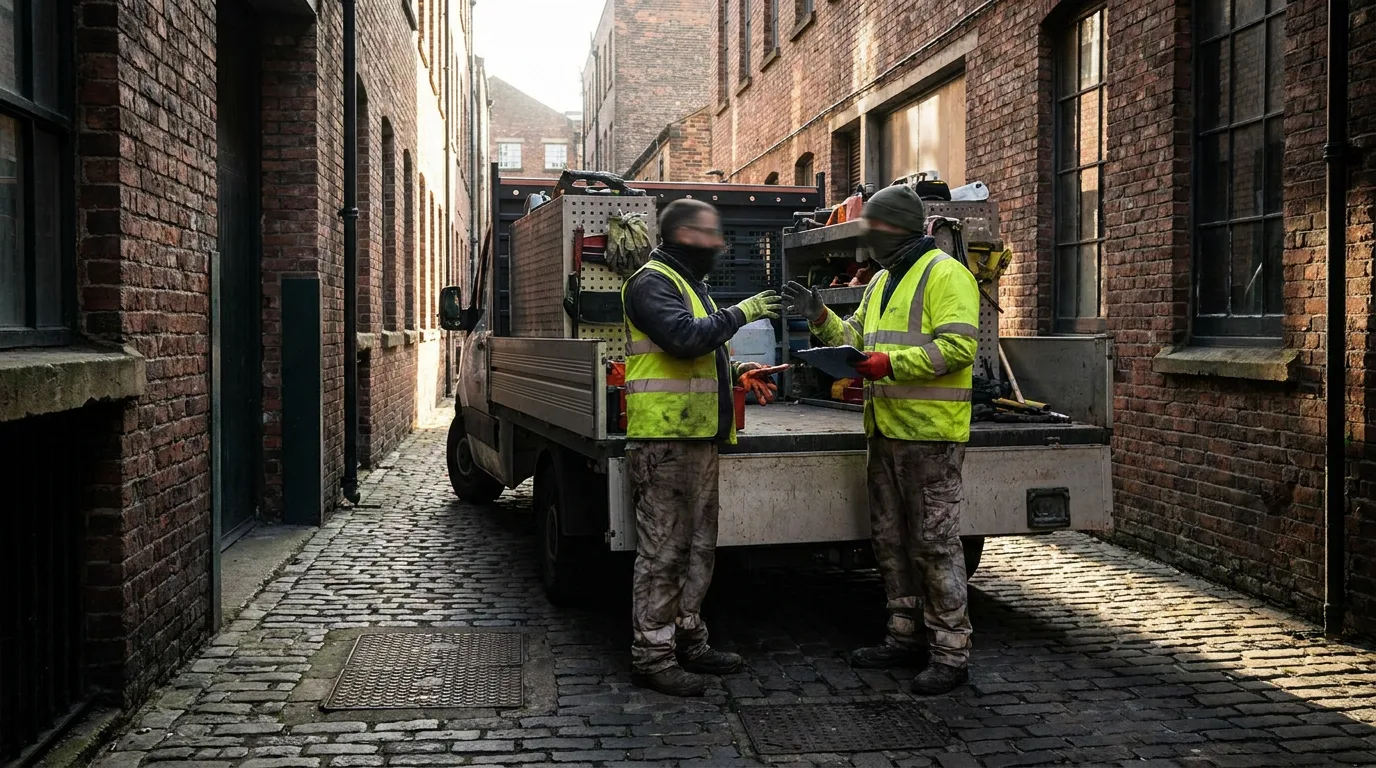
OSHA 1926.51(c)(1) requires one toilet per 20 workers on a construction site running a 40-hour week, and the ratio steps up past 20 workers. It counts people on site rather than companies, so a job with four subcontractors counts all four crews. OSHA 1926.51(f)(1) separately requires washing facilities where workers handle harmful substances, which is why a portable sink or a handwashing station belongs on most real jobsite orders.
Dense New York sites are usually short on space rather than short on budget. If the ratio says two units and there is room for one, the answer is a second unit somewhere workable plus tighter servicing. We can bundle everything into one delivery: see construction site services, temporary fencing, a light tower, a temporary power pole, or a mobile office trailer. Smaller jobs usually just want a home renovation unit and a dumpster.
The full compliance picture is on OSHA portable toilet requirements and handwashing requirements.
Events, film and street fairs
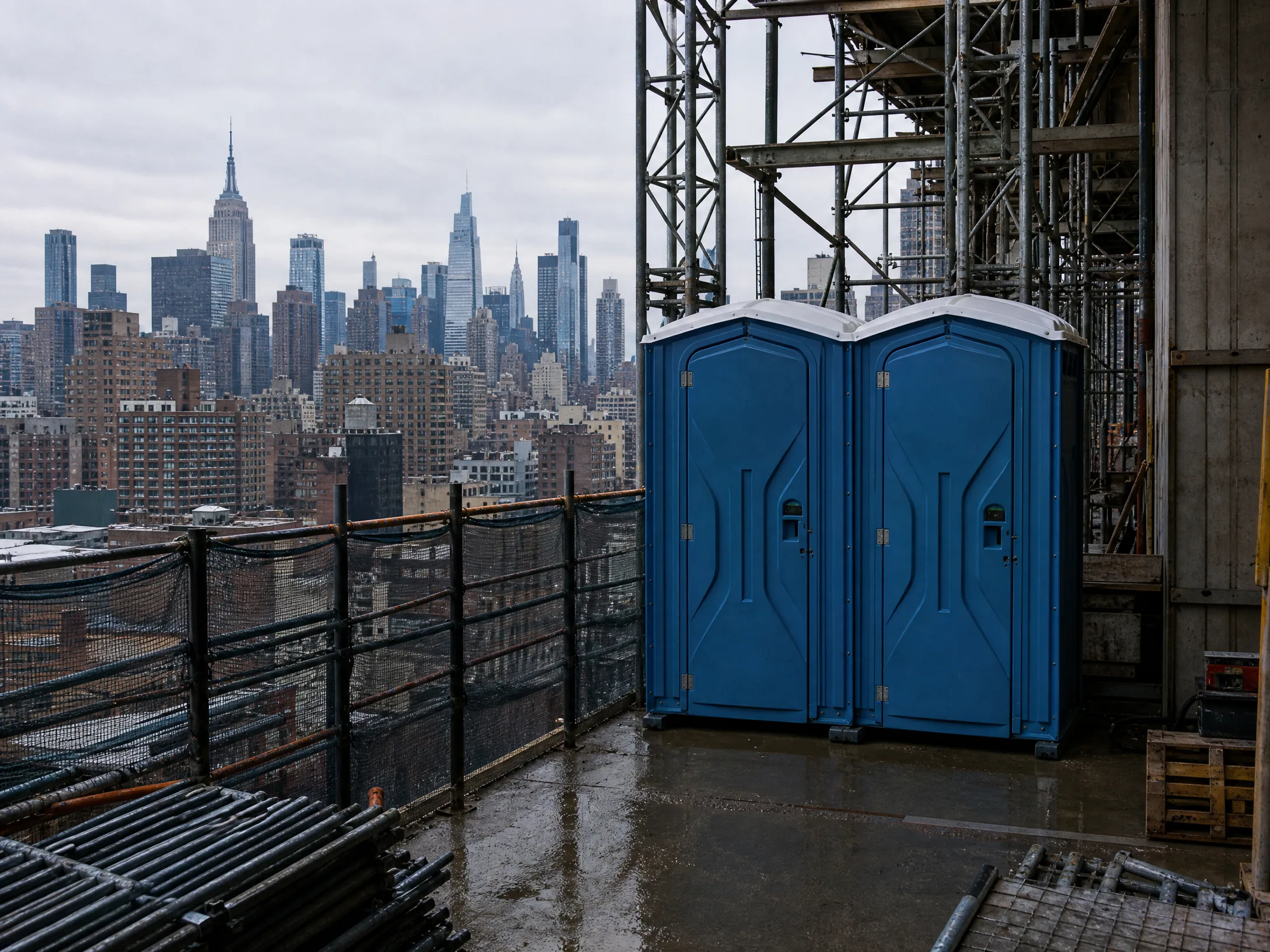
New York runs two demand patterns most cities do not have. The first is film and television production, which books at short notice, wants deluxe or trailer units, and needs servicing on a schedule that fits a shoot day. The second is street fair season, which puts thousands of people on a closed block for eight hours with no fixed restrooms anywhere.
For venue work, the venue sets placement before we do. Citi Field, Yankee Stadium, Flushing Meadows Corona Park, Prospect Park and Randalls Island each run their own service vehicle access rules and their own lead times, and none of them are the same. Ask the venue first.
Plan on one unit per 50 guests for a four hour event, plus 15 to 20 percent if alcohol is served. Where units are clustered, the 2010 ADA Standards section 213.2 exception 4 sets 5 percent of the cluster as the accessible share. Event pages by type: event restrooms, weddings, festivals, concerts, marathons and races, county fairs, golf tournaments and hand sanitizer stands.
Dumpsters, storage and site equipment
We run the rest of the temporary site kit on the same trucks and the same routes.
- Roll-off dumpster rental in 10 yard, 20 yard, 30 yard and 40 yard
- Construction dumpsters with dumpster rental cost broken out separately
- Sizes and dimensions, weight limits, what cannot go in and dumpster permits, which is a different DOT track from the toilet permit
- Storage container rental in 20 foot and 40 foot, with container pricing
- Chain link temporary fence, crowd control barrier and temporary fence cost
A New York dumpster on the street carries its own permit question, and it is not the same office or the same timeline as a portable toilet permit. Ask us before you assume one covers the other.
Septic, holding tanks and grease traps
Outside the dense core, particularly on Staten Island and the eastern edge of Queens, plenty of properties still run on septic. We pump them. Septic pumping service, septic tank cleaning, pumping cost, warning signs a tank is failing, emergency septic service and grease trap pumping for restaurants.
For events and trailers with no sewer connection, a holding tank is usually the answer. How often a septic tank needs pumping is the guide worth reading before it becomes urgent.
Where do we deliver?
All five boroughs, plus a working radius into New Jersey and Long Island. Real drive distances from the city centre:
- Hoboken, NJ, 9.9 miles northwest
- Jersey City, NJ, 11.2 miles northwest
- Union City, NJ, 11.9 miles northwest
- North Bergen, NJ, 14.8 miles northwest
- Newark, NJ, 16.3 miles west
- Bayonne, NJ, 18.3 miles west
- Hempstead, NY, 19.8 miles east
- Elizabeth, NJ and Freeport, NY, both 19.9 miles out
- North Hempstead, NY, 20.6 miles northeast
- Paterson, NJ, 27.0 miles northwest
- Levittown, NY, 27.7 miles east
The service areas hub has the borough-by-borough detail, and the New York City rental page covers how the boroughs differ on access, permits and price. Job on a farm or a nursery out east? That is farm and agricultural restrooms. Storm response and disaster relief sanitation runs on its own dispatch.
Booking, and what we need from you
Give us the address with cross streets, the dates, roughly how many people, and whether the unit lands on private property or public right of way. That last answer changes the timeline more than anything else on the list. The rental checklist is the short version if you would rather work from a list.
How do porta potty rental companies differ?
On service frequency and what the quote leaves out. Ask both before you pick a porta potty rental company.
Do you compare with other portable toilet rental companies?
We tell you what we do not do. That is usually more useful than a feature list.
Then either fill in the quote form or call. The FAQ covers most of what comes up, about us explains how we work, and contact has the direct line. Camping trip or a remote site with no truck access at all? Start with camping porta potty and we will tell you honestly whether it is worth delivering.
Next step
Get a delivery date
Tell us the address, the dates and the headcount. We size the order and confirm the route.