
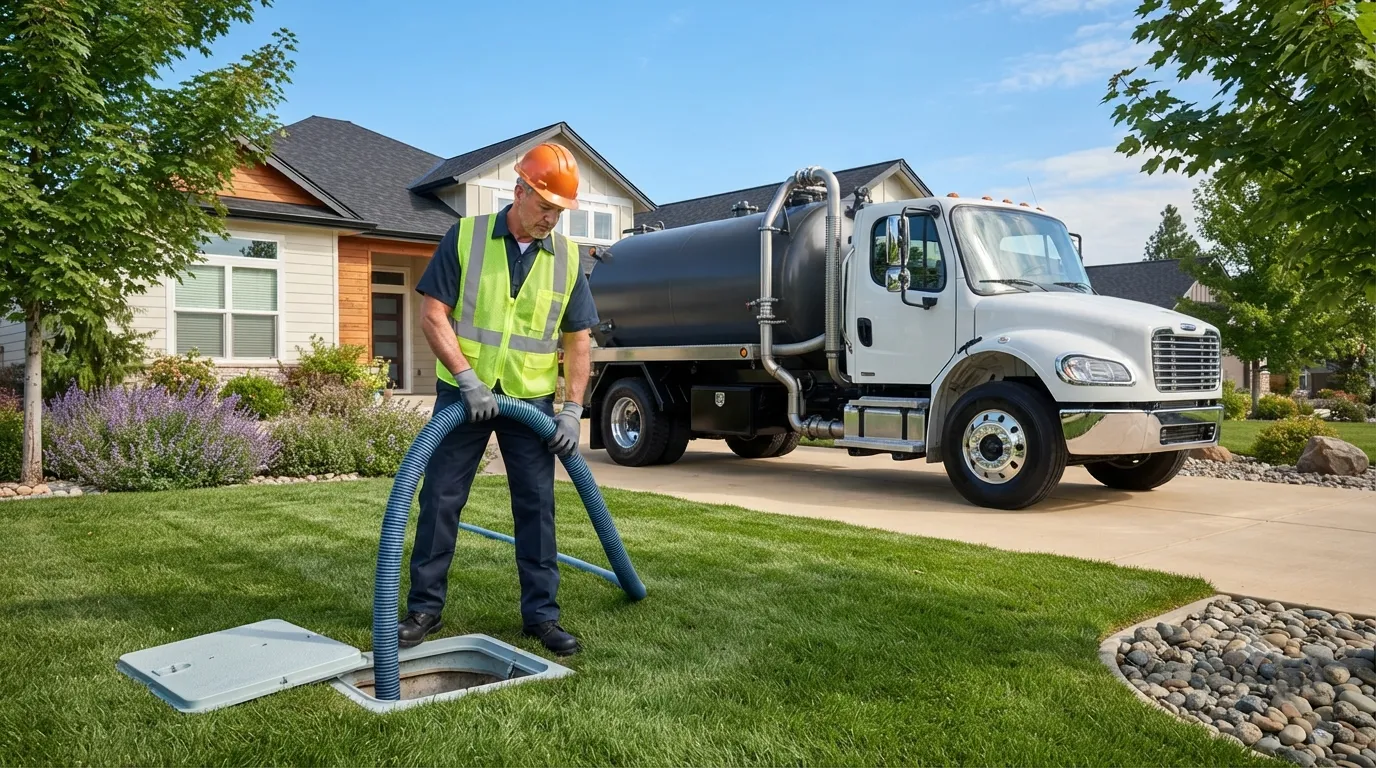
What is septic tank cleaning, and how is it different from pumping?
Septic tank cleaning is a pump-out plus the mechanical work of removing what a hose alone leaves behind: the compacted sludge cake on the floor and the grease crust welded to the walls. Pumping moves liquid. Cleaning restores the tank's working volume.
The difference shows up in the numbers. A tank that has been "pumped" cheaply for years can be carrying several inches of solids that no vacuum lifted, which means the 1,000 gallons you are paying to have serviced is really 700. The US EPA's SepticSmart guidance sets the threshold plainly: a tank needs service once the scum layer sits within 6 inches of the outlet baffle or the sludge layer within 12 inches of it. Both of those are measured off the tank floor and the water surface, not guessed from the driveway.
If you only want the mechanics of the pump-out itself, the septic pumping service page covers the equipment and the routing side.
The steps in a real cleaning visit
Nine things happen, in this order, and you can ask for any of them to be shown to you.
- Locate and uncover the main manhole lid, not just the small inspection ports
- Measure sludge depth and scum thickness, and write both down
- Pump the liquid volume off
- Backflush to break the crust away from the walls and the corners
- Re-pump the loosened residue until the floor is visible
- Pull, rinse and refit the effluent filter
- Inspect the inlet and outlet baffles or sanitary tees for cracks and missing pieces
- Check the liquid level refill rate, which is the fastest read on drain field health
- Reseal the lid and leave you the hauling manifest
Step 8 is the one that saves money. A tank that refills to the outlet within minutes of being emptied is telling you groundwater or backflow is getting in, and that is a different repair from anything a cleaning fixes.
Cleaning the septic tank filter
An effluent filter is a slotted cartridge in the outlet tee that catches solids before they reach the drain field, and it clogs long before the tank fills. Systems built to New York State Department of Health Appendix 75-A of 10 NYCRR in the last two decades usually have one. Older tanks often do not, and retrofitting one is cheap insurance.
A blocked filter produces exactly the symptoms people blame on a full tank: slow drains, gurgling, sometimes a backup, all with a tank that is nowhere near capacity. Pulling and rinsing it takes about ten minutes and should be part of every cleaning rather than an added line. If yours is clogging every year rather than every three, something upstream is putting solids into the tank faster than it can settle them.
How often does a septic tank need cleaning?
The EPA recommends inspection at least every 3 years and cleaning every 3 to 5 for a typical household system. Use is what actually decides it.
| What changes the interval | Effect |
|---|---|
| Garbage disposal used daily | EPA notes solids load can rise by up to 50 percent. Shorten by a year |
| Household above average water use | EPA WaterSense puts indoor use near 70 gallons per person per day |
| Long vacancies, seasonal use | Interval stretches, but inspect on schedule anyway |
| Water softener discharge to the tank | Can disturb settling. Ask before assuming it is fine |
| Tank at the 1,000 gallon Appendix 75-A minimum | Least headroom of any size. Stay on schedule |
The pumping frequency guide has the interval table by tank size and household, and the warning signs page covers what to watch for between visits.
What does septic tank cleaning cost here?
The published market band for a standard residential job is $150 to $300, and that covers a 1,000 gallon tank with a lid at or near grade and a truck that can get within hose reach. Prices reviewed July 2026. These are typical market ranges rather than a quote.
- Buried lid. Excavating to find and open a lid under 18 inches of soil adds real labour. Fitting a riser once is cheaper than paying for the dig at every visit.
- Distance from where the truck can stop. Hose runs past about 150 feet start costing time.
- Two-compartment or oversized tanks. More volume, more disposal, above the band.
- Same-day and after-hours. Priced above the band. See emergency septic service.
The septic tank pumping cost page breaks the pricing out properly, and the quote form asks for tank size and access so the figure comes back accurate.
What wrecks a tank between cleanings
New York City DEP runs a campaign called Trash It, Don't Flush It, and the three things it names happen to be the three that damage a septic tank fastest: wipes, paper towels and cooking grease. Wipes marketed as flushable do not break down in a tank, they mat together in the outlet, and they are the single most common cause of a filter blockage we pull.
Also worth keeping out: cat litter, feminine products, dental floss, coffee grounds, paint, solvents, and anything antibacterial in quantity. Grease is its own category, and in a commercial kitchen it needs an interceptor rather than good intentions. That is covered on the grease trap pumping page.
Additives are not a substitute for any of this. The EPA states directly that additives do not eliminate the need to pump a tank, and some push solids out into the drain field where the damage is permanent.
Cesspools, holding tanks and what else gets called a septic tank
Not everything people call a septic tank is one, and each takes a different visit.
- Cesspool. A pit that receives raw waste and lets it seep into the surrounding soil, with no separate tank or field. Older New York properties still have them. They are cleaned more often and they cannot be repaired into a septic system.
- Sealed holding tank. No outlet at all, so everything that goes in must be pumped out. Emptied on volume rather than on a 3 to 5 year clock. See holding tank rental.
- Grease interceptor. A commercial kitchen fitting, serviced on its own schedule.
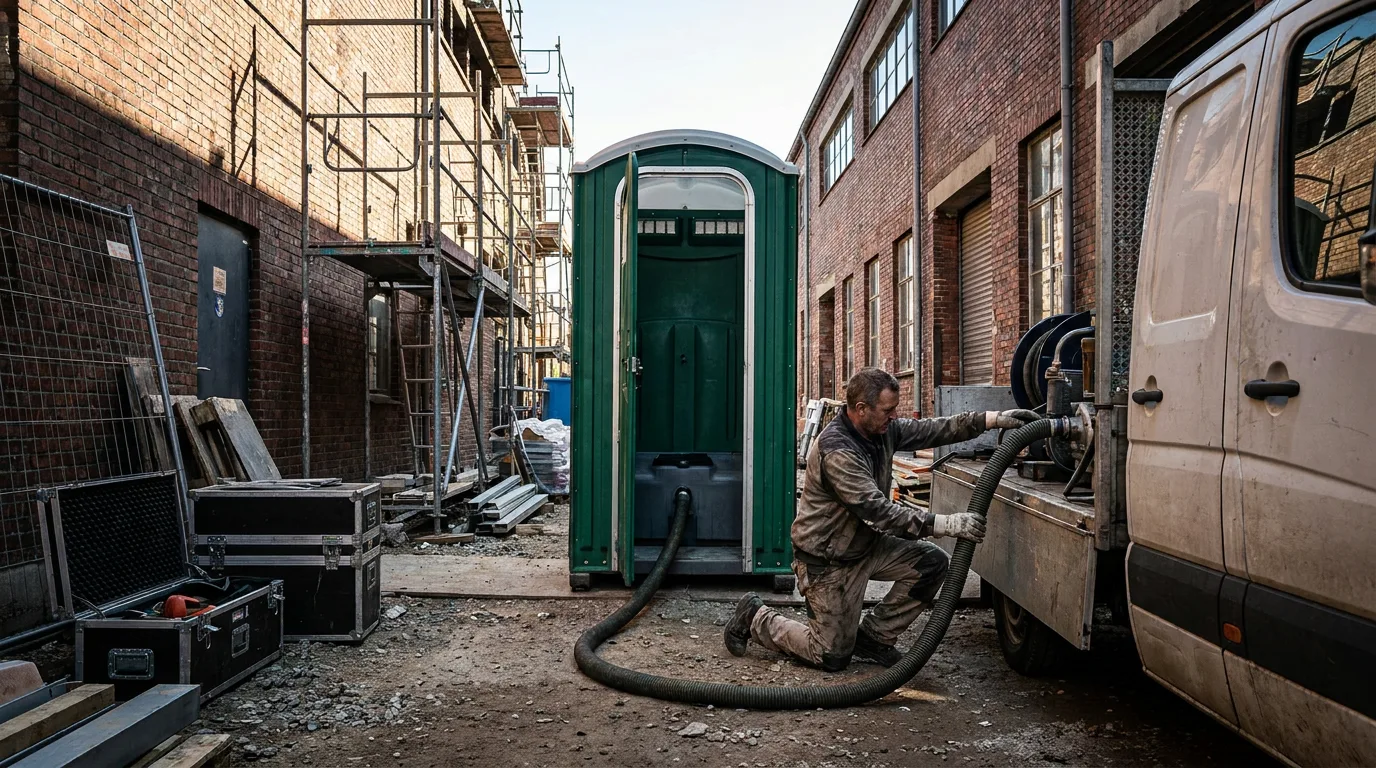
- Portable toilet tanks. Serviced on the rental side. ANSI/PSAI Z4.3 sets weekly service as the floor for a unit in normal use, and how often porta potties get cleaned walks through what each visit includes.
Access on a New York City property
Almost every private onsite system left in the five boroughs is on Staten Island, where the South Shore was sewered late and lots are big enough to hold a tank and a field. DEP's own sewer network runs about 7,400 miles of main feeding 14 wastewater resource recovery facilities, so if your block is connected, none of this applies to you.
Where a tank does exist, the practical questions are the same every time. Can the truck stop legally within about 150 feet of the lid. Is the run over a driveway or across a public sidewalk. Commercial vehicles are banned from New York City parkways, so the routing to a South Shore address goes via the Staten Island Expressway and the West Shore Expressway rather than the Belt.
If the work has to occupy the street or sidewalk beyond ordinary standing, a New York City Department of Transportation permit is involved. Approvals run through borough offices and turnaround ranges from about a day to several weeks depending on the borough and the type of work. The DOT Bureau of Permit Management and Construction Control at 55 Water Street handles it, and 311 is the quickest way to get a straight answer for your address. The same process governs porta potty permits and dumpster permits, and the placement guide covers what a driver needs to know before the truck leaves. On active building sites the tank service usually rides along with the rest of the construction site package.
Will a cleaning fix a backed-up drain field?
No, and this is the honest answer nobody selling a cleaning wants to give. If effluent is surfacing in the yard or the tank refills within minutes of being emptied, the soil has stopped accepting water, and pumping buys you days rather than years. Appendix 75-A requires at least 100 feet of separation between an absorption field and a water supply well, which is one reason field replacement is permitted work with a licensed installer rather than something you schedule casually.
What a cleaning does fix: slow drains caused by solids, odour at the lid, a clogged filter, and the slow loss of working volume that eventually kills a field. Done on schedule, it is the cheapest maintenance on the property.
Questions people ask about septic tank cleaning services
Do I need to be home? Only if the lid has never been located. After that we can work from a marked riser.
Is cleaning the same thing as a pump-out? A pump-out is part of a cleaning. The full job adds the backflush, the filter and the baffle check. The pumping service page explains the equipment side.
Can you come out the same day if it is backing up? Usually. Same-day and after-hours work is priced above the standard band and is covered on the emergency septic page.
How long does it take? Two to three hours for a 1,000 gallon tank with easy access. Longer if the lid has to be dug out.
Can it be done in winter? Yes. Frozen ground is the main obstacle, and it mostly costs time. The same seasonal problems show up in winter porta potty placements.
Do you cover New Jersey and Long Island? Yes. Jersey City, Hoboken, Newark and Hempstead are in normal range, and the full list is on the service areas page.
What else do you run? Portable toilets, restroom trailers, roll-off dumpsters, storage containers and temporary fencing across all five boroughs. The home page lists everything, pricing is published, and the contact page has the direct line.
Is cleaning septic tank contents the same as pumping?
Pumping empties. Septic tank cleaning service work scrapes the walls and the outlet baffle too.
Do you handle cleaning septic tank filter work?
Yes. The effluent filter clogs long before the tank fills, and it is a five minute job.
How often septic tank cleaning is needed?
On the same 3 to 5 year interval as pumping, sooner with a garbage disposal.
Next step
Get a delivery date
Tell us the address, the dates and the headcount. We size the order and confirm the route.