
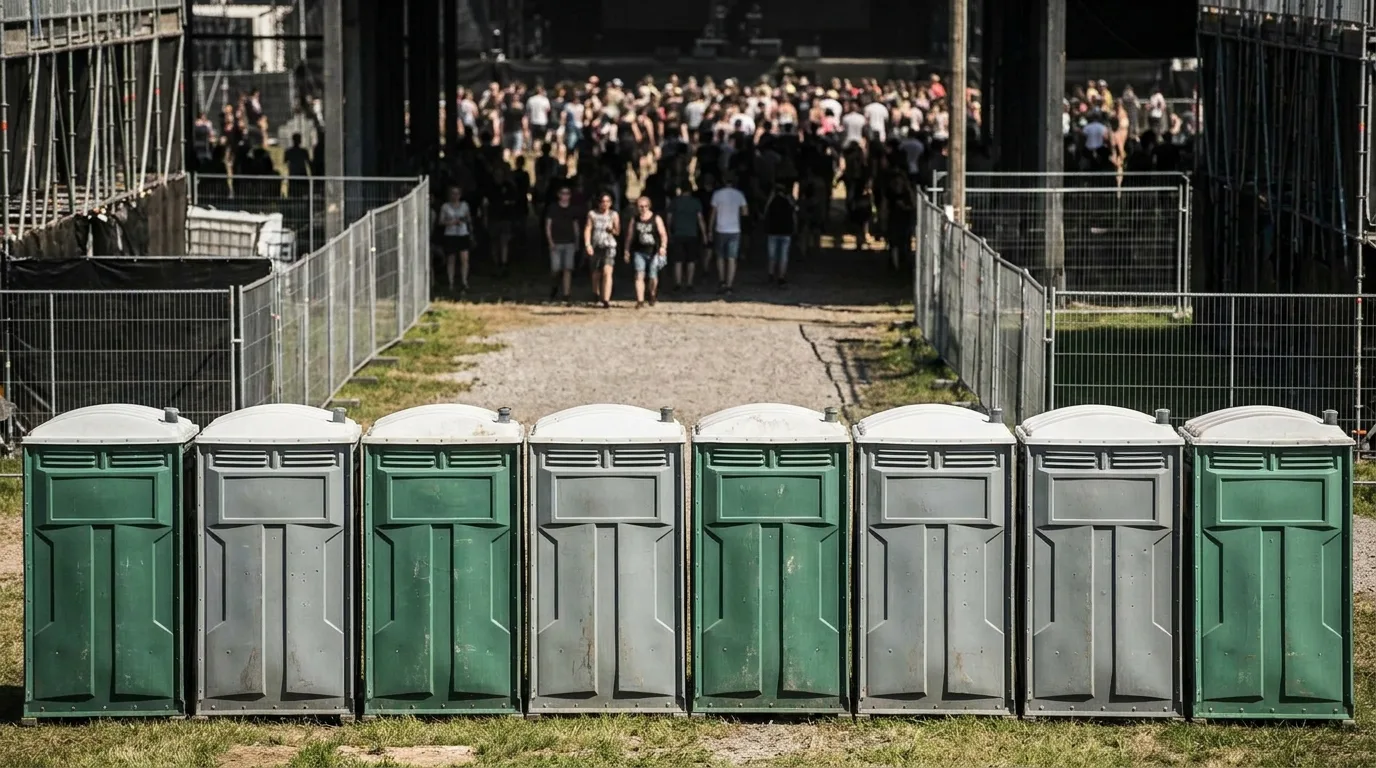
Where can a porta potty go in New York City?
Somewhere firm, level, reachable by a service hose, and out of the pedestrian path. On private property that leaves plenty of options. On a sidewalk it usually leaves one, and getting it wrong means a rejected permit or a unit that cannot be serviced.
Start with the physical footprint. A standard unit runs roughly 43 to 48 inches square and about 90 to 92 inches tall, and the door needs clear space in front of it to swing. Call it a 4 foot by 4 foot pad plus 3 feet of approach. An accessible unit is bigger again, because the ADA Standards for Accessible Design require a 60 inch turning space at 304.3.1 inside the cabin.
Then check the pad itself. Level matters more than most people think: a unit sitting off level does not drain properly on servicing and the tank chemistry stops working, which the smell guide explains.
What can you never block on a New York sidewalk?
This is where placement gets rejected, and the list is short enough to memorise.
- Curb ramps. Never, under any circumstances. The ADA Standards set 36 inches at 403.5.1 as the minimum clear width of an accessible route, and a blocked ramp fails before width is even measured.
- Building entrances. Including residential stoops, service doors and anything marked as an exit.
- Emergency egress and work-zone pedestrian routes. If the shed has a walkway, it stays open.
- Fire hydrants. New York City parking rules keep vehicles 15 feet clear of a hydrant, and the same reasoning applies to anything you set down beside one.
- Bus stops and bus shelters.
- Subway grates, cellar doors, vault covers and utility access. All of them get opened, usually at the worst moment.
- Street trees and tree pits. Street trees are city property and protected, and a unit standing on a pit compacts the root zone.
Everything on that list is a permit condition as well as good practice. A unit on a New York City street or sidewalk needs a permit from the Department of Transportation, handled through borough offices by the Bureau of Permit Management and Construction Control at 55 Water Street, with turnaround from about a day to several weeks. Call 311 for a specific block, and read the permit requirements page before ordering.
How close does the service truck need to get?
Closer than most people plan for. A vacuum truck runs a hose to the unit, and while the reach is usually workable up to about 50 to 100 feet depending on the truck, every extra foot is friction on a schedule and eventually a refused stop.
The New York complications are specific:
| Constraint | What it does to servicing |
|---|---|
| Alternate side parking rules | A unit legal to service at 10am is unreachable at 11am |
| No standing zones on avenues | The truck has nowhere legal to stop at all |
| Sidewalk sheds with one opening | Hose runs get longer and slower |
| Loading dock hours in commercial buildings | Servicing has to fit a window somebody else set |
| Work hour limits outside 7am to 6pm weekdays | An after-hours variance from the Department of Buildings may be needed |
Decide the service access at the same time as the placement, not afterwards. ANSI/PSAI Z4.3 sets weekly servicing as the baseline for a standard unit, so a spot the truck can only reach once a month is not a spot. The cleaning schedule guide covers what each visit needs.
How far from the work should the unit be?
Close enough that nobody walks off site, far enough that it is not in the way of the work face. On a typical New York frontage that means the far end of the shed rather than the middle of it.
Federal OSHA sets no maximum walking distance for construction toilets, but its longstanding interpretation of 1910.141(c)(1)(i) requires employers to allow prompt access without unreasonable restriction. On a tower job the distance that matters is vertical, not horizontal, and the answer is usually units on the working deck rather than more units at grade. Sizing that trade-off is what the unit count guide is for.
Keep units away from where food is being prepared or eaten, away from building air intakes and restaurant vents, and downwind of the site office if there is a prevailing direction. Pairing each one or two units with a handwash station or a portable sink matters more than the distance does, and handwashing requirements sets out where it is mandatory.
Placing units on decks, roofs and hoists
Units go up in this city far more often than they go along. A standard unit weighs somewhere near 150 to 200 pounds empty and several hundred pounds full, so the pick happens empty and it happens on schedule with the hoist, not as an afterthought on delivery day.
Three things to settle before a unit leaves grade:
- Structural check. The deck or roof has to take the loaded weight, and someone on the site team
needs to have said so.
- Wind restraint. A tall, light, flat-sided box at height needs strapping or ballasting. This is
the one that generates incidents.
- Service plan. A unit on the twelfth floor still needs pumping. Either it comes down for
service, or the hose goes up, and the answer changes the schedule.
Where do units go at parks and event venues?
Differently, and with more room to work with. Flushing Meadows Corona Park runs 897 acres and Prospect Park 526, so the constraint at a park event is rarely space. It is turf, vehicle access routes and distance from the crowd flow.
Practical placement rules at the big venues:
- Set banks on paved or compacted surfaces, not on soft turf a truck then has to drive over.
- Keep the bank 25 to 30 feet back from a footpath or a food area, which handles both queueing and odour.
- Split the bank rather than centralising it, so nobody crosses the whole site. At a race, weight it toward the start.
- Leave a clear truck lane behind the bank for overnight servicing on multi-day events.
- Include accessible units in every cluster, not in one corner. The US Access Board's guidance on accessible temporary events puts the working figure at 5 percent, minimum one.
That is how festival, concert and race layouts get built, and the event restroom page covers the rest.
What about dumpsters, fencing and site trailers?
Same right of way logic, separate permits. A roll-off container on the street needs its own Department of Transportation container placement permit, covered on dumpster permit requirements, and it needs a clear overhead swing for the hook, which the sizes and dimensions page sets out.
Temporary fencing and crowd control barriers define the zone the units sit inside, a mobile office trailer needs a footprint of its own, and light towers matter on any unit used after dark, which in December in New York means from about 4:30pm.
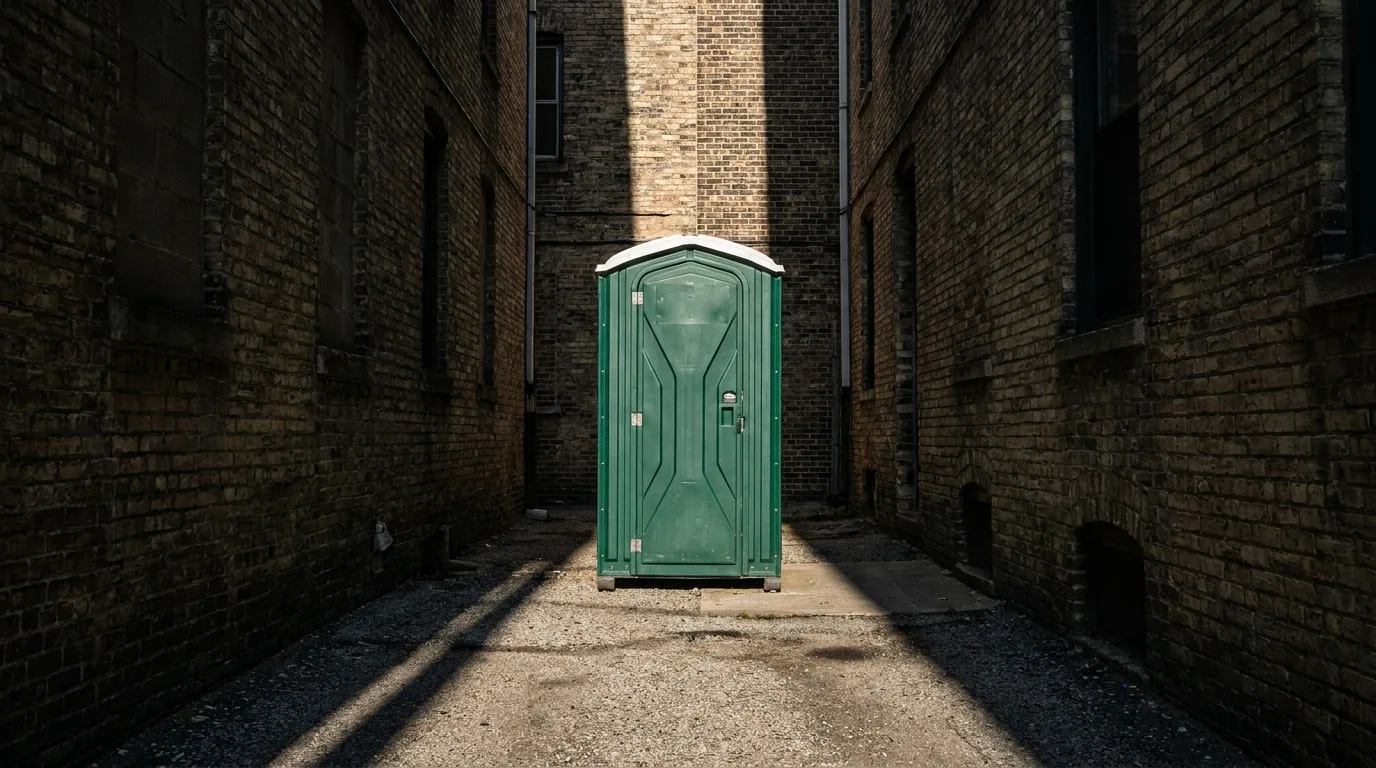
Getting placement right the first time
Send an address, a photo of the frontage, and the dates. Most placement problems in the five boroughs are visible in one picture, and it is far cheaper to move a unit on paper than after the permit is issued.
Rates are on the cost page, with monthly hire for builds and day rates for short jobs. Units run from a standard cabin to a flushable deluxe, an accessible unit under the ADA requirements guide, or a restroom trailer. Winter placement has its own rules on the winter guide, and the rental checklist covers what to confirm before delivery.
What are the porta potty placement rules that matter most?
Level ground, a truck within 25 feet, and doors that do not open into foot traffic.
Is a dumpster placement permit needed on the same job?
If the box touches public ground, yes. Dumpster placement permit cost varies by New York City block and duration.
Coverage is listed on the service areas page, the city overview at porta potty rental in New York City, and jobs come in through the quote form or the contact page.
Next step
Get a delivery date
Tell us the address, the dates and the headcount. We size the order and confirm the route.