
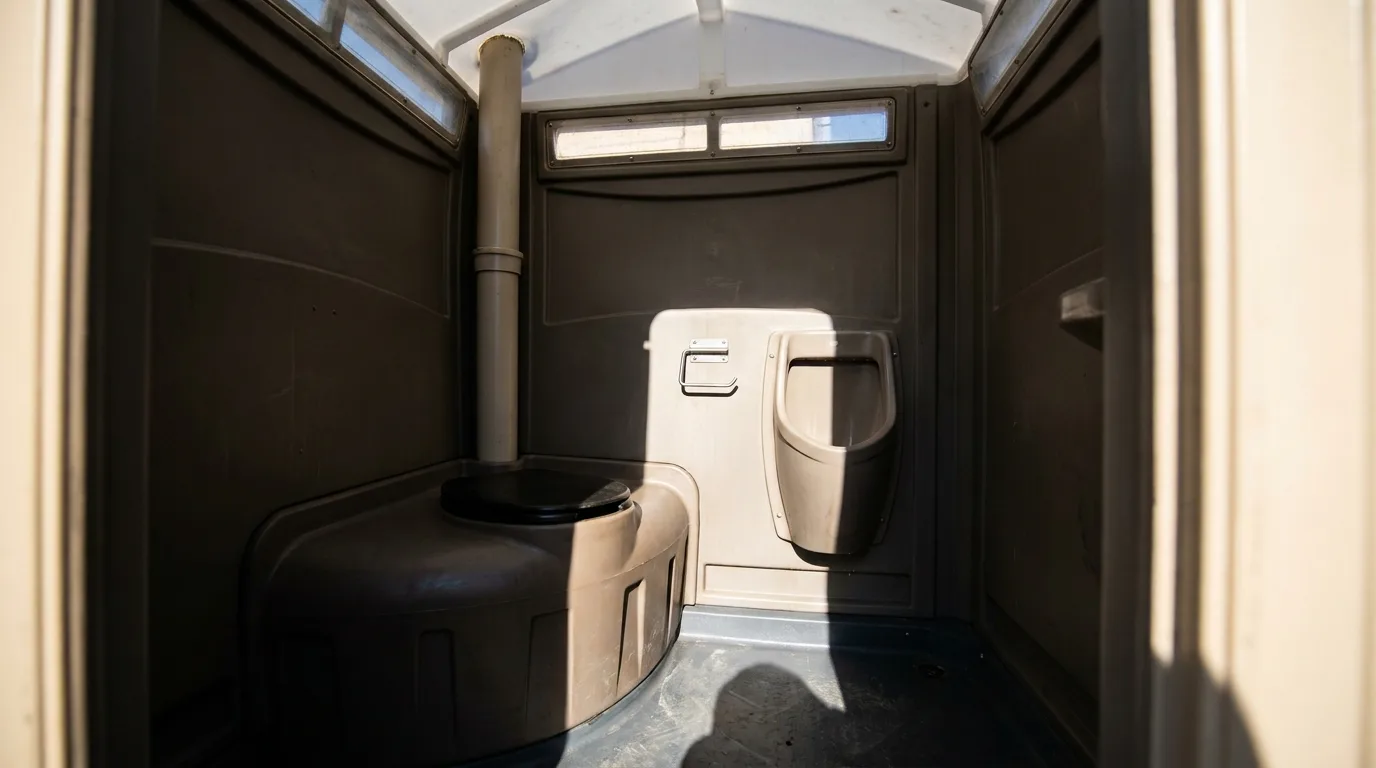
How much does a porta potty cost in New York City?
A standard porta potty in New York City costs $175 to $300 for a weekend and $150 to $350 a month on a jobsite, with delivery of $75 to $200 added depending on borough and access. Deluxe flushing units and ADA accessible units sit roughly 30 to 50 percent higher. Restroom trailers are priced by stall count and start near $1,000 for a weekend.
Those are market ranges reviewed in July 2026, not a quote. The full table, including delivery, weekly service and pickup broken out as separate lines, is on the porta potty rental cost page, with the daily and monthly figures split out on monthly rental.
Do I need a permit for a porta potty in New York City?
Yes, if it sits on a city street or sidewalk. A unit on public right of way in New York City needs a permit from the Department of Transportation. Approvals run through the borough offices, and turnaround ranges from about a day to several weeks depending on the borough and the type of work. The NYC DOT Bureau of Permit Management and Construction Control at 55 Water Street administers it, and 311 will tell you what a specific block needs.
On private property, a driveway, a yard, a fenced lot or inside a construction site, no city permit is involved and we can usually deliver the same day. The full sequence is on porta potty permit requirements, and a street dumpster runs on a separate track again, covered in dumpster permit requirements.
Can a porta potty legally go on my sidewalk?
Often not, and the reason is width rather than paperwork. The 2010 ADA Standards require a 36 inch minimum clear width on a pedestrian access route in section 403.5.1. A standard unit is about 44 inches wide and roughly 48 inches deep per manufacturer spec. On a narrow side street sidewalk there is no arrangement that leaves 36 inches clear, so the answer is a different location rather than a different application.
Placement here is decided by pedestrian clearance before anything else. A unit never blocks a curb ramp, a building entrance, an emergency path or a work-zone route. The placement guide covers what our driver needs to see before the truck leaves the yard.
How fast can you deliver in the five boroughs?
Same day or next day for anything landing on private property, which covers most of Staten Island, much of eastern Queens, and any placement inside a fenced site anywhere. Street and sidewalk placements move at the permit's pace, not ours.
Book a week ahead for a jobsite so the placement can be planned around the crew. Book two to four weeks ahead for a weekend event between May and October, because street fair and race season across all five boroughs pushes a lot of demand onto a small number of Saturdays. Anything already urgent goes through emergency porta potty rental.
How often is the unit cleaned, and who does it?
We do, and the baseline is weekly. ANSI/PSAI Z4.3 sets weekly service as the minimum for a portable toilet in normal use, and that is included on every rental rather than sold as an upgrade. A visit means the tank is pumped, the interior is washed down, the deodoriser is recharged and the paper is restocked.
You do not need to be on site. Our driver needs a clear approach for the vehicle and about 30 feet of hose reach to the unit, which in Manhattan is the constraint that decides more service outcomes than anything else. Busy placements, mainly film sets and street events, move to two or three visits a week. How often porta potties are cleaned walks through a visit in detail.
Will it smell?
Not if it is serviced on schedule and sized correctly. A standard unit holds 60 to 70 gallons per manufacturer spec, which works out at roughly 200 to 250 uses before it needs pumping. Smell is almost always an arithmetic problem: too few units, too many people, or a service interval set for a quiet site and applied to a busy one.
Winter changes the deodoriser mix rather than the schedule. The longer answer, including what we swap out below freezing, is on do porta potties smell.
How many units do I need?
For construction, OSHA 1926.51(c)(1) requires one toilet per 20 workers on a site running a 40-hour week, and the ratio steps up past 20. It counts people on site, not companies, so a job with four subcontractors counts all four crews. OSHA 1926.51(f)(1) separately requires washing facilities where workers handle harmful substances, which is why a portable sink belongs on most real jobsite orders.
For events, the working figure is one unit per 50 guests over four hours, plus 15 to 20 percent when alcohol is served. Run your own numbers on how many porta potties do I need, and read OSHA portable toilet requirements if the job is inspected.
Do I have to rent an ADA unit?
For a public-facing cluster, yes. The 2010 ADA Standards section 213.2 exception 4 sets 5 percent of a cluster of portable toilets as the accessible share, with a minimum of one. In practice that means any event bank of units includes at least one ADA accessible unit, built around the 60 inch diameter turning space the same standards specify in section 304.3.1.
A two-worker renovation with a single unit on private property is a different case. The detail is on ADA restroom requirements.
What if the job is at a stadium or a park?
Ask the venue before you ask us. Citi Field, Yankee Stadium, Flushing Meadows Corona Park, Prospect Park and Randalls Island each set their own service vehicle access rules and their own lead times, and none of them match. Their windows decide our schedule.
Event work by type sits on event restrooms, festivals and street fairs, marathons and races and weddings.
Do you rent anything besides toilets?
Yes, and it usually travels on the same delivery, which is the point. Roll-off dumpsters come in 10, 20, 30 and 40 yard sizes, with the capacities and footprints compared on dumpster sizes and dimensions. We also run storage containers, temporary fence, handwashing stations, light towers and mobile office trailers, all listed on construction site services. Properties off the sewer, mostly on Staten Island and the eastern edge of Queens, use septic pumping.
How far out do you deliver?
All five boroughs plus roughly 28 miles beyond, which takes in Hudson County, Newark, Paterson and most of Nassau County. Real driving distances for every town are on the service areas page, from Hoboken at 9.9 miles to Levittown at 27.7 miles. Borough-level differences in access and price are on the New York City rental page.
Still unanswered? The contact page has the direct line, the quote form takes about two minutes, and the about page explains how we work.
Next step
Get a delivery date
Tell us the address, the dates and the headcount. We size the order and confirm the route.