
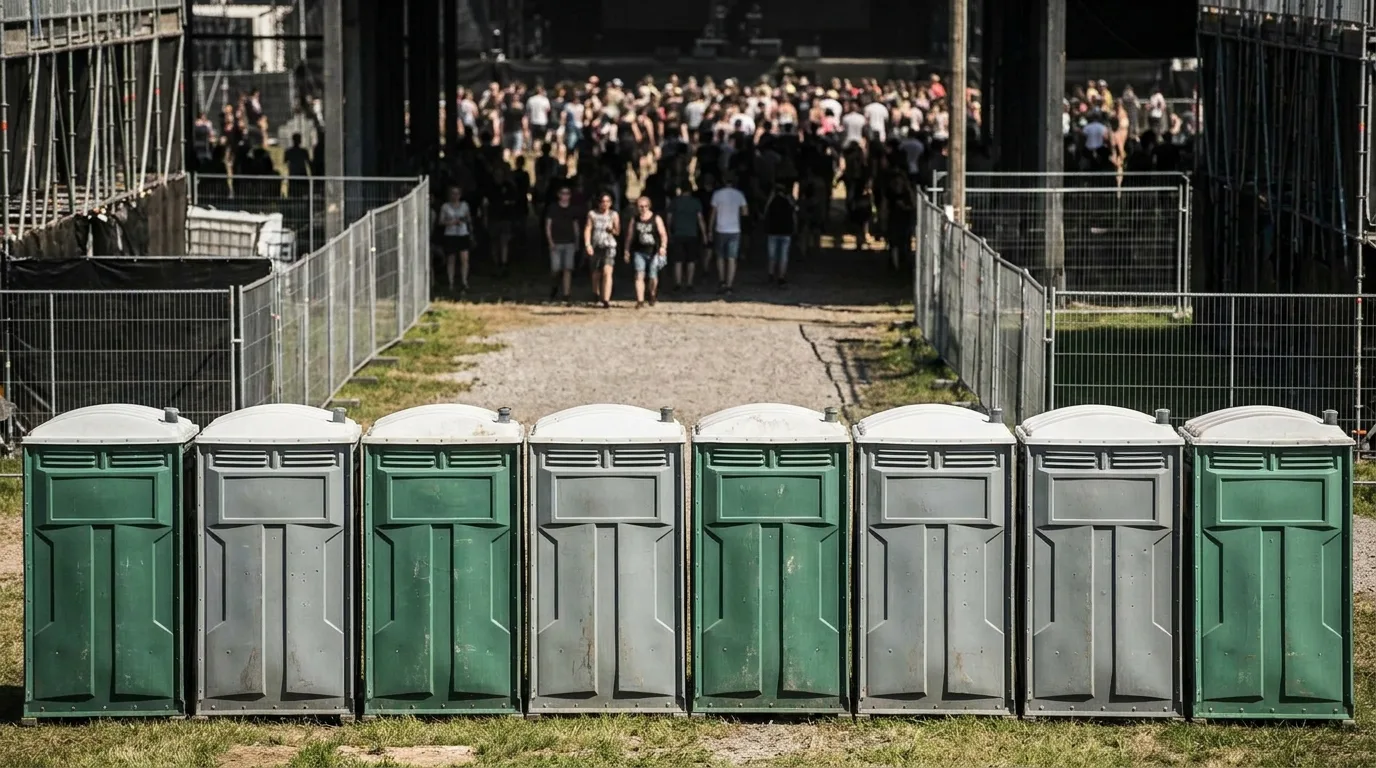
Do I need a permit for a porta potty in New York City?
It comes down to one question: is the unit on private property, or is it on the public right of way?
A unit inside a fenced yard, on a private driveway, in a rear garden, in a private parking lot or behind the property line on a construction site needs no city permit for the placement itself. A unit touching the sidewalk, the curb lane, a parking space, a plaza or a roadway is occupying the public right of way, and that requires a New York City Department of Transportation permit.
The line is the property line, not the fence line or the shed line. Contractors get caught out when a sidewalk shed makes the sidewalk feel like part of the site. It is not. That ground still belongs to the city and still needs the paperwork.
Which agency issues which permit?
More than one office is involved depending on what you are doing, and picking the wrong one is the most common reason a job slips a week.
| Situation | Who handles it |
|---|---|
| Unit on a street, sidewalk or curb lane | NYC Department of Transportation, borough permit offices |
| Street fair or block party closure | The city's Street Activity Permit Office |
| Event in a city park | NYC Parks special event permit |
| Film or TV production | Mayor's Office of Media and Entertainment, Office of Film, Theatre and Broadcasting |
| Work outside 7am to 6pm weekdays | Department of Buildings after-hours variance |
| Roll-off container on the street | NYC DOT container placement permit |
| Unit entirely on private property | No city permit for the placement |
The Department of Transportation runs its permitting through the Bureau of Permit Management and Construction Control at 55 Water Street, with the borough offices handling day to day approvals. For guidance on a specific address, 311 is faster than any other route and it is the number the city itself points people to.
How long does a permit take in New York City?
Anywhere from about a day to several weeks. The spread is real and it depends on the borough, the type of work, and whether the block is already under a construction embargo or a coordinated street works programme.
Practical planning figures we work to:
- A simple sidewalk occupancy on a quiet residential block in Queens or Staten Island can come through quickly.
- A Manhattan avenue frontage, a bus route, or anything in Midtown takes longer and can attract conditions on hours of work.
- Anything touching a protected street, a special district or a coordinated corridor takes longest.
- Event permits through the Street Activity Permit Office and NYC Parks run on their own published calendars, and those close months ahead for large events, not weeks.
Book the units around the permit rather than the permit around the units. That is the single most useful sentence on this page.
What does the city look at when it reviews placement?
Pedestrian clearance, before anything else. New York has the tightest sidewalk rules of any US market, and the review starts with what remains walkable rather than with what you want to put down.
The non-negotiables:
- No curb ramp blocked. The ADA Standards for Accessible Design set 36 inches at 403.5.1 as the minimum clear width of an accessible route, and a blocked ramp fails before you get to width.
- No building entrance obstructed, including a residential stoop or a fire exit.
- No emergency path or work-zone pedestrian route obstructed.
- Nothing over a fire hydrant, a utility access cover, a subway grate or a cellar door.
- The unit door has to open without swinging into the walking path.
The placement guide works through the rest, including servicing access, which reviewers rarely mention and which decides whether the schedule survives contact with the block.
What about dumpsters, fencing and power poles?
Same principle, different permits, and they are usually applied for together on a real job.
A roll-off container on a New York street needs its own Department of Transportation container placement permit, which is covered on the dumpster permit requirements page. A container entirely on private property does not. Sizing sits on dumpster sizes and dimensions, with 10 yard, 20 yard and 30 yard options, and restricted material on what cannot go in a dumpster.
Temporary fencing around a work zone in the right of way follows the same occupancy logic, and a temporary power pole brings a separate electrical permit and utility coordination on top. Bundling them into one application window is how a competent site manager avoids three separate delays.
Across the river the rules change entirely. Jersey City, Newark, Hoboken and the rest of Hudson County run their own municipal permits through their own engineering and public works departments, on different timelines to New York. See porta potty rental in Jersey City, Hoboken and Newark, or the service areas page for the full coverage list.
Are there rules beyond the permit?
Yes, and they come from a different direction. OSHA 1926.51(c)(1) requires one toilet facility on a construction site with 20 or fewer workers and more above that, which is a federal workplace rule rather than a city one. It applies whether or not a permit is involved, and it applies inside the fence line where no permit is needed at all.
Servicing is governed by standard rather than by ordinance. ANSI/PSAI Z4.3 sets weekly servicing as the baseline for a standard unit in normal use, and OSHA 1926.51(c) requires facilities to be kept in a sanitary condition. The OSHA requirements guide covers the workplace side, and how often units get cleaned covers the schedule.
Accessibility is the third layer. The US Access Board's guidance on accessible temporary events puts the working figure at 5 percent of units accessible with a minimum of one, and the ADA Standards require a 60 inch turning space at 304.3.1 inside the unit. Detail on the ADA restroom requirements guide and the accessible unit page.
What do I need to have ready before applying?
Have the address and cross streets, the exact footprint you want, the dates, and a certificate of insurance ready before you start. In this city the insurance certificate is frequently the item that holds up an otherwise complete application, and building owners and managing agents will usually want their own copy naming them as well.
For events, add the expected attendance and the hours, because both feed the unit count. The sizing guide gives you the number to put on the form, and the rental checklist lists everything else worth confirming before delivery day.
Getting a New York job permitted and delivered
Tell us the address and the dates early, even before the job is confirmed. Permit lead time is the constraint on most New York placements, not availability of units.
Pricing is on the rental cost page, with monthly hire for builds, day rates for short jobs, and emergency service when something has gone wrong. Units run from a standard cabin to a flushable deluxe or a restroom trailer for events at Prospect Park and similar venues.
What are the porta potty rules and regulations here?
Private ground needs nothing. Public ground needs the permit named above, before the drop.
Are there porta potty placement rules beyond the permit?
Yes. Level ground, truck access, and a clear pedestrian route past the unit.
Do you need a permit for a dumpster too?
On the street, yes. A permit for dumpster on street placement is a separate application.
The city overview sits at porta potty rental in New York City, common questions on the FAQ, and you can start a job through the quote form or the contact page.
Next step
Get a delivery date
Tell us the address, the dates and the headcount. We size the order and confirm the route.