
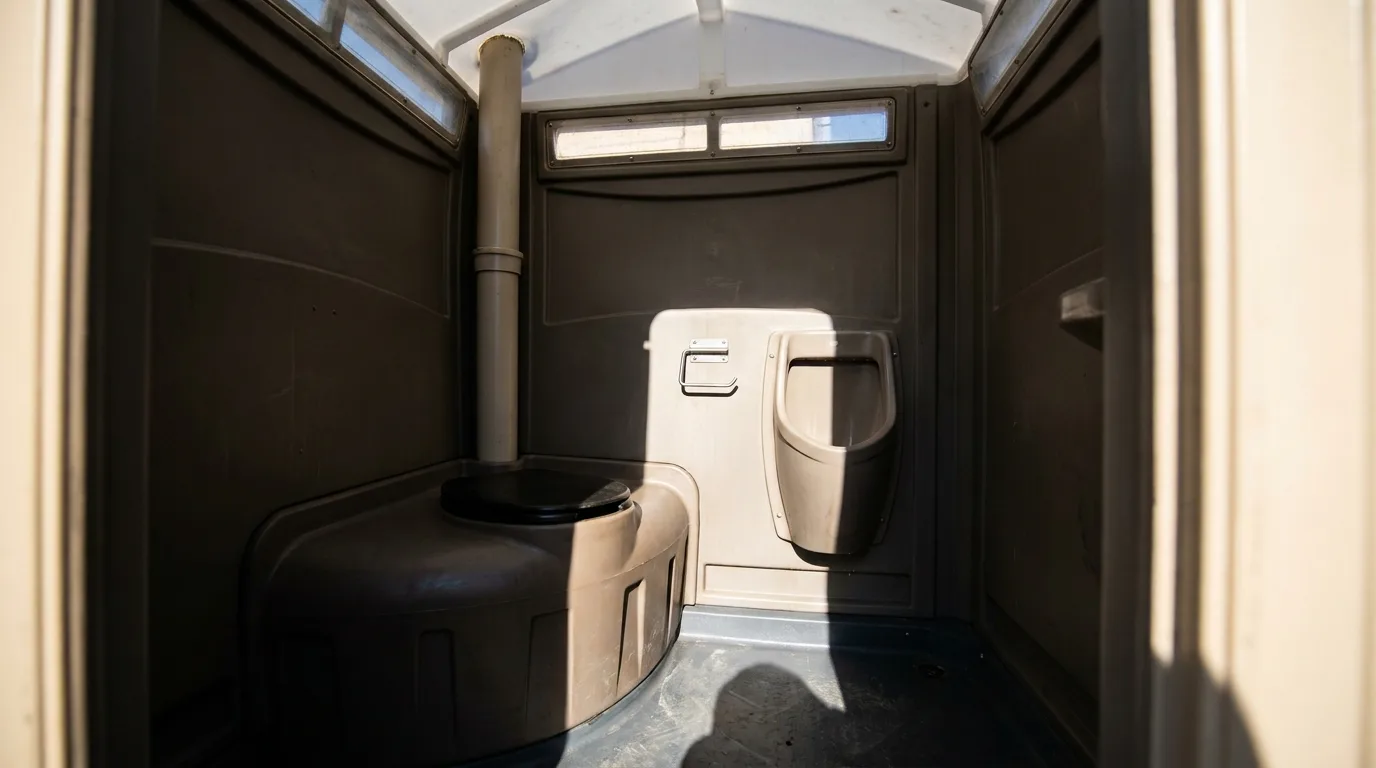
How often is a porta potty cleaned?
A service visit is a scheduled stop where a vacuum truck pumps the holding tank, washes the interior, recharges the tank with fresh water and deodorizer, and restocks the paper. ANSI/PSAI Z4.3, the American National Standard covering nonsewered waste disposal systems, treats one visit per week as the floor for a standard unit under normal use.
Weekly is a starting point rather than a rule for every job. The real driver is how many people go through the unit between visits. Manufacturer specifications put a standard unit at a 60 to 70 gallon tank depending on the model, and about 10 users a day for seven days puts it close to full. Double the traffic and the schedule has to double with it, or the unit fails before the truck arrives.
On a jobsite the schedule is also a legal item. OSHA 1926.51(c) requires toilet facilities on a construction site to be maintained in a sanitary condition, and OSHA 1926.51(c)(1) sets the count at one facility for 20 or fewer workers. Under-count the units and no service interval will hold, which is the point the sizing guide makes with the arithmetic.
What actually happens on a service visit?
Six steps, in this order, every time:
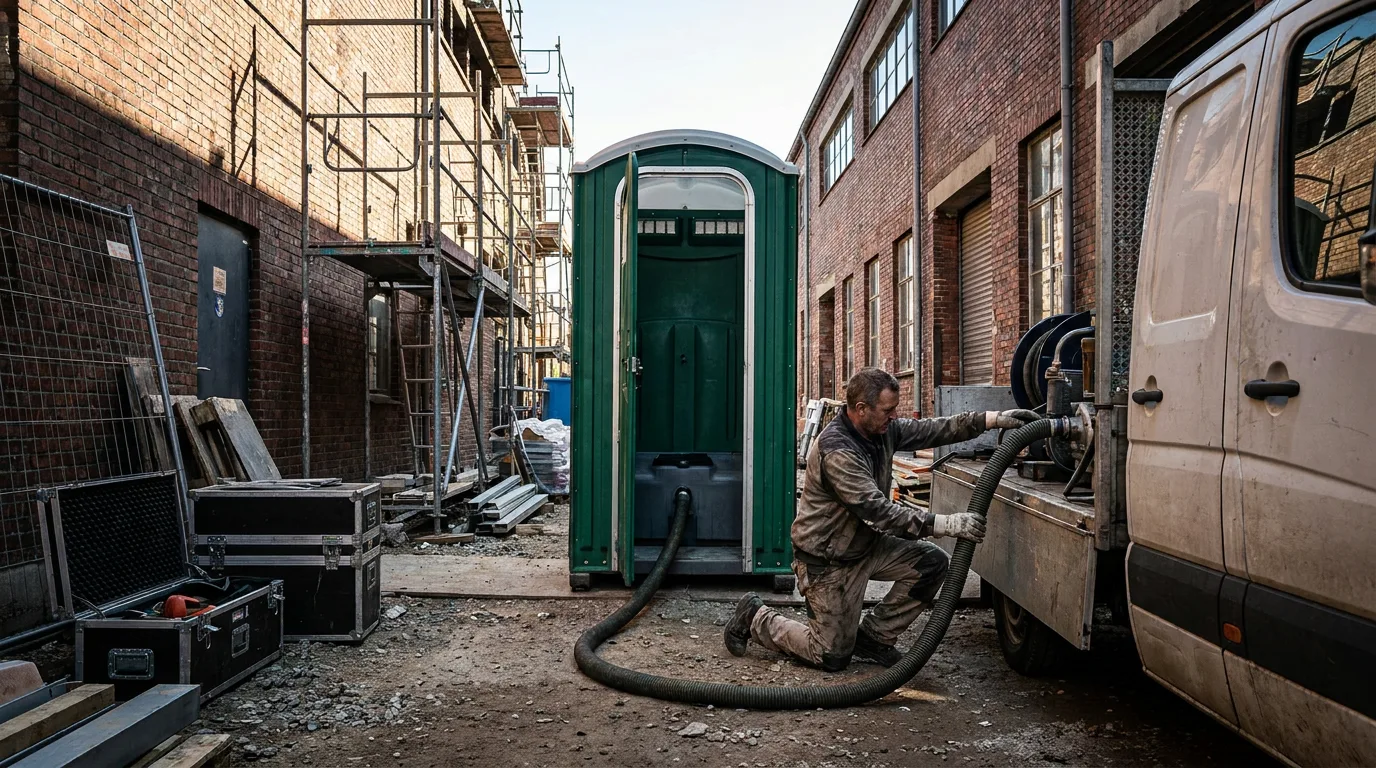
- Pump the tank. A vacuum hose empties the holding tank down to the bottom, waste and residual
water together.
- Rinse and scrub. The bowl, seat, urinal, walls and floor get washed down, usually with a
pressure wand and a disinfectant.
- Vacuum the rinse water out. The wash water goes into the truck too, not onto the ground.
- Recharge the tank. Three to five gallons of fresh water plus a measured dose of deodorizer.
- Restock. Toilet paper, hand sanitizer in the dispenser, and seat covers where the unit has
them.
- Check the hardware. Door latch, vent stack, occupancy indicator, and whether the unit is still
sitting level.
That last one gets skipped by cheap operators and it is the one that causes call-backs. A unit knocked half off level by a delivery truck will not drain properly, and a vent stack blocked by a plastic bag turns a working unit into a problem within two days. Why the vent matters is explained on how porta potties work.
How often should my units be serviced?
Match the frequency to the traffic, not to the calendar. The table below is what we normally schedule across the boroughs.
| Job type | Typical users per unit per day | Service frequency |
|---|---|---|
| Small residential renovation | 3 to 6 | Weekly |
| Standard construction site | 8 to 12 | Weekly |
| Busy site, one unit over-subscribed | 20 or more | Twice weekly |
| Long-term site with public access | Variable | Twice weekly |
| Single day event | 50 to 100 total | Before and after |
| Multi-day festival | Heavy | Overnight, every night |
| Race or marathon course | Concentrated spike | Before the start, again after |
| Film production, night shoots | 30 to 60 crew | Daily |
Events are a different animal from sites. A festival on Randalls Island running three days needs a truck on site each night, not a Tuesday visit. A wedding needs one clean unit that stays clean for six hours, which is usually a flushable deluxe unit or a restroom trailer instead of more standard units.
How much does it cost to clean a porta potty?
Published market rates for an additional service visit on a weekly cycle typically run $30 to $60, though heavier jobs and difficult access push higher. Monthly service packages typically fall between $100 and $150. Those are ranges, not a quote, and the real number depends on where the unit stands and how the truck reaches it.
The important point is what should not be extra. On a normal rental, the first service is part of the price. So is the deodorizer, the paper and the pump-out on collection. If a quote separates those out as line items, ask why. The cost page sets out what a fair New York quote includes and what typically gets charged on top.
Why does servicing work differently in New York City?
Access, almost entirely. In most of the country a service tech parks beside the unit. Here the truck often cannot get within 50 feet of it.
Three constraints shape every route in the five boroughs:
- Alternate side parking and street cleaning windows. A block that is legal to work at 10am is blocked at 11am. Routes get built around posted regulations rather than around geography.
- Sidewalk sheds. On facade jobs under the city's Facade Inspection Safety Program, the unit sits inside a shed with limited headroom and a single opening. Hose runs get longer and the visit takes more time.
- Midtown traffic. For a unit on a busy Manhattan frontage, an early morning or overnight visit is often the only realistic one, which brings the city's noise rules into play. Work outside 7am to 6pm on weekdays generally needs an after-hours variance from the Department of Buildings.
If the unit stands on a street or sidewalk in the first place, that placement needs a New York City Department of Transportation permit, run through borough offices by the Bureau of Permit Management and Construction Control at 55 Water Street. Approval takes anywhere from about a day to several weeks. Call 311 for a specific block, and read the permit requirements page before the units arrive.
Where does the waste actually go?
Into the municipal system, not a hole in the ground. New York City's Department of Environmental Protection treats roughly 1.3 billion gallons of wastewater a day across 14 water resource recovery facilities, and licensed septage from portable units is discharged at approved receiving points rather than dumped.
The same applies to any holding tank or septic pumping work on the small number of private systems left in the city, mostly on Staten Island. Interval guidance for those sits on how often a septic tank needs pumping, with pricing at septic pumping cost and urgent work at emergency septic service.
Is there such a thing as a self-cleaning porta potty?
Not in the way the phrase suggests. There is no standard rental unit that empties or disinfects its own tank. What does exist is equipment that reduces how dirty a unit gets between visits: a flushable deluxe unit with a foot pump and a separate freshwater supply, a restroom trailer with real plumbing and a sink at every station, and touch-free sanitizer stations outside the door.
The unglamorous version of the same idea works better. More units at a lower load per unit stays cleaner than fewer units serviced more often, because tank chemistry has time to work. The sizing guide covers the ratios, and do porta potties smell explains what happens when they are wrong.
Booking service in the five boroughs
Tell us where the unit stands, how the truck reaches it, and roughly how many people use it. That is enough to set a schedule you will not have to chase. Most standard units on a build go weekly under a monthly rental, and shorter jobs get priced at day rates.
Something urgent gets handled through emergency rental and service. Cold weather changes the chemistry and the schedule, which the winter guide covers, and accessible units need their own service attention under the ADA requirements guide.
Anyone asking about portable toilet cleaning work rather than service should note that operating a vacuum truck over 26,001 pounds gross weight requires a commercial driver's licence under Federal Motor Carrier Safety Administration rules, so it is a licensed trade rather than casual work. Reach us through the contact page.
Is portable toilet cleaning service near me weekly?
Weekly is standard under ANSI/PSAI Z4.3. Heavy use in New York City moves it to twice a week.
What does portable toilet cleaning near me involve?
Vacuum the tank, wash the walls, recharge the deodoriser, restock paper. Roughly seven minutes.
Is clean porta potty rental a real category?
Every unit should be. Ask the service frequency, not the marketing.
Is self-cleaning porta potty rental available?
No, and be wary of anyone selling it. Portable toilet cleaner rental is a truck and a person, not a gadget.
Coverage across the boroughs and into Jersey City and Hoboken is listed on the service areas page. The city overview sits at porta potty rental in New York City, common questions are on the FAQ, and a schedule can be set up through the quote form.
Next step
Get a delivery date
Tell us the address, the dates and the headcount. We size the order and confirm the route.