
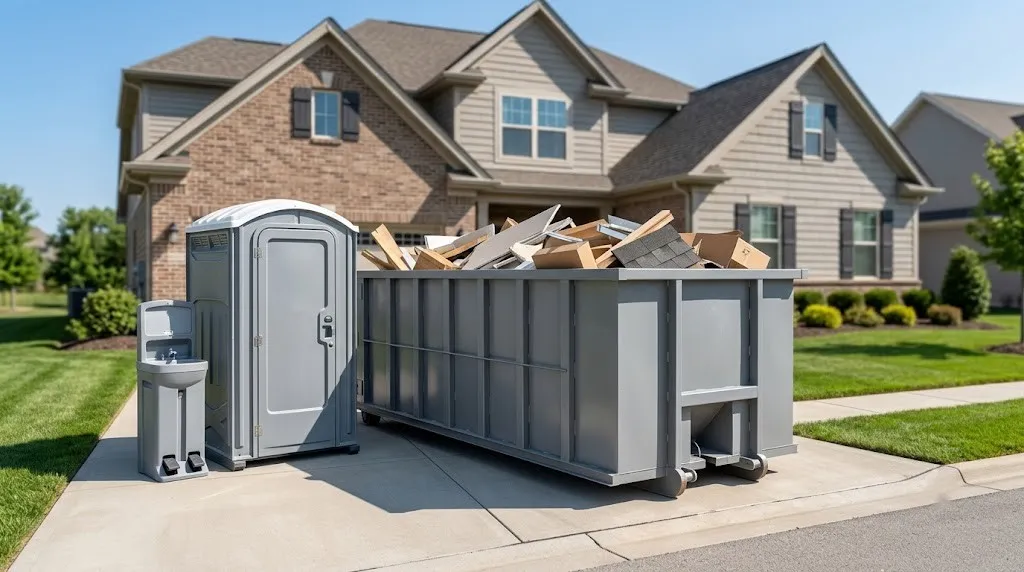
How much does a dumpster rental cost in New York City?
The ranges below are typical market prices reviewed July 2026, not a quote. Each one covers delivery, the haul to the transfer station, and disposal up to the stated tonnage. Where a job lands inside a band comes down to access, borough and how far the nearest transfer station is.
| Container | Typical week | Extra day | Tonnage included | Best for |
|---|---|---|---|---|
| 10 yard | $425 to $650 | $50 to $115 | 1 to 2 tons | Bathroom gut, concrete, dirt |
| 20 yard | $475 to $700 | $50 to $115 | 2 to 3 tons | Kitchen and bath, roof tear-off |
| 30 yard | $550 to $780 | $50 to $115 | 3 to 4 tons | Full gut, commercial fit-out |
| 40 yard | $600 to $800 | $50 to $115 | 4 to 6 tons | Light bulky demolition debris |
Sizing up is usually the cheaper mistake. The 20, 30 and 40 yard containers share a 22 by 8 foot footprint per manufacturer spec, so if one fits your placement they all do, and the price gap between them is smaller than the cost of a second haul. Every measurement is on the sizes and dimensions page, and the roll-off dumpster overview explains how swaps work.
What is included in a roll-off dumpster price?
Five things should be in the base number, and three things are normally billed on top. Get all eight named before you compare two quotes, because in this market the same container can be quoted two completely different ways.
Included in the rate:
- Delivery to the address you give, in normal business hours
- The rental period, usually 7 to 14 days
- The haul back to the transfer station
- Disposal up to the stated tonnage
- Basic tarping and the load being secured for transport
Billed separately, and reasonably so:
- Extra days, $50 to $115 each
- Tonnage over the allowance, billed per ton at the transfer station rate. Ask for that figure as a number before you book. We won't take a demolition booking without stating it, because it's the line that decides your final invoice.
- A dry run, when the truck arrives and the container can't be placed or collected. Cars parked in the spot and a locked gate are the two usual causes.
Why is dumpster rental more expensive in Manhattan than in Queens?
Because almost none of the cost is the steel. It's the truck, the driver's time and the permission to occupy the street.
A driveway placement in Bayside takes ten minutes end to end. The same container on a Midtown side street means a permitted lane, a delivery window, traffic agents and a route that avoids the parkway network, since commercial vehicles are banned from the FDR Drive, the Belt Parkway and the Henry Hudson Parkway and have to use the NYC DOT truck route network instead. That's a different job, and it gets priced as one.
The other structural factor is who's allowed to haul. Private trade waste in New York City is regulated by the Business Integrity Commission under Title 16-A of the Administrative Code, and every legitimate carter holds a BIC license. A number that undercuts the market by 40 percent is worth asking questions about.
How much does the permit add?
A container on a New York City street or sidewalk needs a permit from the Department of Transportation, filed through the Bureau of Permit Management and Construction Control at 55 Water Street with borough offices doing approvals. The permit itself is a city charge. The real cost is the calendar: turnaround runs from about a day to several weeks depending on the borough and the type of work, and 311 is the fastest way to get a read on a specific address.
On private property there's no permit and no wait. That single difference is the biggest swing factor in New York dumpster pricing, and it's why the first question on any quote here is whether the container touches public right of way. The dumpster permit requirements page has the sequence, and porta potty permits run separately if the crew needs a restroom on the sidewalk too.
Placement legality comes before the permit anyway. The 2010 ADA Standards require a minimum 36 inch clear width on a pedestrian access route in section 403.5.1, and no container can block a curb ramp, building entrance or emergency path. The placement guide covers what a driver checks on arrival.
How much do you pay if you go over the weight limit?
Overage bills by the ton at the prevailing transfer station rate, which moves with the disposal market. That's why we quote it as a live number rather than publishing one here. What you can plan against are the densities.
Mixed construction debris runs roughly 500 to 800 pounds per cubic yard. Drywall is about 500 pounds per yard, asphalt shingles 230 to 400 pounds per 100 square foot square, and broken concrete around 4,000 pounds per cubic yard. Federal rules cap a loaded truck at 80,000 pounds gross vehicle weight under 23 CFR 658, so the tonnage allowance isn't a sales device, it's the axle limit on the vehicle sent to collect the container. Dumpster weight limits works through the maths for every size.
Rain is the sneaky one. An open container of drywall or soil that sits through a wet weekend gains real tonnage, and that weight is yours. Tarp it.
Routing feeds into the same number. Section 385 of the New York State Vehicle and Traffic Law sets vehicle weight and dimension limits, and a loaded roll-off truck has to stay on the DOT truck route network, which in parts of Brooklyn and Queens adds real mileage between the site and the transfer station.
Three real New York jobs, priced
A Park Slope bathroom gut, five days, container in the driveway. One 10 yard container, no permit needed, tile and cast iron so the tonnage matters more than the volume. Roughly $425 to $650 all in, plus overage if the cast iron pushes past 2 tons. Long interior jobs in an occupied building usually add a standard restroom unit so the crew isn't using the client's bathroom, and an ADA unit if the site is open to the public.
A Queens two-family roof tear-off, 22 squares of asphalt shingle. A 20 yard container at $475 to $700 for the week, but the shingles alone run 2.5 to 4.4 tons at 230 to 400 pounds per square, so budget for tonnage above the allowance. Roof work almost always beats the weight limit before it fills the container.
A Manhattan street placement, ten days, DOT permit. A 20 yard container at $475 to $700 for the first week plus three extra days at $50 to $115 each, so around $625 to $1,045 before the permit and any restricted-hours delivery charge. Start the permit weeks before the crew mobilises. On a job like this the container usually arrives with temporary fencing and a light tower, priced on the temporary fence cost page.
Charges that should never appear
- A vague environmental fee with no definition attached
- A fuel surcharge that wasn't mentioned at booking
- A heavy load charge on a container that never went over its tonnage
- Delivery billed twice because the driver came back for a second look
- Disposal of standard mixed debris billed as special waste
If a line can't be explained in one sentence, push on it. Loads rejected at the transfer station for prohibited material are a legitimate charge, and they're avoidable: check what cannot go in a dumpster before you load. Asbestos in particular is a separate process, and the NYC DEP Asbestos Control Program requires an ACP-5 filing before many Department of Buildings sign offs.
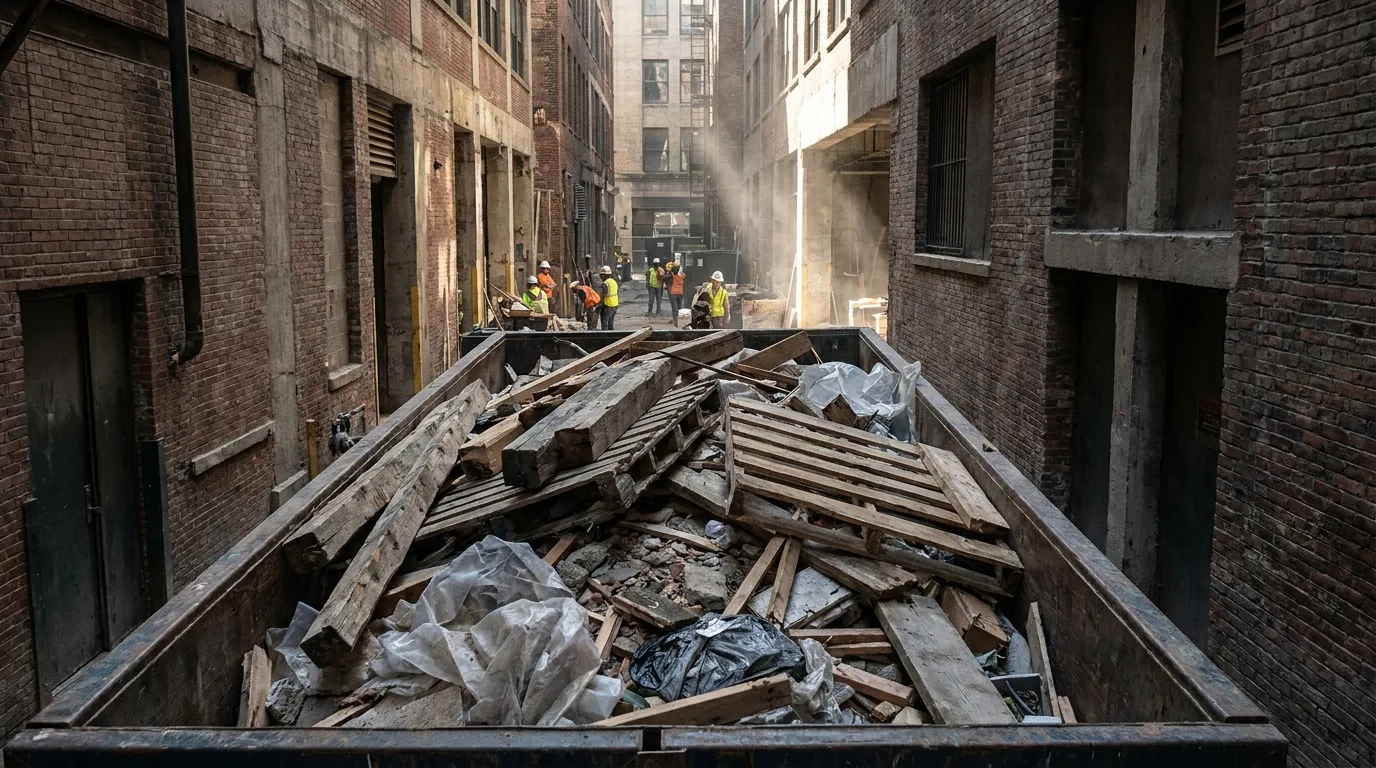
Questions people ask about dumpster prices
What's the cheapest dumpster rental in NYC? A 10 yard container on private property, next-day delivery, no permit. Around $425 to $650 for the week. The cheapest quote you'll receive is usually the one with the narrowest tonnage allowance.
Is a long job cheaper by the month? Long construction jobs are priced on a swap schedule rather than a flat monthly rate, because the cost is driven by hauls and tonnage rather than by days on site. See construction dumpster rental.
Do you price concrete and dirt differently? Yes. They go as a clean load in a small container with a dedicated tonnage rate, because the disposal stream is separate. The same logic applies to septic and liquid waste, which never goes in a container at all.
Does event cleanup cost more? Usually, because of timing rather than volume. A festival or marathon strike happens in a fixed overnight window, and overnight collection is a separate charge. Bring the rental checklist to the planning meeting.
Can I get a container and a restroom on one invoice? Yes, and most jobsites do. Porta potty rental in New York City covers the units, what porta potty rental costs has the sanitation pricing, daily rates and monthly rates are broken out separately, and construction site services bundles the lot.
How fast can you deliver? Next business day for private property in all five boroughs, plus Jersey City, Newark, Hoboken and Hempstead. Short-notice work goes through emergency rental, and the full map is on the service areas page.
What else gets ordered with a container? Storage containers for tools, priced on the storage cost page, a mobile office trailer on larger sites, a temporary power pole, and a portable sink where the crew handles anything harmful.
What is a typical roll-off dumpster rental price?
Roll off dumpster rental prices in New York City track size, tonnage and haul distance ahead of anything else.
What is the cost of roll off dumpster rental on a small job?
Ask the dumpster rental 10 yard price first. 10 yard dumpster rental prices are the cheapest entry point.
Send the address, the debris type and the dates through the quote form and you'll get a real number rather than a range. The contact page has the direct line, the FAQ answers the common ones, the about page explains how we work, and everything we run is listed on the home page.
Next step
Get a delivery date
Tell us the address, the dates and the headcount. We size the order and confirm the route.