
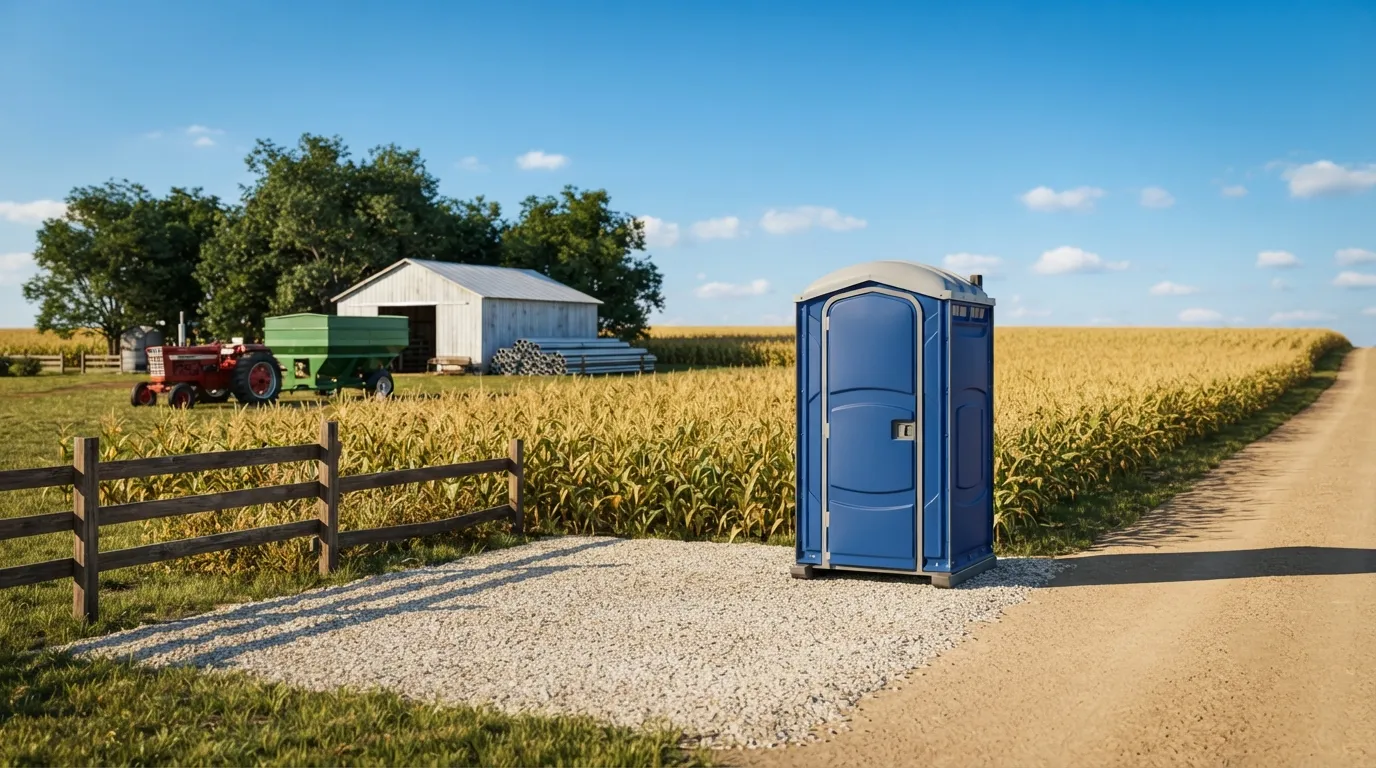
Agriculture in a city of 8.8 million people
New York City grows more food than most people expect, on ground shaped nothing like a farm. NYC Parks GreenThumb supports more than 550 community gardens across the five boroughs, which makes it the largest programme of its kind in the country. The Queens County Farm Museum in Floral Park works roughly 47 acres and is the longest continuously farmed site in New York State. Rooftop soil farms operate at the Brooklyn Navy Yard and in Long Island City, and there is a working urban farm on Randalls Island.
None of those places has a spare restroom. That is the actual problem we get called about, and it splits three ways:
- Urban growing sites, where the need is one unit for a season and the constraint is where a truck can stop
- Working farms past the city line, in northern New Jersey and out on Long Island, where the constraint is field distance
- Farm events, from harvest festivals to markets, which are event orders with a farm address
What OSHA field sanitation actually requires
OSHA 1928.110 is the field sanitation standard, and it applies to agricultural establishments with 11 or more employees engaged in hand-labor operations on any day in the past 12 months. Where it applies, it requires one toilet and one handwashing facility for every 20 employees, potable drinking water, and facilities located within a quarter-mile walk of each worker, or at the closest point of vehicular access where the terrain makes that walk impractical.
Below 11 hand-labor employees the standard does not bite, and a lot of urban agriculture sits there. General industry rules still apply to a site with paid staff: OSHA 1910.141(c)(1)(i) starts at one toilet for 1 to 15 employees, and OSHA 1926.51(f)(1) requires washing facilities where workers handle harmful substances, which includes plenty of what gets used on a farm. Read OSHA portable toilet requirements for the construction side of the same rules, and handwashing requirements for the sink question.
How many units does a farm or growing site need?
| Workers on site | Toilets | Handwash units | Standard applied |
|---|---|---|---|
| 1 to 10, hand labor | 1 | 1 | Good practice, below 1928.110 threshold |
| 11 to 20 | 1 | 1 | OSHA 1928.110 |
| 21 to 40 | 2 | 2 | OSHA 1928.110 |
| 41 to 60 | 3 | 3 | OSHA 1928.110 |
| Seasonal crew, 100 | 5 | 5 | OSHA 1928.110 |
The quarter-mile walking distance is the constraint people miss. On a 40 acre field that can mean two placements rather than one, even when the headcount says one unit is enough. Work through your own numbers on how many porta potties you need, and add at least one ADA accessible unit wherever the public is invited on site.
Where the unit goes on a growing site
A standard unit is roughly 44 inches wide by 48 inches deep and 90 inches tall per manufacturer spec, around 150 to 200 pounds empty. Two people can walk one through a wide gate, which matters on a community garden where no truck is getting past the fence line.
- Community gardens. Placement is usually just inside the gate, on a hard corner, because the service truck has to work from the street.
- Rooftop farms. Freight elevator or lift access, plus written building sign-off. A full unit is near 700 pounds and that number decides the answer.
- Open field. Placed at a headland or track edge, moved as the work moves, sited so the truck can reach it without crossing worked ground.
- Farm yards and packing sheds. Straightforward, and usually the right place for a handwashing station as well.
The placement guide covers measuring a spot, and porta potty in winter matters for anyone running a season into December.
Do you need a permit for a farm porta potty in NYC?
Not on private ground or inside a fenced garden. A unit standing on a New York City street or sidewalk needs a permit from the Department of Transportation, filed through borough offices, with turnaround running from about a day to several weeks depending on the borough and the type of work. The NYC DOT Bureau of Permit Management and Construction Control at 55 Water Street runs it, and 311 will tell you what applies to a specific address.
Community gardens on NYC Parks land, including the GreenThumb sites, answer to Parks rules on top of that, so ask the garden's own agreement what it allows before booking anything for a season. Nothing may block a curb ramp, a building entrance, an emergency path or a work-zone route, and the 2010 ADA Standards set a 36 inch minimum clear width on a pedestrian access route in section 403.5.1. Detail on porta potty permit requirements.
Servicing, and what a season costs
ANSI/PSAI Z4.3 sets weekly servicing as the floor for a unit in normal use. A community garden with a handful of volunteers can often run on that comfortably. A packing crew in September cannot, and wants two visits a week. A standard unit holds 60 to 70 gallons per manufacturer spec, which is the number that decides it.
| Item | Typical range |
|---|---|
| Standard unit, monthly | $150 to $350 |
| ADA unit, monthly | $275 to $550 |
| Handwash station, monthly | $50 to $110 |
| Delivery, one time | $75 to $200 |
| Extra service visit | $75 to $125 |
| Holding tank for a wash station | quoted per job |
Ranges reviewed July 2026, market bands rather than a quote. A season of six or seven months is priced monthly, not weekly, and the monthly rental page explains why that gap is so wide. Full breakdown on the porta potty rental cost page.
Septic, tanks and the rest of the farm side
Properties past the city line are frequently on septic rather than sewer, and a farmhouse system serving a seasonal crew gets loaded in a way it was never sized for. New York State licenses the haulers who move that waste under 6 NYCRR Part 364, so any pumping contractor on your site should carry a permit of its own.
Septic pumping service and septic tank cleaning cover the routine work, septic tank warning signs covers what to watch for, and how often septic tank pumping answers the interval question. If something backs up mid-harvest, emergency septic service is a real dispatch. A holding tank is the answer where there is water use but nowhere for it to go.
Questions growers and farm managers ask
Can you deliver to a community garden with no vehicle access? Usually yes, if we can walk the unit in from a legal stop. Tell us the gate width before booking.
Do you rent for a single season? Yes, and monthly pricing is the right way to buy it. Under about ten days, weekly makes more sense.
Do you serve farms in New Jersey and on Long Island? Yes. Paterson, Elizabeth and North Hempstead are inside our normal range, with the full list on the service areas page.
What about a harvest festival or a farm market? That is an event order. See event restroom rental and county fair restrooms.
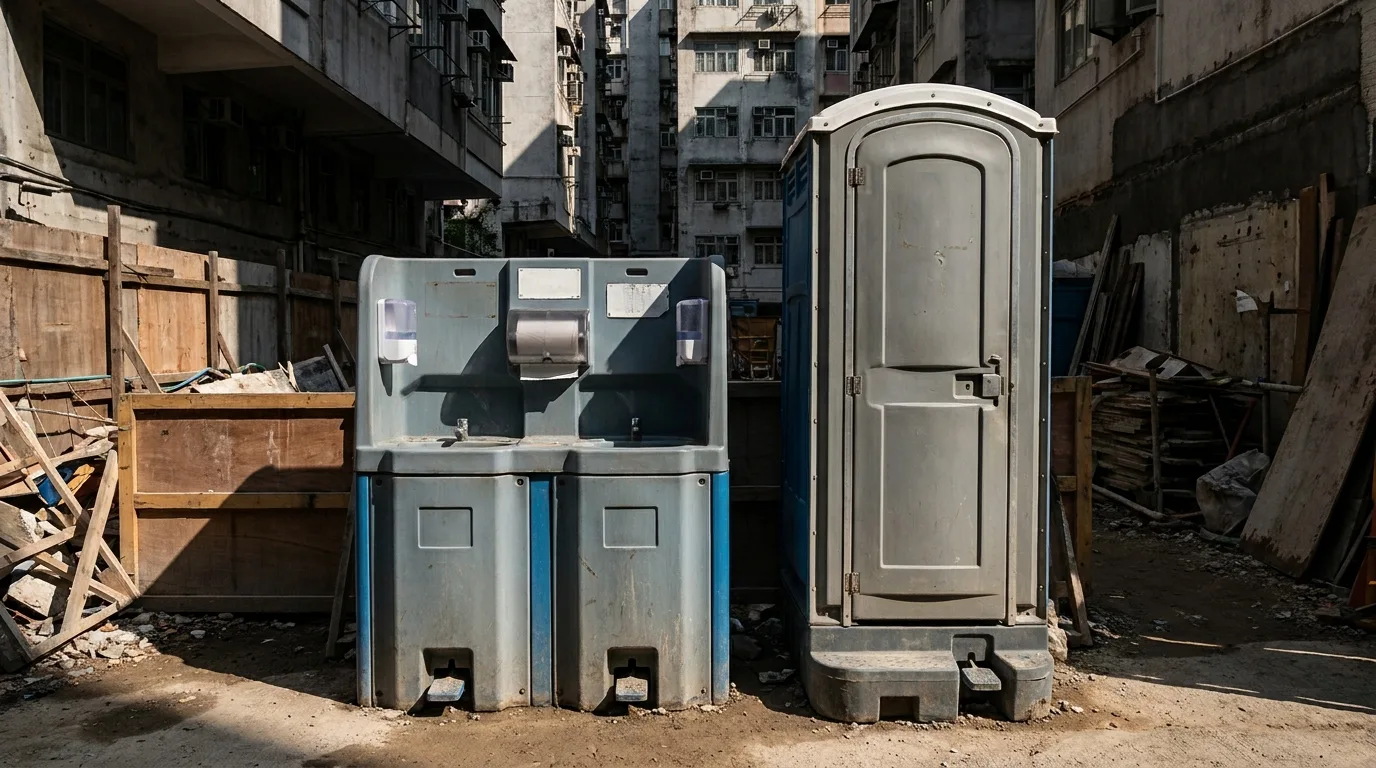
What does OSHA require on a jobsite?
OSHA 1926.51(c): one toilet for 20 or fewer workers, then a seat and a urinal per 40.
Send the site address, the crew size and the season dates through the quote form, or call from the contact page. The wider market picture is on porta potty rental in New York City, and everything else we run is on the home page and in the FAQ.
Next step
Get a delivery date
Tell us the address, the dates and the headcount. We size the order and confirm the route.