
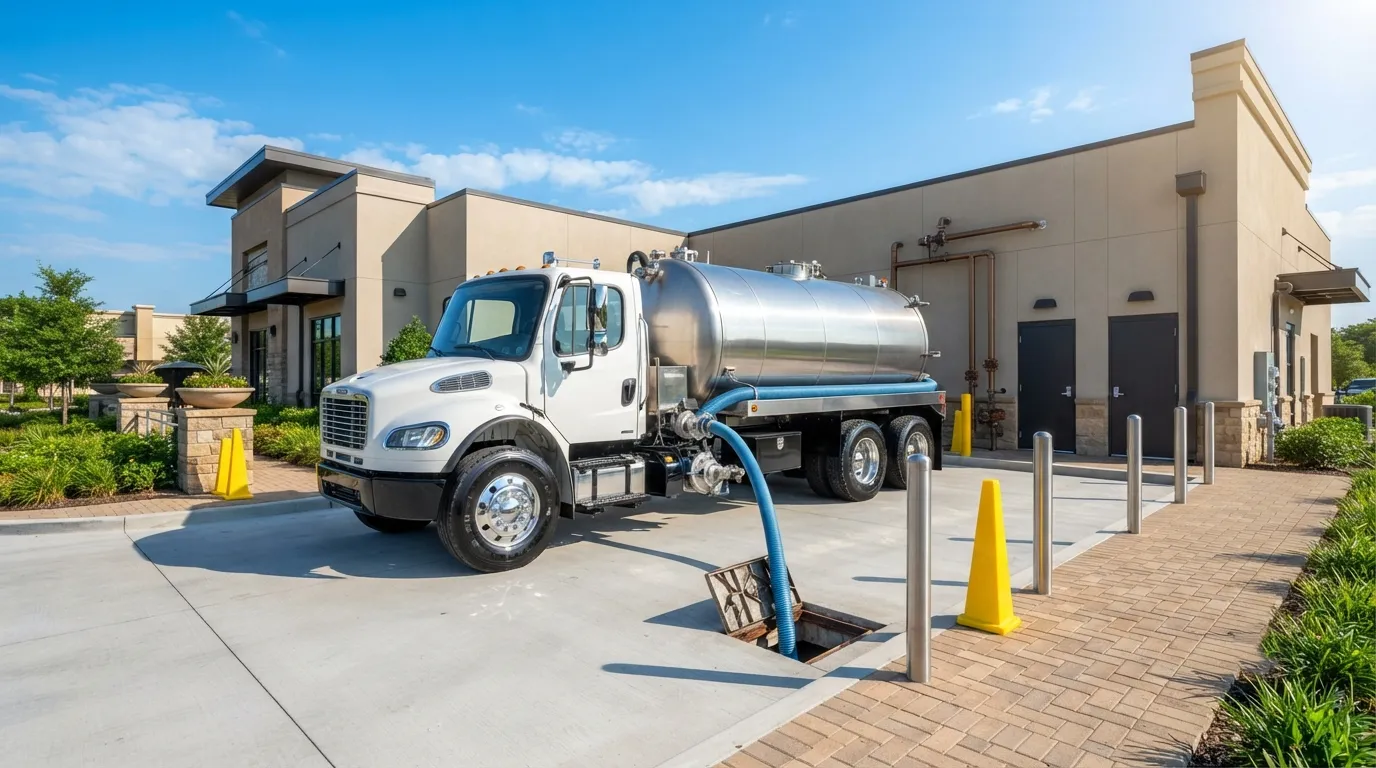
What is a grease trap, and why does a New York City kitchen need one?
A grease trap, or grease interceptor, is a chamber between the kitchen drains and the sewer that slows the flow so fats, oils and grease float to the top and food solids sink, letting only the middle layer pass into the sewer. Without one, that grease cools in the collection system and hardens against the pipe wall.
New York City takes this more seriously than most places for a straightforward reason: DEP maintains roughly 7,400 miles of sewer main serving 14 wastewater resource recovery facilities, and the agency runs a public campaign called Cease the Grease precisely because congealed fat is one of the main things that blocks it. The city's sewer use rules in Title 15, Chapter 19 of the Rules of the City of New York prohibit discharging grease in quantities that can obstruct a sewer, and the New York City Plumbing Code requires interceptors on food service drainage in its section on interceptors and separators. An interceptor is not optional equipment for a commercial kitchen here.
How often does a grease trap need pumping?
The standard trigger is the 25 percent rule: service the unit when the combined grease and solids layers reach a quarter of the total liquid depth. That is the measurement, and the calendar is just a way of getting ahead of it.
| Kitchen type | Typical interval | Note |
|---|---|---|
| High-volume fryer kitchen | every 2 to 4 weeks | Fried food loads a trap fastest |
| Full-service restaurant | every 4 to 8 weeks | The most common schedule we run |
| Cafe, bakery, deli | every 8 to 12 weeks | Lower fat load, smaller units |
| Bar with limited food | quarterly | Measure before assuming |
| Commissary or catering kitchen | varies by output | Set it on measurement, not habit |
Two visits of data will tell you your real interval better than any table. Ask for the depth readings in writing each time, the same way a septic tank should be measured on the septic tank cleaning side. Properties running both a tank and an interceptor usually put them on one schedule, and the pumping frequency guide covers the septic half of that.
What a grease trap service visit includes
Six things, and you can ask to see any of them.
- Open the unit and measure the grease cap and the solids layer
- Pump the entire contents, liquid included, not just skim the top
- Scrape the walls, baffles and the outlet tee
- Rinse and inspect the flow control fitting and the vent
- Refill or reprime as the unit requires
- Haul the waste under a manifest and leave you the copy
That last step is the one that matters for an inspection. Anyone hauling this waste in New York State needs a New York State Department of Environmental Conservation Part 364 waste transporter permit, and the load has to go to a facility permitted to receive it. Keep the manifests filed. It is the cheapest compliance you will ever do.
Interceptor sizes and what they actually hold
Grease interceptors are rated by flow rate in gallons per minute, not by tank volume, and the Plumbing and Drainage Institute standard PDI-G101 pairs each rating with a grease retention capacity of 2 pounds per gallon per minute of flow.
- 20 gpm unit: about 40 pounds of grease capacity. Typical under-sink size for a small kitchen.
- 35 gpm unit: about 70 pounds. Common in a mid-size restaurant.
- 50 gpm unit: about 100 pounds. Larger kitchens and multi-sink runs.
- In-ground interceptors: sized in gallons instead, often 500 to 3,000 gallons, and serviced by vacuum truck rather than by hand.
Undersized units are the usual reason a kitchen thinks it needs pumping every fortnight. If the readings say you are at 25 percent in three weeks on a 20 gpm unit, the honest answer may be a bigger interceptor rather than a shorter schedule.
What does grease trap pumping cost?
We quote grease trap work per job rather than publishing a rate, and that is deliberate. Interceptor size, whether it is under a sink or in the ground, access from where the truck can legally stop, and disposal volume move the number far too much for a single figure to be honest. Send us the unit rating and a photo of the access and you will get a real number back.
What we will say plainly: a scheduled contract costs less per visit than calling for a one-off, and far less than an emergency. Our quote form has the fields, or the contact page has the direct line.
Servicing a kitchen on a tight New York City block
Restaurants here rarely have a loading dock, and the interceptor is often in a cellar or under a sidewalk hatch. Three constraints decide how the visit runs.
Commercial vehicles are banned from New York City parkways, so routing across boroughs takes the expressways and the NYC DOT designated truck route network. Kerb space is the second problem, with alternate side rules, hydrants, bus lanes and loading zones all removing places a tanker can stop. And the hose has to cross the sidewalk to a cellar hatch without closing it, which the 2010 ADA Standards address in section 403.5.1 by requiring a minimum 36 inch clear width on a pedestrian access route.
Where work needs the street or sidewalk beyond ordinary standing, that is a New York City Department of Transportation permit through the borough offices, handled by the Bureau of Permit Management and Construction Control at 55 Water Street, with turnaround from about a day to several weeks depending on the borough and the type of work. Call 311 for your block. The same process shows up on the porta potty permit page.
Most kitchens book us before service or after close for exactly these reasons. Say which window works and we will route to it. Fit-outs and refits get the same treatment, usually with a dumpster and a handwash station on the same delivery, and the placement guide covers what a driver needs to know about your frontage.
Emergency grease trap pumping
A backed-up kitchen drain during service is a closed kitchen, and we treat it that way. Same-day and after-hours calls are priced above a scheduled visit because they mean pulling a truck off a route, which is the same logic set out on the emergency septic service page.
The prevention is boring and it works: measure at every visit, keep the interval honest, train staff to scrape plates into the bin rather than the sink, and never pour fryer oil down a drain. DEP's Trash It, Don't Flush It campaign names grease alongside wipes and paper towels for the same reason, and the septic tank warning signs page shows what the same neglect looks like on a residential system.
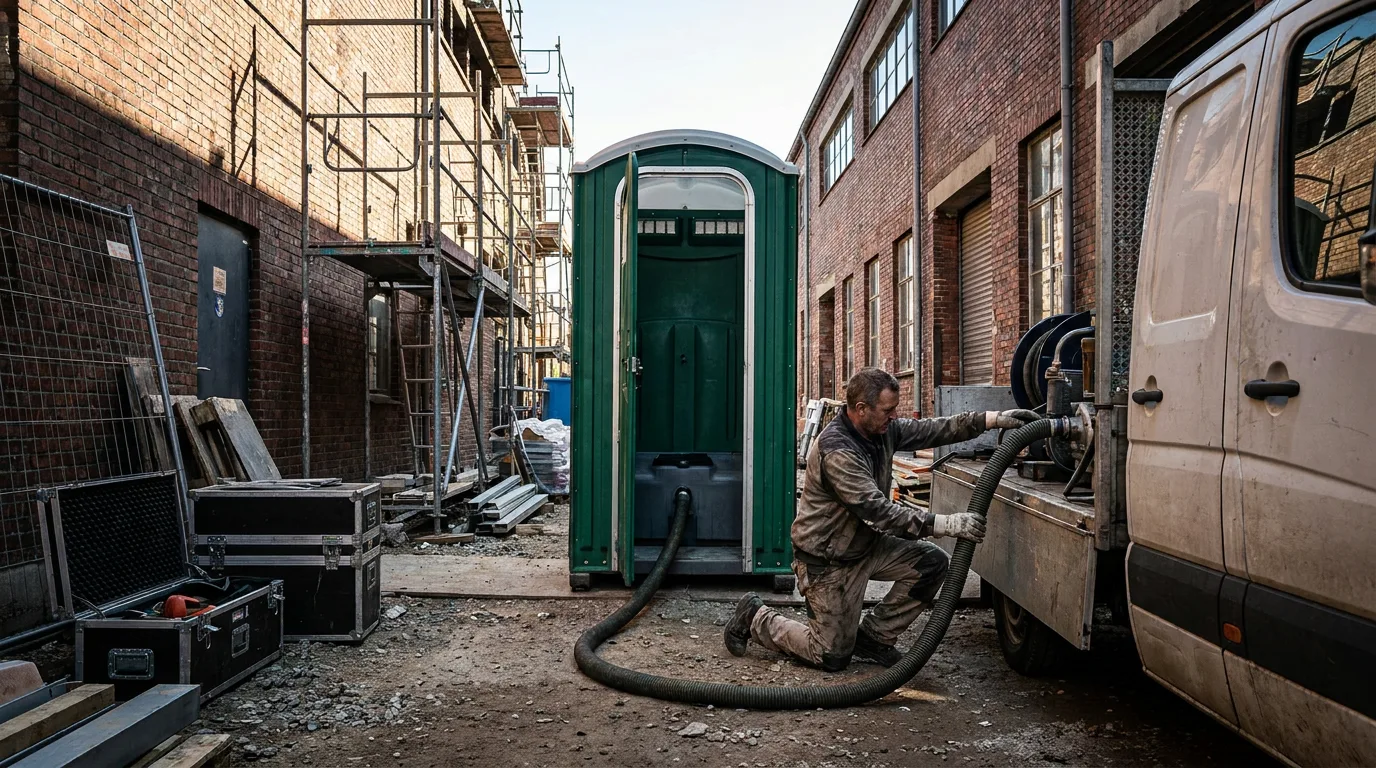
Questions restaurant operators ask
Can you pump during service hours? We can, but nobody enjoys it. Early morning and post-close are the usual windows.
Do you handle in-ground interceptors as well as under-sink units? Yes. Both go on the same truck and the same disposal chain as our septic pumping service.
Do you cover outside the five boroughs? Yes. Jersey City, Hoboken and Newark are inside normal range, and the service areas page has the full list.
What else can you bring on the same visit? Portable toilets for a renovation, roll-off dumpsters for a fit-out and holding tanks for a site with no sewer connection. Everything is listed on the home page, pricing on the cost page, and the rest on the FAQ.
Is grease trap pumping service the same as a clean-out?
When does a trap need pumping?
Most sewer ordinances use the 25 percent rule: pump when fats reach a quarter of trap depth.
Who sets the interval?
The local Health Department and the sewer ordinance, not the kitchen and not us.
How big are the traps?
Under-sink units run 20 to 50 gallon. Exterior interceptors run far larger.
Pumping empties it. A clean-out scrapes the walls. Grease trap pumping services usually mean both.
Next step
Get a delivery date
Tell us the address, the dates and the headcount. We size the order and confirm the route.