
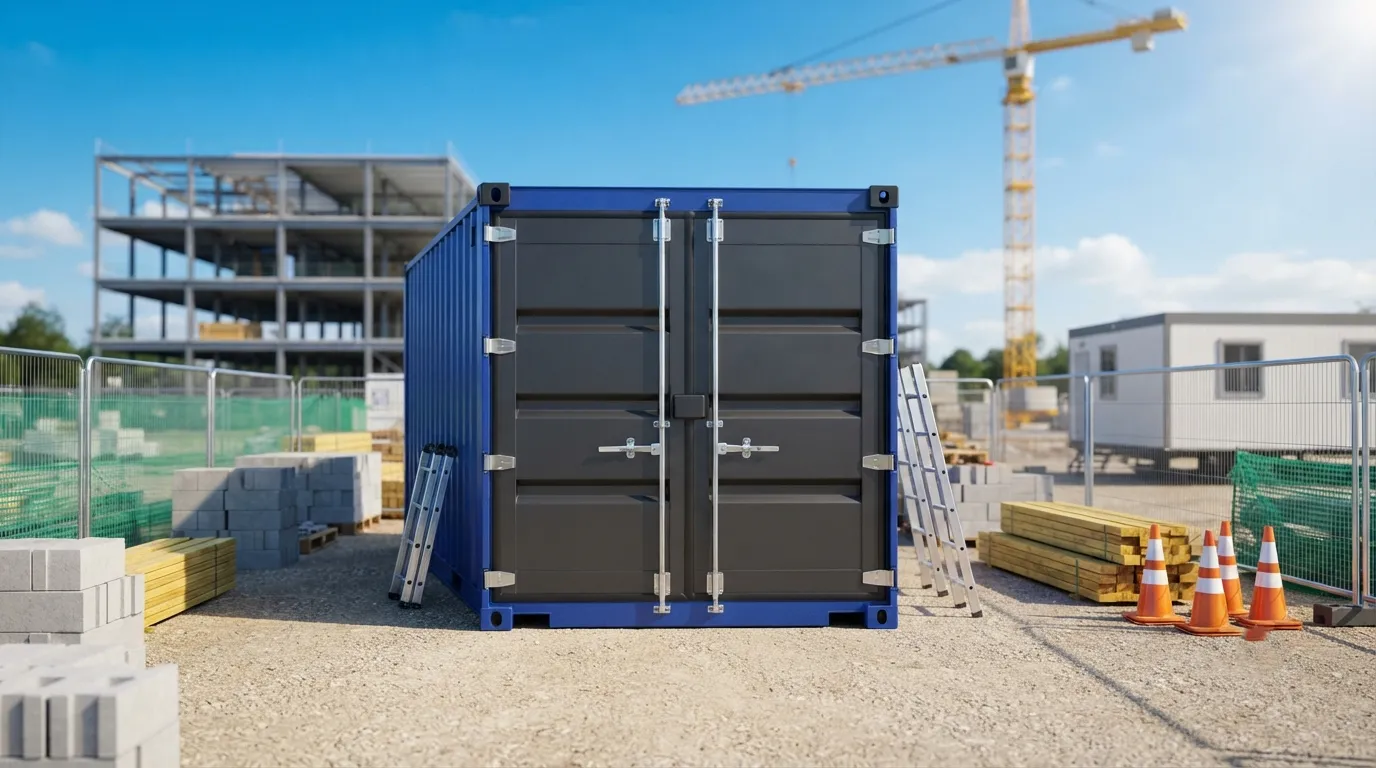
What is a portable storage container?
A portable storage container is a steel shipping container, built to ISO 668 dimensions, delivered on a tilt bed truck and left on the ground where you need it. Corten weathering steel walls, a marine plywood floor, cargo doors at one end, and no power or plumbing of any kind.
That's the whole product. What varies is length, whether the doors are single or double ended, and whether it's a plain box or a modified unit with a personnel door, shelving or refrigeration. A rental storage container stays yours for the term and goes back to the yard at the end, which is the difference between this and a self storage container rental where you drive to a facility and your things live in someone else's building.
Container sizes and dimensions
ISO 668 is the standard that fixes these numbers, which is why a container from any yard in the world measures the same.
| Size | External | Internal floor | Capacity | Tare weight |
|---|---|---|---|---|
| 10ft | 10 by 8 by 8 feet 6 inches | About 75 square feet | Around 560 cubic feet | About 2,900 pounds |
| 20ft | 20 by 8 by 8 feet 6 inches | About 146 square feet | 1,169 cubic feet | 4,850 to 5,100 pounds |
| 40ft | 40 by 8 by 8 feet 6 inches | About 300 square feet | 2,385 cubic feet | About 8,200 pounds |
| 40ft high cube | 40 by 8 by 9 feet 6 inches | About 300 square feet | 2,694 cubic feet | About 8,700 pounds |
Door opening on a standard 20ft is roughly 7 feet 8 inches wide by 7 feet 5 inches high, which decides whether a lift, a scissor or a pallet of tile goes in. Interior height on a standard box is 7 feet 10 inches, and a high cube gives you 8 feet 10 inches. That extra foot is what people rent high cubes for.
What size storage container do I need?
Work backwards from the door, not from the volume.
- 10ft: hand tools, small plant, a retail stockroom overflow. Fits on most Queens and Staten Island driveways.
- 20ft: the default New York jobsite box. Holds the contents of a two bedroom apartment, or a full trade fit-out kit with room to walk in.
- 40ft: long material. Lumber, ductwork, scaffold plank, curtain wall units. It's the same 8 foot width, so the gain is entirely in length.
- 40ft high cube: same footprint, more headroom, worth it for stacked pallets or anything on racking.
Two 20ft boxes usually beat one 40ft in this city. They fit more placements, they let you split tools from materials, and they each need a shorter delivery run. The 20ft storage container and 40ft storage container pages have the full spec sheets. If the load is debris rather than stock, you want a roll-off dumpster instead, sized on the dumpster sizes and dimensions page, with weight limits and what cannot go in a dumpster worth reading first.
Delivery access: what the truck actually needs
This is where most New York bookings fall over, so measure before you call.
A tilt bed truck sets the container down by raising the bed and rolling it off, and it needs a straight run to do it: roughly 60 feet of clearance for a 20ft box and closer to 100 feet for a 40ft. It also needs overhead room while the bed is up, around 14 to 15 feet, so a scaffold, a sidewalk shed, a fire escape or a mature London plane on a Brooklyn side street can kill an otherwise fine placement.
Then there's the route. Commercial vehicles are banned from the FDR Drive, the Belt Parkway and the Henry Hudson Parkway, so a loaded truck runs the NYC DOT truck route network, and in parts of Queens and the Bronx that adds real mileage. Section 385 of the New York State Vehicle and Traffic Law sets the weight and dimension limits those routes are built around. Send us a photo of the approach and we'll tell you honestly whether it works.
Ground conditions and real placements across the five boroughs
Ground first. A loaded 20ft container can pass 30,000 pounds, and that load lands on four corner castings rather than being spread across the floor. Asphalt in July gives. Timber cribbing under the castings solves it for a few dollars.
Realistic New York placements, in the order we see them: a fenced construction lot, a private driveway or side yard, a parking garage forecourt, a loading dock apron, and a permitted curb lane on a full block job. Rooftop and setback placements happen, but they are an engineering question before they are a delivery question and they need a licensed professional signing off the load path and a Department of Buildings filing.
Flood zone matters here more than in most cities. Anything stored below grade or on a low lying Rockaway or Red Hook site should be on dunnage, and a container is not watertight against standing water even though it is weathertight against rain.
Do you need a permit for a storage container in NYC?
On a New York City street or sidewalk, yes. The permit comes from the Department of Transportation through its Bureau of Permit Management and Construction Control at 55 Water Street, borough offices handle approvals, and turnaround runs from about a day to several weeks depending on the borough and the type of work. 311 gives the fastest read on one address.
Behind a construction fence or on private property there's no filing and no wait. That single difference is the biggest swing factor in New York container logistics, which is why perimeter fencing usually goes up first. New York City Building Code Chapter 33, safeguards during construction, governs that perimeter, and an 8 foot construction fence along a public way is the standard requirement. Temporary fence rental covers it and dumpster permit requirements explains the same DOT process for a container on the curb.
Placement legality comes before the permit anyway. The 2010 ADA Standards require a 36 inch minimum clear width on a pedestrian access route in section 403.5.1, and nothing can block a curb ramp, building entrance or emergency path. The placement guide covers what the driver checks on arrival.
How much does a storage container rental cost in New York City?
Published market data puts a storage container rental cost at $100 to $250 a month, with around $125 typical. Prices reviewed July 2026, and these are market ranges rather than a quote. Storage container rental rates for a 10ft or 20ft unit sit toward the bottom of that band and 40ft and specialty units toward the top.
What moves a storage container rental price in this market:
- Borough, and distance from the yard to the placement
- Whether the placement needs a DOT permit and a delivery window
- Term length, since a six month job prices better per month than a three week one
- Whether the site needs cribbing, a night delivery or a traffic agent
- Doors at one end or both, and any modification
The storage container rental cost page breaks the fees out line by line, including delivery, relocation and pickup. Searching storage container rental near me will surface national brokers who quote a national average; the number that matters is the one that accounts for your block.
Security, locks and the lock box
Cargo doors close on four vertical locking bars and two cam handles. That's already stronger than almost any site shed. What people add is a lock box, a welded steel shroud that covers the padlock shackle so bolt cutters can't reach it, and a puck lock rather than a standard padlock.
On an open New York jobsite, put the doors facing a wall or a fence rather than the street. It sounds obvious and it's the single most effective thing you can do. Sites with night activity usually add a light tower at the container end of the yard, which does more for security than the lock does, plus crowd control barriers to keep the public off the working area and chain link fencing around the perimeter. The temporary fence cost page has the numbers for that side.
Ventilation, condensation and the New York summer
Steel boxes sweat. Warm humid air gets in during a July afternoon, the temperature drops overnight, and moisture condenses on the underside of the roof and rains onto whatever's below. New York summers produce exactly the right conditions for it.
Standard containers carry small vents at each end, which handles a normal load. If you're storing paper, textiles, electronics or anything that rusts, add desiccant, keep pallets off the floor, and don't pack to the ceiling so air can move. Refrigerated units solve it properly with active temperature control, and those come up on catering and pharmaceutical jobs rather than construction.
Typical loads, and what else lands on the same order
Containers land on renovation jobs, retail fit-outs, film productions, event builds and post storm recovery work. On a New York site the container usually arrives with the rest of the kit rather than alone.
The common pairing is a container for tools, a mobile office trailer for the site team, a roll-off dumpster for debris, a temporary power pole for the supply, and restrooms. Construction site services bundles the lot, porta potty rental in New York City covers the sanitation, and handwashing station rental covers the sinks that go with it.
Event and film work is the other half. Film set restroom rental and festival restroom rental both usually include a container for staging at places like Randalls Island or Flushing Meadows Corona Park. The same goes for concert restroom rental near Citi Field, marathon restroom rental on a race course and event restroom rental generally, where a restroom trailer and a container arrive on the same load-in. Post storm recovery work runs through disaster relief sanitation.
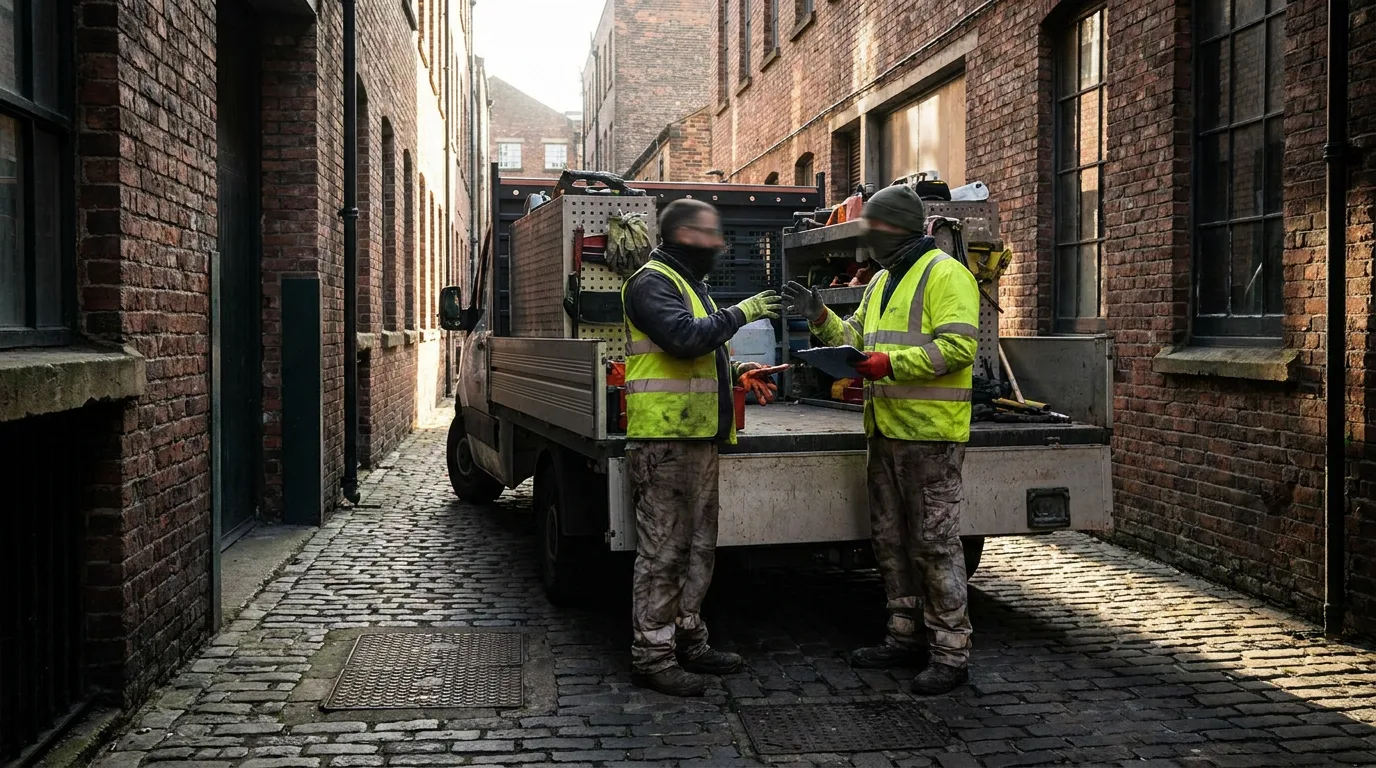
Questions people ask about storage container rental
How long is the minimum rental? A month. Anything shorter and the delivery run costs more than the box, so we'd rather tell you that up front than dress it up as a special rate.
Can you move it once it's on site? Yes, a relocation is a separate truck visit and it's billed as one. Plan the placement properly the first time and you save it.
Is it waterproof? Weathertight, not waterproof. Rain is fine, standing flood water is not. Get it on dunnage in a low lying spot.
Can I get a container and a restroom on one invoice? Yes, most jobsites do. See what porta potty rental costs, monthly rates for long terms and standard porta potty rental for the units.
Do you deliver outside the boroughs? Yes, including Jersey City, Newark, Hoboken, Hempstead and Elizabeth. The service areas page has the full list.
How fast can you deliver? Next business day for a private property placement in all five boroughs. Street placements move at the speed of the DOT permit. Urgent work goes through emergency porta potty rental for sanitation and a phone call for everything else.
Send the address, the size and the term through the quote form, or call the number on the contact page. The FAQ answers the common ones, the about page explains how we work, and everything we run is on the home page.
Next step
Get a delivery date
Tell us the address, the dates and the headcount. We size the order and confirm the route.