
What does it cost to rent a porta potty in New York City?
A porta potty is a self-contained portable toilet with a sealed holding tank under the seat, delivered by truck and pumped out on a service schedule. Manufacturer specs put the tank on a standard unit at 60 to 70 gallons, and that number is what decides how often yours has to be serviced. The five-borough ranges below are typical market prices, not a quote. Prices reviewed July 2026.
| Unit type | Per day | Weekend | Per week | Per month |
|---|---|---|---|---|
| Standard | $125 to $350 | $175 to $300 | $175 to $500 | $150 to $350 |
| Deluxe, flushing | $175 to $400 | $250 to $400 | $200 to $450 | $250 to $500 |
| ADA accessible | $200 to $400 | $225 to $350 | $250 to $500 | $275 to $550 |
| 2 stall trailer | $500 to $1,200 | $1,000 to $2,500 | $1,300 to $2,000 | quote only |
| 4 stall trailer | $700 to $1,600 | $1,400 to $3,000 | $1,800 to $2,800 | quote only |
| 8 stall trailer | $1,100 to $2,400 | $2,200 to $4,000 | $2,600 to $4,200 | quote only |
Manhattan below 96th Street sits at the top of every band on that table. Outer-borough placements with off-street access sit at the bottom. That gap is wider in this city than in any other US market, and it has almost nothing to do with the unit. Full breakdowns by duration live on the daily rental page and the monthly rental page.
Porta potty rental prices by unit type
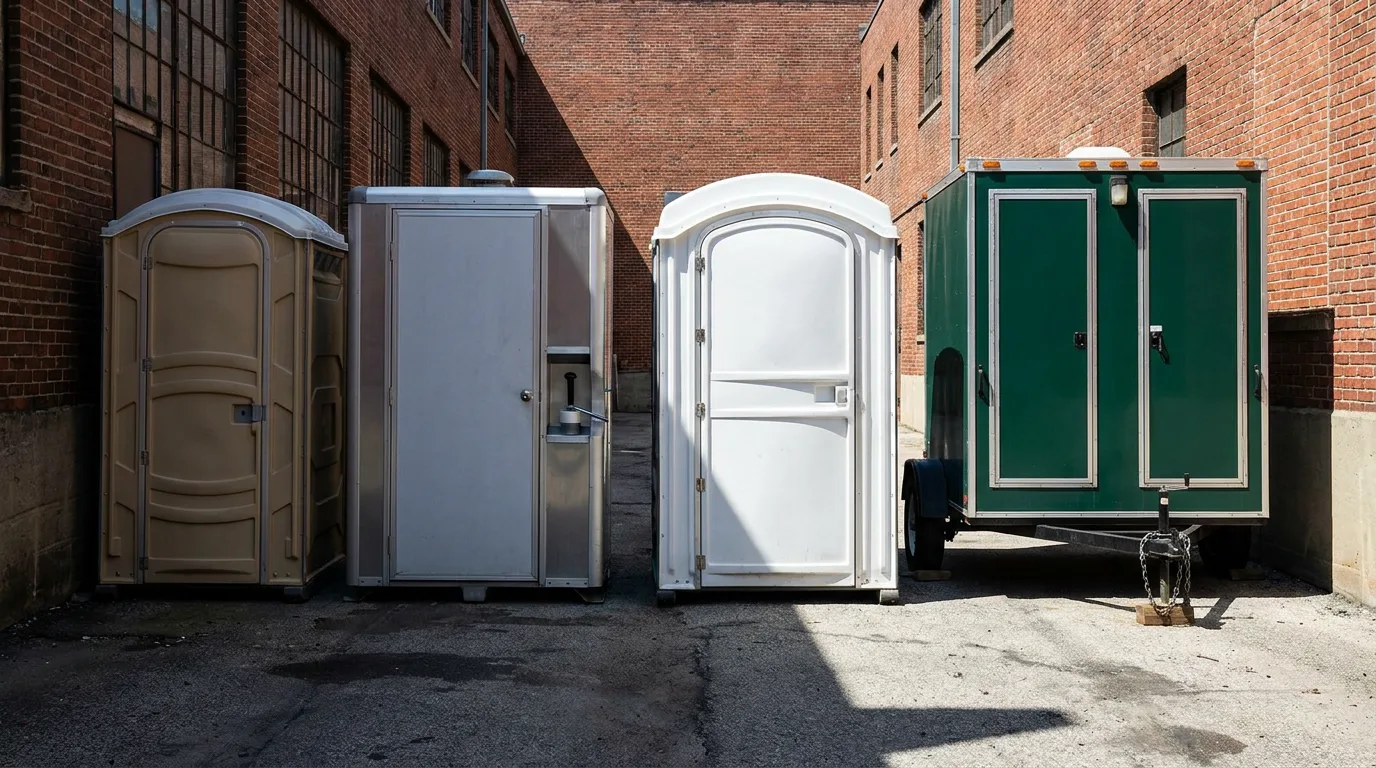
Four things get rented here under four different names, and the price gap between them is real.
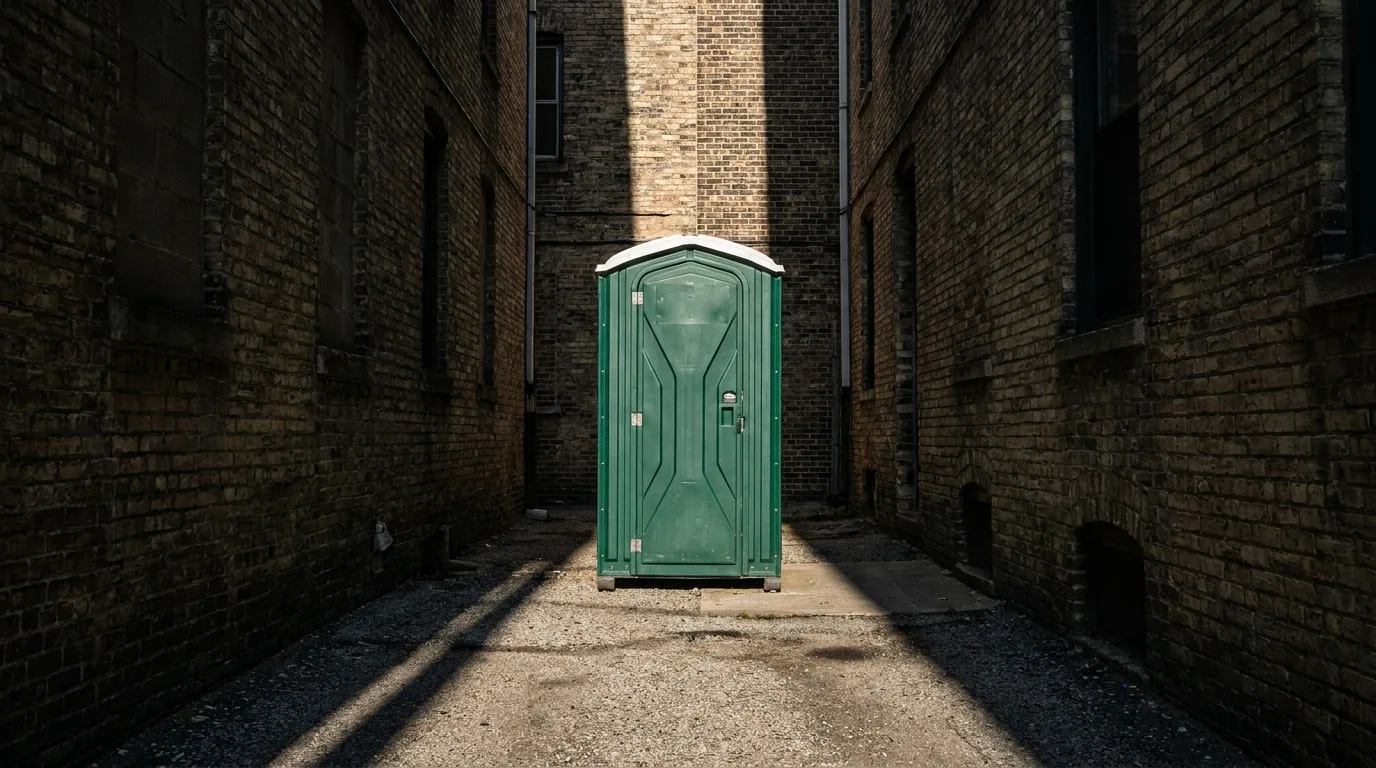
- Standard porta potty rental. The blue unit everyone pictures. Roughly 44 inches wide by 48 inches deep and 90 inches tall per manufacturer spec, about 150 to 200 pounds empty. $175 to $300 a weekend. Same product whether the listing says porta john rental, portable toilet rental or portable restroom rental.
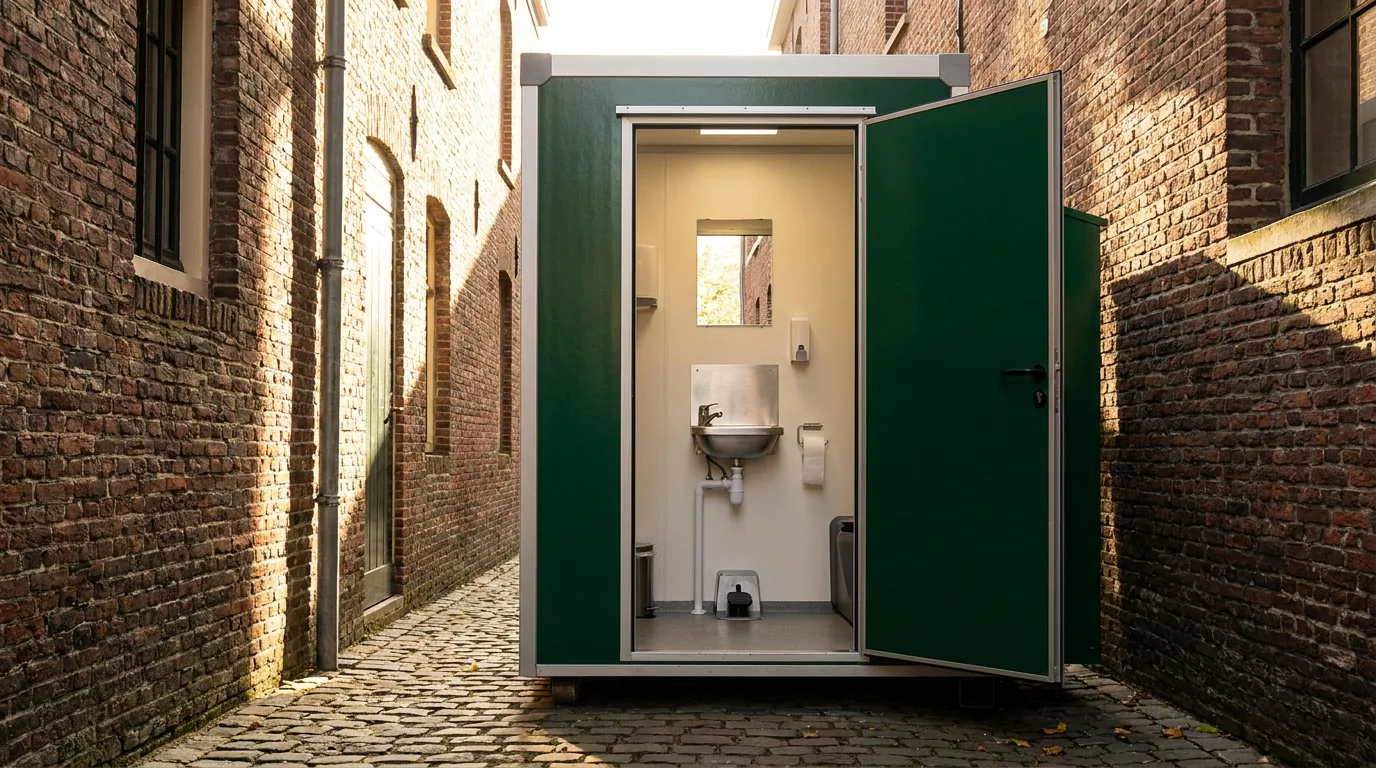
- Deluxe flushable. Foot-pump flush, a hand sink inside, a bigger fresh water reservoir. $250 to $400 a weekend. Worth it for anything a guest will use.
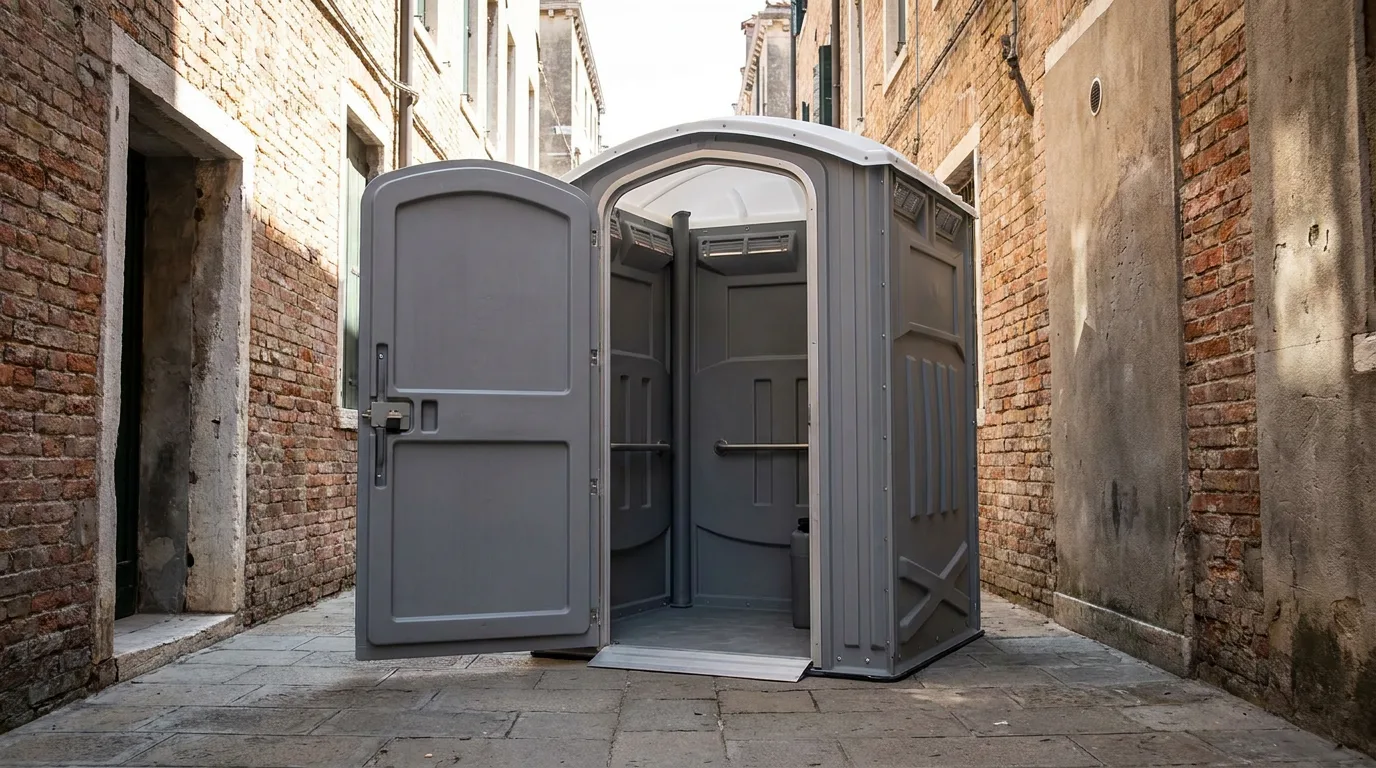
- ADA accessible. Ground-level entry and a wider footprint so a wheelchair can turn inside. The 2010 ADA Standards call for a 60 inch diameter turning space in section 304.3.1, which is why these units are close to five feet square. Budget 30 to 50 percent above a standard unit. The ADA restroom requirements guide covers how many you need.
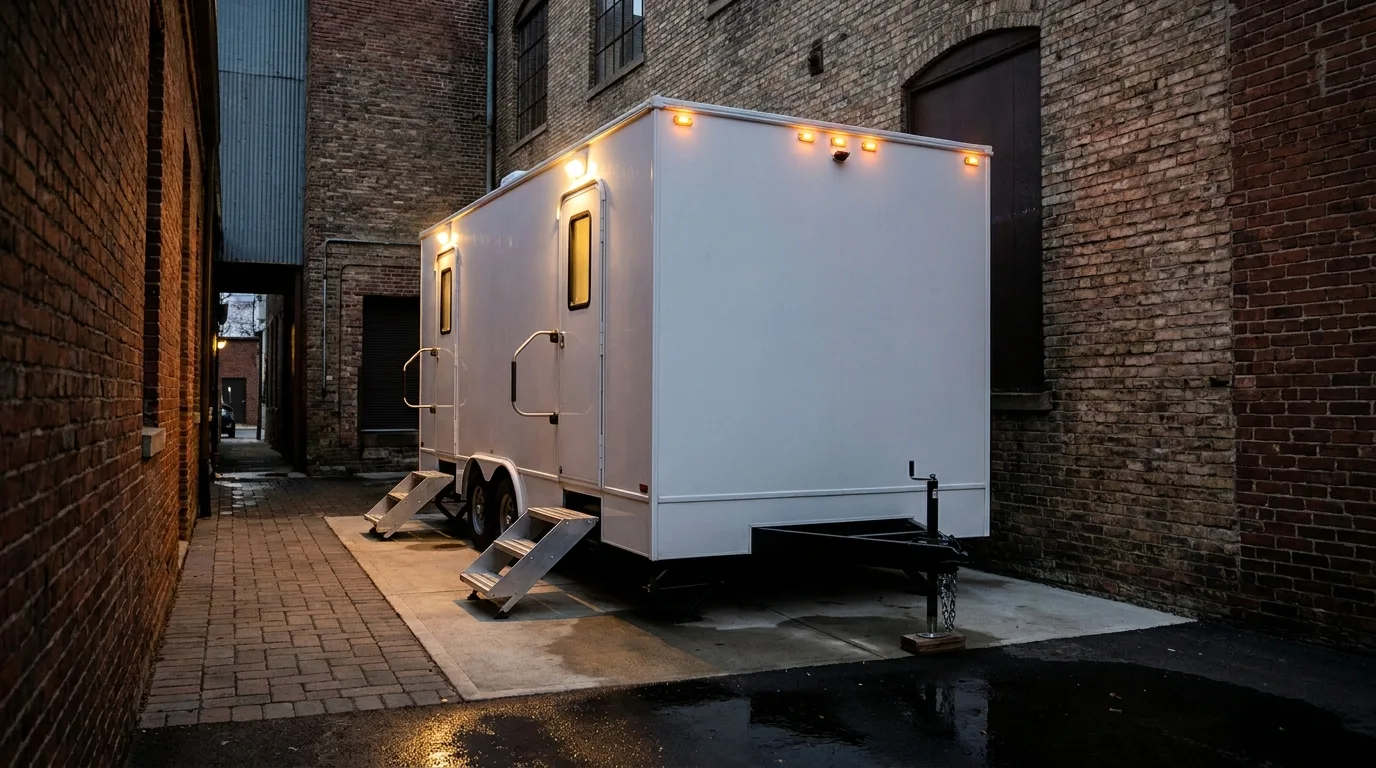
- Restroom trailers. Towable, climate controlled, flushing, with running water. Priced by stall count, not by day. See restroom trailer rental cost for the full picture, or the luxury trailer page if the job is a wedding.
What is included, and what is billed separately
Every honest quote in this market breaks these out. Get them named as separate lines before you compare two numbers, because in New York delivery alone can be a third of a weekend rental.
| Line item | Typical NYC range | Notes |
|---|---|---|
| Delivery | $75 to $200 | Manhattan and any restricted-hours placement sits at the top |
| Weekly service | $40 to $75 | Pump out, restock paper, sanitise, deodorise |
| Pickup | usually bundled | Ask whether it is a separate line before you sign |
| Extra service visit | $75 to $125 | Common on film sets and high-traffic placements |
| Additional standard unit | $125 to $250 per month | Cheaper per unit once the truck is already there |
| Handwash station | $75 to $150 per event | Or $50 to $110 a month on a jobsite |
| Hand sanitizer stand | $25 to $60 | Per unit, per rental period |
| Permit filing time | varies | The DOT permit itself is a city charge, see below |
ANSI/PSAI Z4.3 sets weekly servicing as the floor for a unit in normal use, so a quote that does not name a service frequency is not a complete quote. If you want the detail, how often porta potties get cleaned walks through what a service visit actually involves.
Why portable restrooms rental cost is structurally higher in New York
Three things drive it, and none of them is the plastic.
Access. A truck that pulls into a driveway does the job in four minutes. A truck double-parked on a Manhattan side street with a traffic agent walking toward it is a different operation entirely, and it gets priced that way. The placement guide covers what a driver needs to see before delivery day.
Restricted hours. Plenty of blocks and buildings only take deliveries inside a set window. A placement that has to happen between 6am and 8am costs more than one that can happen any time Tuesday.
Service frequency. High-traffic placements on film sets and street events often need servicing two or three times a week. That is not a surcharge. It is a genuinely different service level, and it is the single biggest reason two quotes for the same unit come back $200 apart. OSHA 1926.51(c)(2) adds a second step for crews over 20, calling for one toilet seat and one urinal per 40 workers, and a second unit almost always costs less than the argument about the first one.
How much does a porta john rental cost per month on a jobsite?
Monthly is by far the cheapest rate per day. Budget $150 to $350 a month for a standard unit with weekly service, plus a one-time delivery charge of $75 to $200. Past roughly ten days on site, stop asking for weekly porta john rental prices and ask for the monthly number instead.
OSHA 1926.51(c)(1) requires one toilet per 20 workers on a construction site working a 40-hour week, and the ratio steps up above 20 workers. It counts people on site, not companies, so a job running four trades counts every one of them. OSHA 1926.51(f)(1) separately requires washing facilities where workers handle harmful substances, which is why a portable sink shows up on most real jobsite quotes. Non-construction work falls under OSHA 1910.141(c)(1)(i) instead, which starts at one toilet for 1 to 15 employees. Mobile crews get an exception under OSHA 1926.51(c)(3) if there are usable facilities nearby, which in Manhattan is rarely as simple as it sounds.
On a constrained New York site, hitting that ratio is usually a placement problem rather than a budget problem. If there is room for one unit and the crew needs two, the fix is a second unit somewhere workable plus more frequent servicing, not one over-used unit. Run the numbers on how many porta potties you need or read the OSHA portable toilet requirements in full. Bundled site packages sit on the construction site services page, and most of those jobs also want a roll-off dumpster and temporary fencing on the same delivery.
What does it cost to rent a portable toilet for an event or a film shoot?
Single-unit event rentals in the five boroughs typically run $250 to $900, and the spread is about access and duration rather than the unit. New York carries two demand patterns most cities do not: a heavy film and television production calendar that books at very short notice, and a street fair season that concentrates demand into a handful of weekends.
For venue work, the venue sets placement before you do. Citi Field, Yankee Stadium, Flushing Meadows Corona Park, Prospect Park and Randalls Island each have their own service vehicle access rules and their own lead times, and none of them match. Ask the venue first, then call us.
Sizing rule of thumb for planning: one unit per 50 guests for a four hour event, plus 15 to 20 percent if alcohol is served. Where units are clustered at one location, the 2010 ADA Standards section 213.2 exception 4 sets 5 percent of the cluster as the accessible share, so a bank of 20 units needs at least one ADA unit in it. Marathon and race events run on entirely different ratios because usage concentrates hard at the start corral. Specific event types are broken out on the event restroom, wedding, festival, concert and county fair pages.
The DOT permit, and why the timeline matters more than the fee
A unit going on a New York City street or sidewalk needs a permit from the Department of Transportation. Approvals run through borough offices, and turnaround ranges from about a day to several weeks depending on the borough and the type of work. The NYC DOT Bureau of Permit Management and Construction Control at 55 Water Street handles this, and 311 is the fastest route to a straight answer on your specific block.
That range is the most important planning fact on this page. A Manhattan placement tied to a street closure is not the same lead time as a Staten Island driveway job, and a schedule that treats them as interchangeable will break.
Placement is decided by pedestrian clearance before anything else. A unit must never block a curb ramp, a building entrance, an emergency path or a work-zone route. The 2010 ADA Standards require a minimum 36 inch clear width on a pedestrian access route in section 403.5.1, and a standard unit is 44 inches wide, so a narrow Manhattan sidewalk often simply cannot take one legally no matter who signs off. Those are hard constraints, not preferences.
If your unit sits entirely on private property, none of the permit process applies. Sequence that works: confirm the placement is legal, start the DOT permit, then book the unit. The permit requirements page has the full walkthrough, and dumpster permits follow a separate track if you need both.
What makes the price to rent a porta potty go up or down?
Six things move a quote in this market, roughly in order of how much they move it:
- Where the unit goes. Public right of way versus private property. This is the biggest single
variable in New York and it is not close.
- Borough and cross street. Manhattan below 96th costs more than the Bronx, which costs more
than eastern Queens. Drive time and parking are the whole story.
- Service frequency. Weekly is baseline. Twice weekly on a busy site adds $40 to $75 per extra
visit.
- Duration. A month at $250 works out near $8 a day. A weekend at $250 is $125 a day. Longer is
always cheaper per day.
- Unit type. Deluxe and ADA units cost more to buy, more to haul and more to service.
- Season. May through October is street fair and event season across all five boroughs, and
weekend availability tightens. Winter placements have their own issues and their own costs.
Three real New York City jobs, priced
A Saturday wedding in Brooklyn, 130 guests, six hours. A two-stall trailer plus one ADA unit on private property. Roughly $1,300 to $2,600 for the weekend including delivery, setup and pickup. Trailers need a 110-volt 20-amp circuit and a garden hose connection per manufacturer spec, with fresh water tanks typically 100 to 300 gallons, so confirm power and water before you book anything. Details on the wedding restroom page.
An eight-month renovation in Queens, four to six trades, off-street placement. One standard unit on weekly service, no DOT permit because it never touches the sidewalk. Around $175 to $300 a month plus delivery, so roughly $1,600 to $2,800 across the whole job. A 20 yard dumpster usually lands on the same site, and home renovation jobs often only need one unit the entire time.
A one-day street fair in Manhattan, about 2,000 attendees. Around 40 standard units plus four ADA, two handwash stations and crowd control barrier on the perimeter. Here the DOT permit, the borough office timeline and the pedestrian clearance rules drive everything. Start the permit weeks before you think you need to.
Is a restroom trailer worth the extra over port o potties for rent?
For a jobsite, almost never. For a wedding or a client-facing event, usually yes. A restroom trailer is a towable unit with flushing toilets, running water, lighting and climate control, and it replaces roughly four to eight standard units depending on stall count. Waste tanks typically run 200 to 500 gallons per manufacturer spec, which is why a trailer can go a full weekend without a service visit while four standard units cannot.
The honest comparison: four standard units for a weekend runs $700 to $1,200. A four-stall trailer runs $1,400 to $3,000. You are paying roughly double for something guests will actually walk into without complaining. If the event has a dress code, rent the trailer. If it has hard hats, rent the port o johns. Shower trailers are a separate line again, mostly for film units and disaster work.
What a fair quote includes
A usable quote names the unit type, the service count, delivery and pickup as separate lines, the exact placement address with cross streets, and whether a DOT permit is required. In this city a quote that never mentions the permit question is incomplete, and it usually means whoever wrote it has not worked here.
Should not be extra: a standard delivery in normal hours where access is clear, the first weekly service visit, paper and basic supplies, and the deodoriser charge. ANSI/PSAI Z4.3 treats stocked paper and a sanitised interior as part of a service visit, not as an upsell, so a quote that itemises toilet paper is telling you something about the operator.
Reasonably extra: restricted-window deliveries, walked-in placements where the truck cannot get close, weekend or overnight collection, extra service visits, and anything needing a lift or a crane. Our own quote form asks for all of it up front so the number you get back is the number you pay.
Questions people ask about porta potty rental prices
How much is it to rent a portable toilet for one day in NYC? $125 to $350 for a standard unit. One-day rentals cost the most per day because delivery and pickup are the same work whatever the duration, and in this city that work is the expensive part.
Can I rent a portable toilet near me the same day? Same-day and next-day are realistic for private property placements in all five boroughs. Anything needing a DOT permit moves at the permit's pace, not ours. See emergency porta potty rental.
Do I need a DOT permit? Only if the unit goes on a street or sidewalk. On private property, no. If you do need one, start early: borough turnaround runs from about a day to several weeks.
Why is Manhattan more expensive than Queens? Access, delivery windows and permit complexity. The unit is identical. Everything around getting it there and servicing it is not.
Can a unit go on the sidewalk outside my building? Only with a DOT permit, and only if it clears the pedestrian path, curb ramps, entrances and emergency routes. Many narrow sidewalks cannot take one legally.
Is a month cheaper than a week? Per day, substantially. Past roughly ten days, ask for monthly pricing rather than extending a weekly rental.
Will it smell? Not if it is serviced on schedule. Do porta potties smell explains what actually causes it and how the deodoriser charge works.
Do you serve outside the five boroughs? Yes. Jersey City, Hoboken, Newark and Hempstead are all inside our normal range. The full list is on the service areas page.
Getting a real number for your address
These are honest market ranges, but they are still ranges, and in New York the spread inside them is wide enough to matter. A real quote needs the address, the borough, the dates, expected usage, and whether the placement is private property or public right of way.
What are typical porta potty rental costs?
Portable toilet rental cost in New York City moves with unit type, term and service frequency.
Is there one price for portable toilet rental?
No. Portable toilet rental costs change with delivery distance and how long you keep it.
Call and we will price the actual job, or start from the New York City rental page if you want the service detail before the number. Everything else we run, from septic pumping and storage containers to light towers, is listed on the home page. If you would rather ask a person, the contact page has the direct line and the FAQ covers the rest.
Next step
Get a delivery date
Tell us the address, the dates and the headcount. We size the order and confirm the route.