
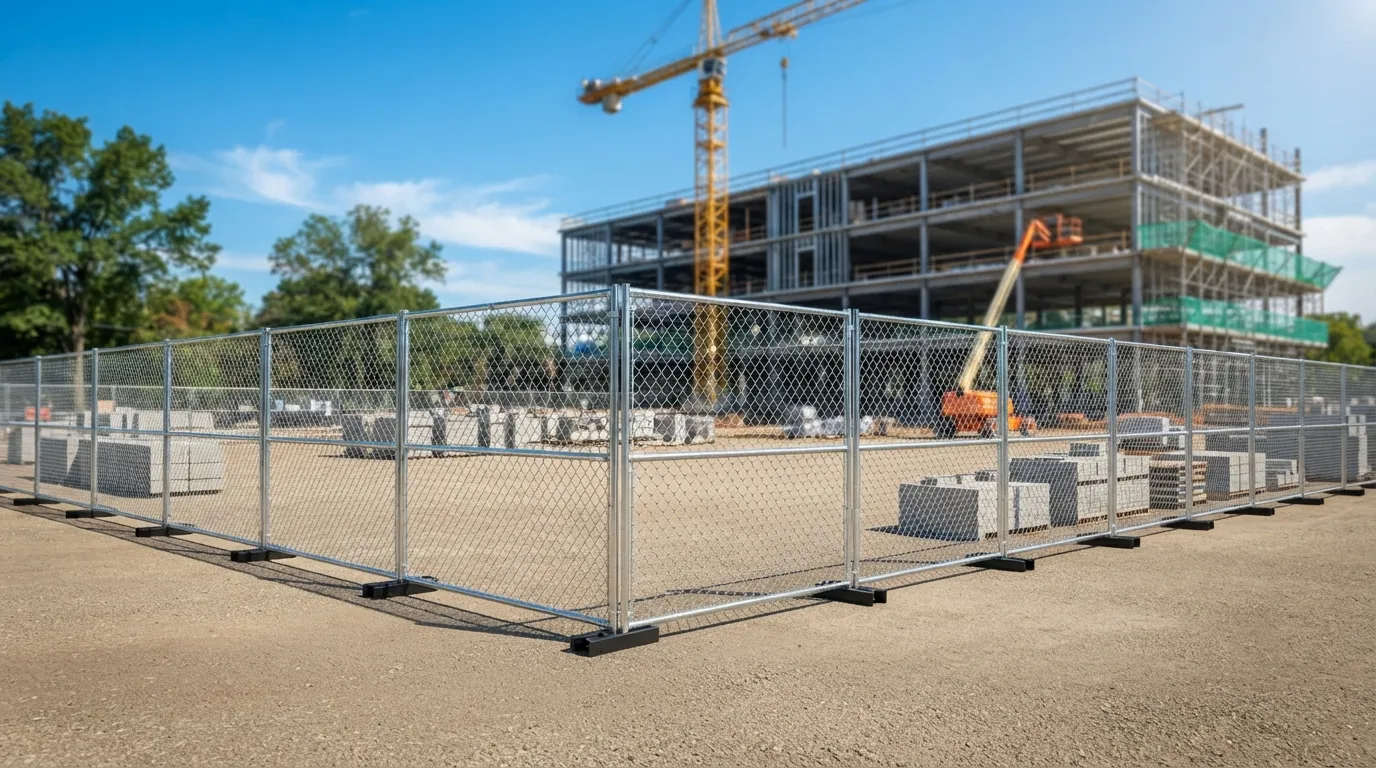
How much does temporary fence rental cost in New York City?
The bands below are typical published market figures reviewed July 2026, not a quote. Installation and removal are separate lines, and on a short job they are the larger half of the invoice.
| Job type | How it is normally priced | Typical published band |
|---|---|---|
| Event or film, days | Per day, install and strike included | $30 to $75 per day |
| Construction, months | Monthly, per linear foot of run | Quoted per job |
| Residential turnover | Monthly, short run | Quoted per job |
| Emergency or storm closure | Per callout plus term | Quoted per job |
Temporary fence panels price out on run length rather than area, so the number you need before calling is the perimeter in feet and the number of gates. A standard panel covers 12 feet, so 300 feet is about 25 panels plus corners and gates.
What moves a temporary fence rental price here?
Seven things, in the order they actually change the invoice on a New York job:
- Run length and gate count. Gates need bracing and hinges, so each one costs more than the panels it replaces.
- Height. New York City Building Code Chapter 33 sets an 8 foot construction fence along a public way, against 6 feet in most of the country.
- Screen. Privacy mesh turns a 6 by 12 panel into a 72 square foot sail and the ballast has to answer for it.
- Whether the line sits on a permitted sidewalk or entirely on private property.
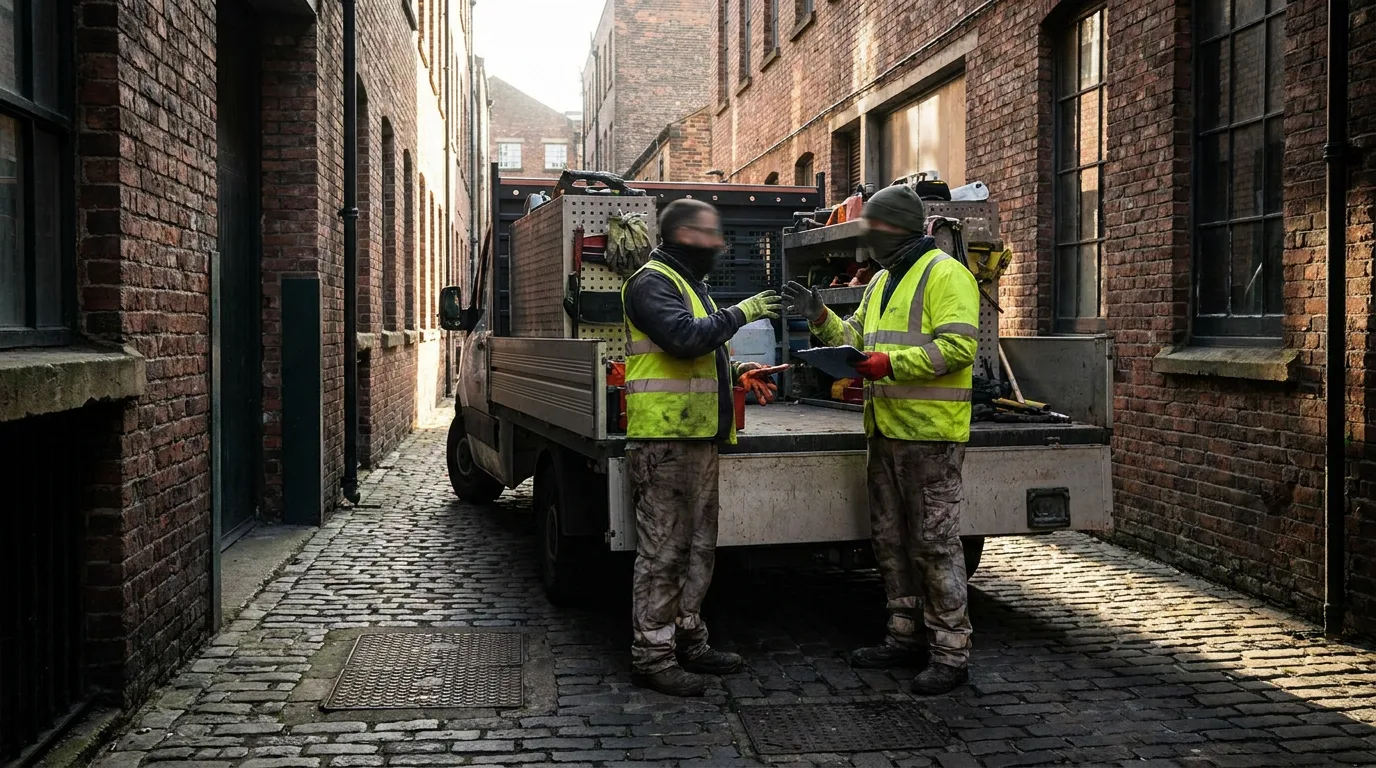
- Access. Panels carried through a building because the truck cannot reach the frontage is a real labour line in Manhattan.
- Term, since installation and removal happen once each regardless of length.
- Install window. A night or weekend install on a live retail, school or hospital site costs more than a Tuesday morning.
Searching temporary fence rental cost near me returns national averages that assume a 6 foot fence on an open lot with truck access at the line. Almost no New York job looks like that.
Fee lines that sit outside the rental rate
| Line | What it covers |
|---|---|
| Installation | Crew, truck, setting panels, bases, clamps and bracing |
| Removal | The same in reverse, plus loading out |
| Gates | Hinged panel sets, bracing, hardware |
| Screen | Material plus the extra ballast it requires |
| Relocation | Moving the line mid job, a second full crew visit |
| Damage or replacement | Panels bent by a vehicle, bases cracked, screen torn |
| DOT permit | Street or sidewalk occupancy, filed with the city |
Naming these before you compare two quotes is the whole exercise. The same 400 foot run gets quoted two completely different ways depending on whether install and strike are inside the rate or outside it, and the cheaper looking number is often the one that hides them.
Does the 8 foot New York height cost more?
Yes, and by more than the extra 2 feet suggests. An 8 foot panel is heavier to handle, catches more wind, needs more ballast per linear foot, and takes longer to brace, so both the material line and the labour line move.
New York City Building Code Chapter 33, safeguards during construction, is the reason. Budget against that height rather than against a national quote. Where the work involves a tall building over an occupied sidewalk, Chapter 33 pushes you past a fence entirely and into sidewalk shed territory, which is a filed structure with its own cost and its own timeline. Temporary fence rental explains where that line falls, and chain link temporary fence has the panel specs.
Screen, and why it changes the price
Privacy screen looks like a material add and behaves like a structural one.
Bare chain link is mostly holes, so wind passes through. Screened panel is a solid face, and in a city where wind funnels between Midtown towers and comes off the water at Red Hook and the Rockaways, that face needs answering with heavier ballast, closer base spacing and bracing back into the site. On exposed or rooftop work it needs an engineered ballast design. The screen itself is cheap. What holds it up is not, and any quote that adds screen without adding ballast is quoting a fence that will not survive a nor'easter.
Do you pay more for a sidewalk placement?
Usually, though the permit fee is rarely the headline. The Department of Transportation issues street and sidewalk permits through its Bureau of Permit Management and Construction Control at 55 Water Street, borough offices approve them, and turnaround runs from about a day to several weeks depending on the borough and the type of work. 311 gives the fastest read on one address.
What the permit brings with it is the cost: a fixed work window, a route that avoids the FDR Drive, the Belt Parkway and the Henry Hudson Parkway where commercial vehicles are banned, and often a night install. Placement legality comes first regardless, since the 2010 ADA Standards require a 36 inch minimum clear pedestrian route in section 403.5.1 and the line cannot block a curb ramp, a hydrant or a building entrance. A private property line skips the lot of it.
Three real New York fence jobs, priced
A Bed-Stuy brownstone gut, 60 feet of frontage, four months. Five 12 foot panels plus a pedestrian gate, on private property inside the property line, no permit. Small enough that install and removal dominate the cost rather than the rental. Jobs like this usually add a home renovation porta potty inside the line and a 10 yard dumpster, priced on the dumpster rental cost page.
A Long Island City lot, 480 feet, printed screen, eleven months. Forty panels at 8 feet with a double vehicle gate, screened, with ballast specified for the screen load. Long term, so the monthly rate is the number that matters and install cost spreads thin. Sites this size run a mobile office trailer, a 20ft storage container or a 40ft container, a temporary power pole and full construction site services.
A one day street festival in Queens, 900 feet of line, 4am install. Priced as a day job in the $30 to $75 per day band, with the crew size and the overnight window driving the real number. This kind of work usually runs crowd control barriers on the public side and chain link on the back of house, plus festival restroom rental and handwashing station rental for the food vendors.
Charges that should never appear
- A vague site fee with no definition attached
- A fuel surcharge nobody mentioned at booking
- Bracing billed as an extra when it is basic installation practice
- Screen added to the invoice without the ballast it requires
- Damage charges for panels that went back the way they arrived
If a line cannot be explained in one sentence, push on it. Damage after a vehicle strike is a legitimate charge and so is a relocation you asked for. Neither should be a surprise.
What a fair fence quote includes
The rental period, the run length in feet, the panel height, the number and type of gates, installation, removal, and who files the DOT permit if the line touches public right of way. It should also say what happens if the permit approval slips, because in this city it sometimes does.
What it should not include is a rate quoted for a site nobody has looked at. Send the frontage dimensions and a photo of the line.
Questions people ask about temporary fence prices
Is a temporary fence panels rental cost cheaper by the month? Per day, much cheaper, because install and removal are fixed and they spread. A month is the minimum on construction work for exactly that reason.
Can I buy panels instead? For a run you'll reuse for years, buying makes sense. For one job it does not, since storage, transport and the labour to set them are the actual cost.
Do you repair a line that gets hit? Yes, and quickly. A gap in a New York construction fence is a compliance problem the same day it happens.
Can I get fence, restrooms and a container on one invoice? Yes, and most sites do. See porta potty rental in New York City, what porta potty rental costs, storage container rental with its own cost page, and a light tower for evening work.
Do you work outside the boroughs? Yes, including Jersey City, Newark, Hoboken and Hempstead, where open lots make long runs cheaper to install than anything in Manhattan. The service areas page lists everywhere.
Send the perimeter, the gate positions and the dates through the quote form and you'll get a real number rather than a range. The contact page has the direct line, the FAQ answers the common ones, the about page explains how we work, and everything is on the home page.
Next step
Get a delivery date
Tell us the address, the dates and the headcount. We size the order and confirm the route.