
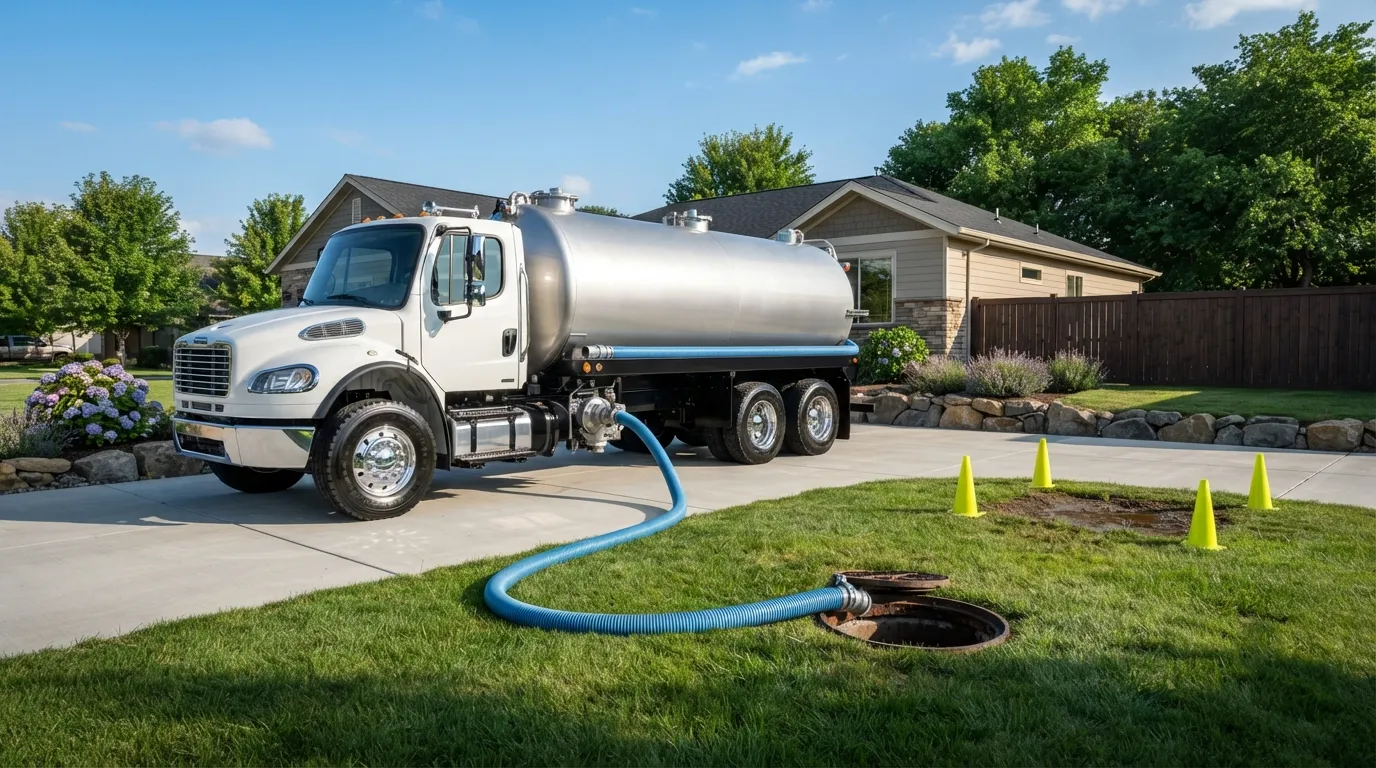
What counts as a septic emergency?
Three things, and a fourth if the property is commercial.
- Sewage coming back up into a fixture indoors. Toilet, shower tray, basement floor drain. This
is untreated waste inside a living space and it does not wait.
- Effluent surfacing over the drain field. Standing water or wet ground in dry weather, often
with odour. Keep people and pets off it.
- An alarm sounding on a pump tank or ejector pit. The alarm exists because the next stage is a
flood.
- A commercial kitchen or restroom out of service. Not dangerous, but it closes a business, so we
treat it as urgent.
What is not an emergency: one slow fixture, a faint smell outside on a warm day, or grass that looks greener over the field. Those need a scheduled visit, not an after-hours premium. The warning signs page sorts the two properly.
Is it your septic system or the New York City sewer?
Ask this first, because in this city the odds strongly favour the sewer. DEP maintains roughly 7,400 miles of sewer main feeding 14 wastewater resource recovery facilities, and the overwhelming majority of five borough addresses are connected to it. Private onsite systems survive mainly on Staten Island's South Shore, where sewer build-out came late and lots are large.
- Sewered property, backing up. Call 311 and report a sewer backup so DEP can check the main. There is no tank for us to pump.
- Private septic system. No city crew is coming. The tank, the field and the pump belong to you.
- Several neighbours affected at once. That is a main, not your system.
- Not sure. Look for a lid or riser in the yard and ask whether anyone has ever pumped a tank at the address.
Getting that question right saves more wasted call-outs here than anywhere else in the country, and it takes about two minutes.
How fast can a truck actually get to you?
Honestly, it depends on the borough and the time of day, and anyone promising a fixed number for all five is guessing.
Commercial vehicles are banned from New York City parkways, so a tanker heading for the South Shore runs the Staten Island Expressway and the West Shore Expressway rather than the Belt or the Grand Central, and through travel has to stay on the NYC DOT designated truck route network. A Staten Island call and a Bronx call are genuinely different journeys, not two slots on the same clock. Add kerb space to that. Alternate side rules, hydrant zones, bus lanes and loading restrictions all remove places a tanker can legally stop.
What we will commit to: a straight answer on the phone about when a truck can be there, before you book anything. If the honest answer is four hours, you will hear four hours.
What to do while you wait
Six things, in order. The first one matters more than the other five combined.
- Stop using water. No flushing, no laundry, no dishwasher. Nobody likes this instruction and it
is the only thing you control.
- Turn off any water-using appliance on a timer, including ice makers and softener regeneration.
- Keep people and pets away from any surfacing effluent, which is untreated.
- If sewage is indoors, ventilate and stay out of the affected rooms.
- Clear access to the tank lid so the crew is not searching for it in the dark.
- Photograph what you can see. It helps with the diagnosis and with any insurance claim.
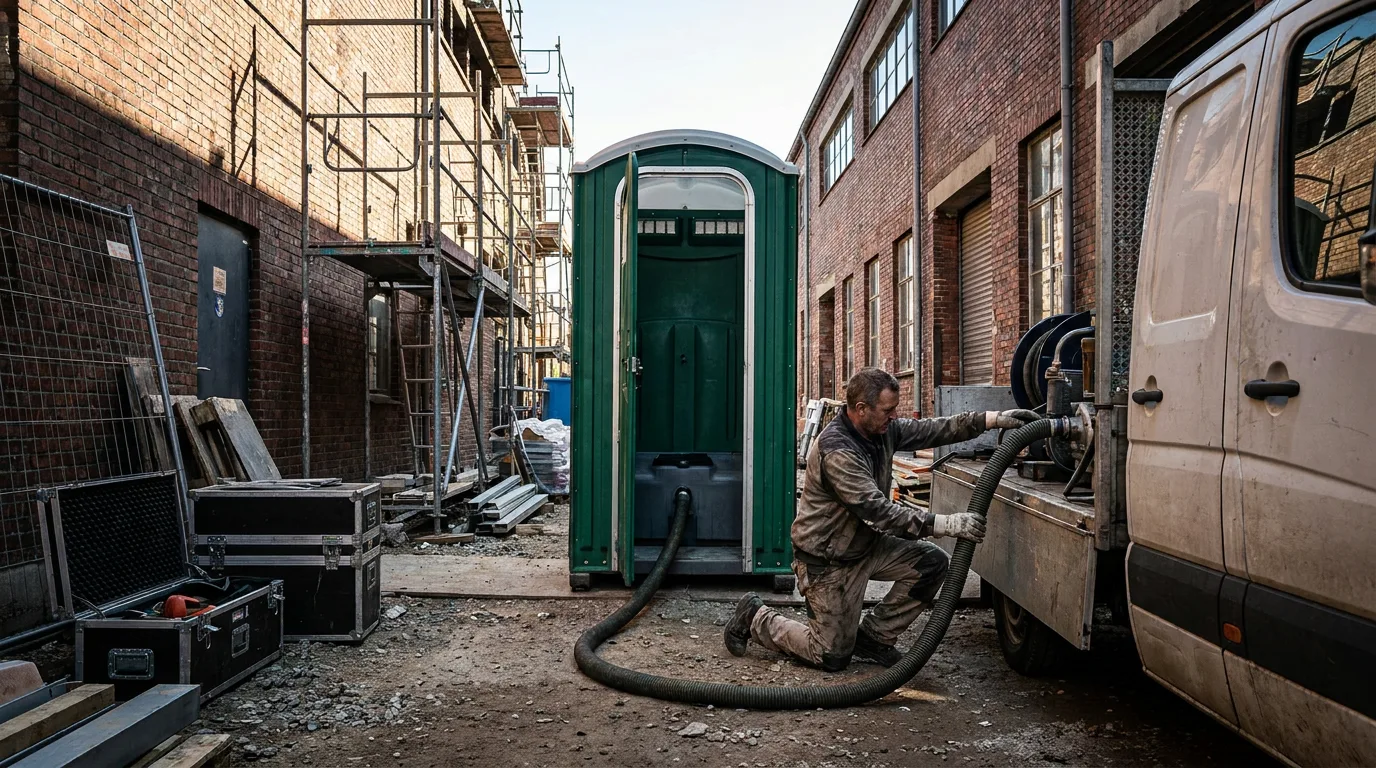
If the house is going to be unusable for a day or more, a unit in the driveway beats moving out. That is what emergency porta potty rental is for, and a deluxe flushable unit with a handwash station is the usual pairing for a family.
Storm, flood and high groundwater
This is the New York version of a septic emergency, and it behaves differently from a normal backup.
Low-lying South Shore properties can have tanks and drain fields sitting in saturated ground after a serious coastal event. Pumping a tank into a flooded field accomplishes very little, because the soil has nowhere to put the water either, and an empty tank in high groundwater can float. The right sequence is to stop using water, wait for the water table to drop, then pump and inspect.
We work storm response and broader disaster relief sanitation jobs on that basis, usually with holding tanks and portable units bridging the gap while the ground drains. For properties that need something standing for weeks, a monthly rental is far cheaper than repeat short-term hires.
Power failures, pump tanks and ejector pits
Not every system is gravity fed. Where a tank sits below the drain field, or where fixtures sit below the sewer line in a basement, a pump moves the waste, and a pump with no power is a countdown rather than a fault.
If the alarm goes off, treat it as the emergency it is announcing. Stop water use immediately, since the tank is now filling with no way to empty itself. A pump-out buys time while the electrical fault gets found. Anything to do with the pump, the float switch or the panel is an electrician or a licensed installer, not a vacuum truck, and we will say so rather than sell you a second visit.
What does emergency septic pumping cost?
A standard pump-out sits in the $150 to $300 market band. Same-day, overnight and weekend work is priced above it, because it means pulling a truck off a planned route and paying a crew outside hours. Prices reviewed July 2026. These are typical market ranges rather than a quote.
Three things move an emergency job the most: a lid that has to be excavated in the dark, a truck that cannot get within about 150 feet of the tank, and a tank that turns out to need a full clean rather than a quick pump. All three get named before the work starts. The septic tank pumping cost page has the full breakdown, and the cleaning page lists what a complete visit includes.
If the work needs the street or sidewalk beyond ordinary standing, a New York City Department of Transportation permit applies, handled through borough offices by the Bureau of Permit Management and Construction Control at 55 Water Street, with turnaround from about a day to several weeks depending on the borough and the type of work. Call 311 for your block. That timeline is exactly why an emergency on private property is a very different job from one in the right of way, and why the permit requirements page is worth reading before you need it.
Can a pump-out fix it on the day?
Sometimes, and we will tell you honestly which it is.
What an emergency pump-out does fix: a full tank, a blocked effluent filter, a scum crust choking the outlet, and enough of a backup to get the house usable again the same evening.
What it does not fix: a drain field that has stopped accepting water. Solids carried out of an overfull tank clog the soil, and a field that has been blinded off does not recover. Replacement is permitted work under New York State Department of Health Appendix 75-A of 10 NYCRR through a licensed installer. A pump-out will get you through the week while that gets arranged, and anyone telling you it will fix the field is selling you something.
Staying out of it
The US EPA recommends inspecting a septic system at least every 3 years and pumping every 3 to 5, and almost every emergency call we take is on a tank well past that. Keep wipes out, because DEP's Trash It, Don't Flush It campaign names them alongside paper towels and grease as the main causes of clogs and they behave identically in a tank. Fit a riser so nobody is digging at 9pm. Ask for the sludge and scum measurements in writing at every visit. The pumping frequency guide builds it into a schedule, and grease interceptors run on their own much shorter clock.
Call it in
Do you run a 24 hour septic pumping service?
Yes. Emergency septic pumping service in New York City is dispatched by nearest truck, not by ticket order.
Is emergency septic tank pumping service near me the same thing?
Same call. The words change, the truck does not.
How often should a tank be pumped?
Every 3 to 5 years under US EPA SepticSmart, sooner on a 750 gallon tank with a full house.
Who permits septic work locally?
The county Health Department. Haulers are licensed separately and manifests are checked.
What triggers a pump out?
Sludge at about one third of tank depth. On a 750 gallon tank that arrives faster than people expect.
How much does the truck carry?
Vacuum tankers commonly run 2,500 to 4,000 gallon capacity, so one trip usually clears a domestic tank.
Where does the waste go?
A permitted treatment works, under the disposal ordinance that governs the hauler's licence.
Tell us the borough, the cross streets, what you are seeing and where a truck can stop. That is enough to triage it and give you a real time. Use the contact page for the direct line or the quote form if it can wait until morning. Scheduled work is on the septic pumping service page. We cover all five boroughs plus Jersey City, Bayonne and Hempstead, with the full list on the service areas page, everything else we run on the home page, pricing on the cost page and common questions on the FAQ.
Next step
Get a delivery date
Tell us the address, the dates and the headcount. We size the order and confirm the route.