
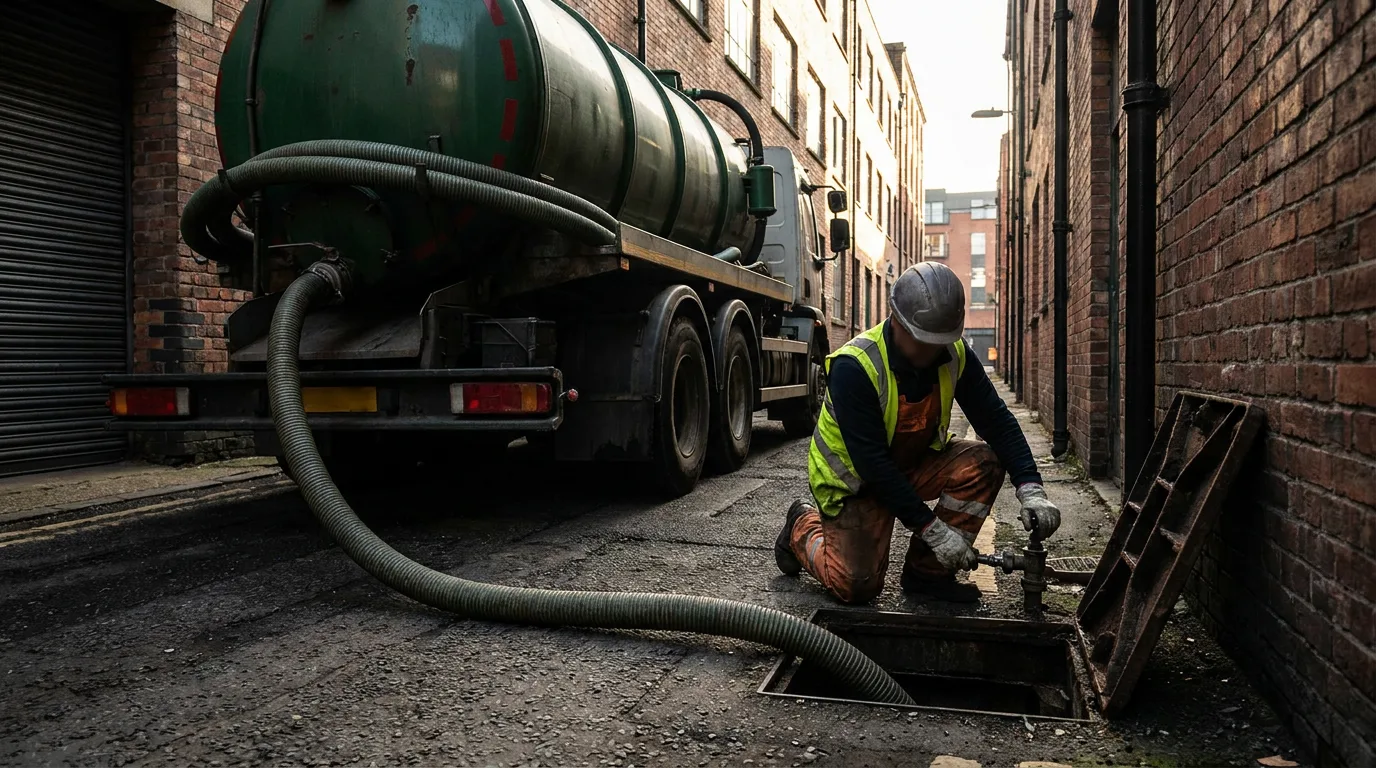
How often does a septic tank need pumping?
The US EPA recommends that a typical household septic system be inspected at least every 3 years and pumped every 3 to 5 years. That is the baseline, and it holds for most single family homes on a conventional tank and drain field.
The interval exists because a septic tank is a settling chamber, not a storage tank. Solids sink and form sludge, fats and paper float and form scum, and the clear middle layer flows out to the drain field. Once the sludge and scum take up too much of the volume, the middle layer gets thin and solids start leaving with it. That is the failure the schedule prevents, and it is the drain field that pays for it, not the tank.
Pumping frequency by tank size and household
New York State Department of Health Appendix 75-A of 10 NYCRR sets minimum residential tank volumes at 1,000 gallons for a one to three bedroom house, 1,250 gallons for four bedrooms and 1,500 gallons for five, so tank size and household size usually move together. When they do not, the smaller number wins.
| Tank size | 2 people | 4 people | 6 people |
|---|---|---|---|
| 750 gallon | about every 4 years | roughly every 2 years | annually |
| 1,000 gallon | about every 5 years | about every 3 years | about every 2 years |
| 1,250 gallon | about every 6 years | about every 4 years | roughly every 2 to 3 years |
| 1,500 gallon | about every 7 years | about every 5 years | about every 3 years |
| 2,000 gallon | about every 9 years | about every 6 years | about every 4 years |
Those are planning intervals built on the EPA's 3 to 5 year guidance scaled by volume and occupancy. They are not a substitute for measuring the tank, which the septic tank cleaning page explains how to do.
What shortens the interval?
Five things, in rough order of how much they matter.
- A garbage disposal. The EPA notes that disposals can raise the solids load reaching a tank by up to 50 percent. Daily use takes about a year off.
- Water volume. EPA WaterSense puts average indoor use near 70 gallons per person per day. A household well above that pushes liquid through before it has settled.
- Wipes and paper towels. New York City DEP's Trash It, Don't Flush It campaign names wipes, paper towels and grease as the leading causes of clogs, and none of the three break down in a tank.
- Cooking grease down the sink. In a home it thickens the scum layer. In a commercial kitchen it needs an interceptor, which is covered on the grease trap pumping page.
- A tank at the Appendix 75-A minimum. A 1,000 gallon tank has the least headroom of any size in common use, and it is what most Staten Island properties have.
A renovation is the hidden one. A house with a crew in it for six months puts a load on the tank that nobody planned for, which is why most home renovation jobs put a unit in the driveway rather than sending trades through the bathroom. The same logic runs across construction site services, where OSHA 1926.51(c)(1) requires one toilet per 20 workers on a 40-hour site and the sizing calculator does the arithmetic.
What stretches the interval
Fewer people, no disposal, low water use, and a tank sized above the minimum for the house. Long vacancies help as well, though a seasonally used property should still be inspected on the normal 3 year clock, because baffles and filters fail on their own timetable whether anyone is flushing or not.
Water softener backwash is the one people argue about. If yours discharges into the tank, ask about it rather than assuming it is neutral, because the salt slug arrives all at once and disturbs settling while it passes through.
How do you know when a tank is actually due?
Measure it. The EPA's SepticSmart guidance gives two thresholds, and either one means service now: the scum layer sitting within 6 inches of the outlet baffle, or the sludge layer within 12 inches of it. A sludge judge or a stick with a rag wrapped on the end will show you both.
If nobody handed you a service record when you bought the house, treat the tank as due. That is common in New York City, where private systems are unusual enough that paperwork rarely survives a sale. A first visit that measures the layers and writes them down gives you a real baseline, and every visit after that is scheduled rather than guessed.
Symptoms are the late signal, not the schedule. Slow drains across the whole house, gurgling in the lowest fixture, sewage odour near the lid, or unusually green grass over the field all mean you are already past due. The septic tank warning signs page sorts the urgent ones from the ones that can wait.
Does a New York City address change the schedule?
The biology does not change. The logistics do.
Almost every private onsite system left in the five boroughs is on Staten Island, where the South Shore was sewered late and lots are big enough to hold a tank and a field. DEP's network runs roughly 7,400 miles of sewer main into 14 wastewater resource recovery facilities, so most of the city is connected and never thinks about any of this.
Two local factors do move the calendar. High groundwater on low-lying South Shore properties means a tank can sit partly submerged after a serious coastal storm, and a pump-out into a saturated field achieves nothing until the water table drops, so those jobs get scheduled around the weather. And winter matters, because a buried lid under frozen ground turns a two hour visit into a longer one. Booking a fall service rather than a February one is the cheapest scheduling decision available. The same seasonal problem shows up on winter porta potty placements and in disaster relief sanitation work after a storm.
If the truck has to occupy the street or sidewalk beyond ordinary standing, that becomes a New York City Department of Transportation permit, handled through borough offices by the Bureau of Permit Management and Construction Control at 55 Water Street, with turnaround from about a day to several weeks depending on the borough and the type of work. Call 311 for your block. The permit requirements page and the placement guide cover the same ground from the delivery side.
How often should a holding tank or commercial tank be emptied?
A sealed holding tank has no outlet, so everything that goes into it has to come out, and the interval is set by volume and usage rather than by a 3 to 5 year clock. Some get emptied weekly. Sizing and scheduling sit on the holding tank rental page.
Commercial septic systems serving a restaurant, a shop or a busy site run far shorter intervals than a house does, and they usually pair with a grease interceptor on its own separate schedule. Portable units are different again: ANSI/PSAI Z4.3 sets weekly servicing as the floor for a standard porta potty in normal use, and how often porta potties get cleaned explains what each of those visits involves.
What happens if you skip a cycle?
Usually nothing, once. Then the sludge cake keeps building, the clear layer keeps thinning, and solids start reaching the drain field. Soil that has been blinded off by solids does not recover, and replacing a field is permitted work under Appendix 75-A through a licensed installer, which is a very different number from a pump-out.
That is the whole economic case for the schedule. A visit typically costs $150 to $300, which is covered in detail on the septic tank pumping cost page. A field is orders of magnitude more, and no amount of pumping brings one back.
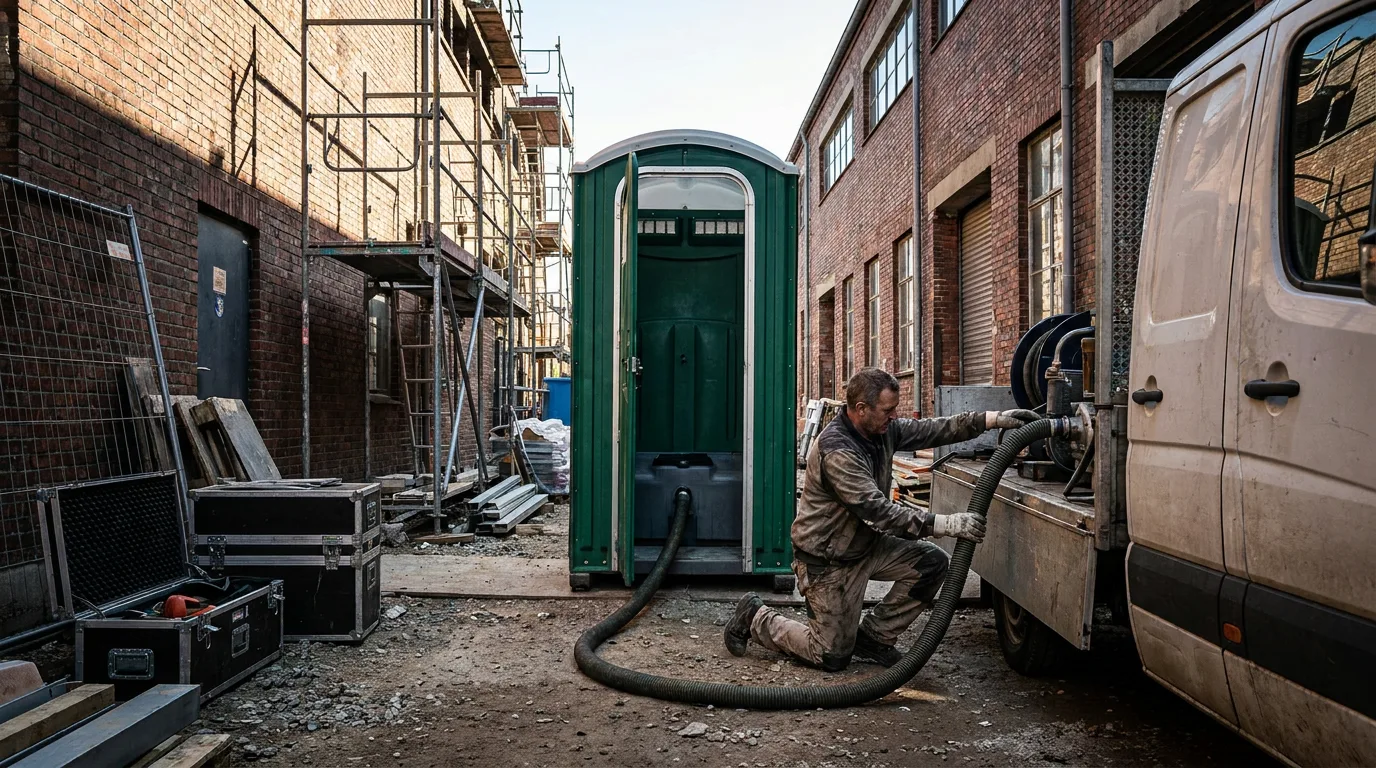
Setting a schedule you will keep
Pick a month and stay in it. Fall is the practical choice in New York City, because the ground is open, the storm season is behind you and the trucks are not competing with a summer route.
Fit a riser at the first visit so the lid never has to be excavated again. Ask for the sludge and scum measurements in writing each time, because two visits of data tell you your real interval better than any table can. And book the next one before the truck leaves.
How often septic tank cleaning is needed?
Same interval as pumping. Septic tank cleaning frequency follows sludge depth, not the calendar.
Call us to get on a schedule, use the quote form, or read the septic pumping service page for how the visit works. If something is happening right now, go to emergency septic service. Everything else we run across the boroughs, from portable toilets and restroom trailers to roll-off dumpsters and temporary fencing, is on the home page, with coverage listed on the service areas page and the common questions on the FAQ.
Next step
Get a delivery date
Tell us the address, the dates and the headcount. We size the order and confirm the route.