
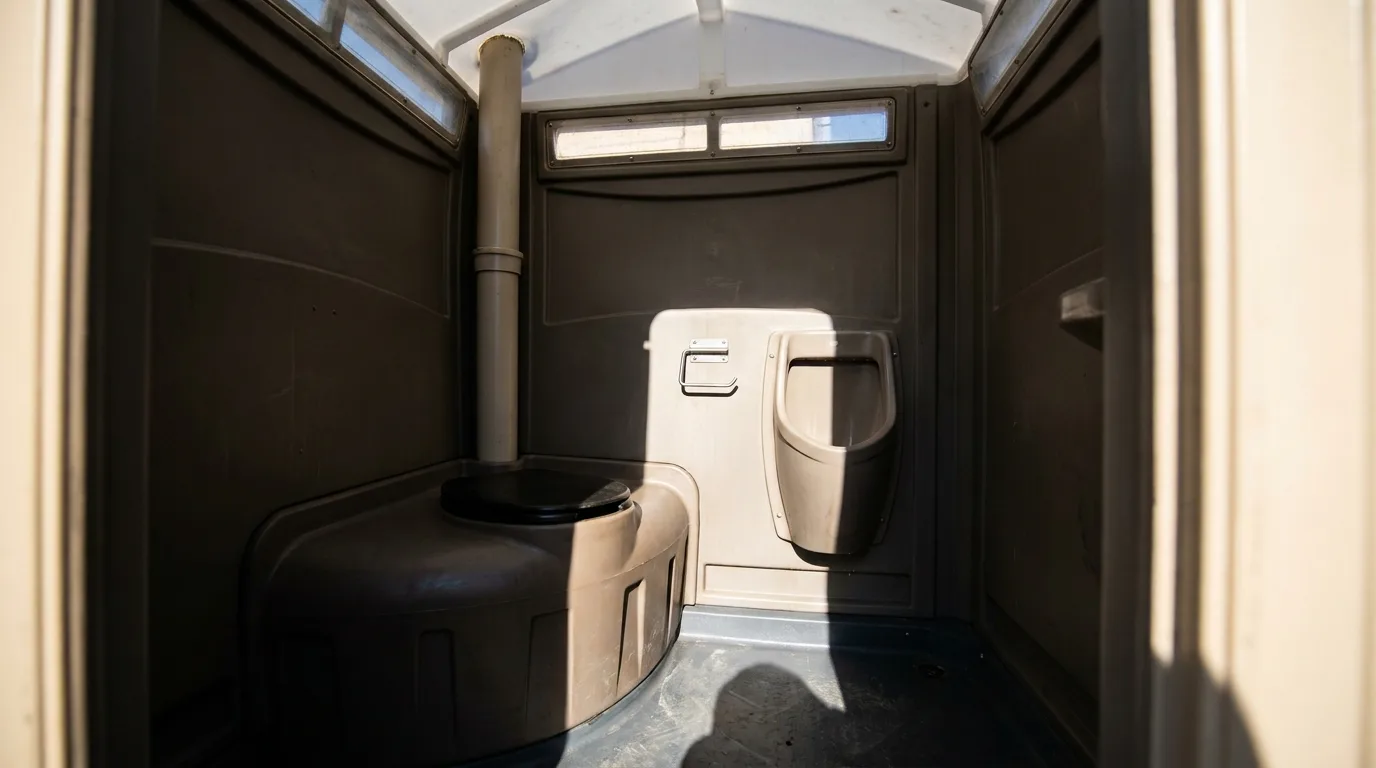
Do porta potties smell?
Under normal use and weekly servicing, no. What people remember is a unit at a summer festival on its third day without a truck, holding several hundred uses, in 90 degree heat. That unit smells. A standard unit on a Queens jobsite with eight men on it, pumped every Thursday, does not.
The difference is measurable rather than a matter of opinion. A standard portable toilet carries a 60 to 70 gallon holding tank depending on the model. At roughly 10 users a day the tank reaches its working capacity in about a week, which is exactly why the ANSI/PSAI Z4.3 service interval is what it is. Odour is what a full tank sounds like.
What actually causes the smell?
Two gases, produced by two different reactions, and they smell different from each other.
Ammonia comes from urea in urine breaking down under the enzyme urease, which happens fast and gets faster in heat. That is the sharp, eye-watering smell. Hydrogen sulfide comes from sulfate-reducing bacteria working in an oxygen-starved tank, and that is the rotten-egg smell that turns up when a tank has sat too long.
Blue deodorizer is designed against both. Modern formulations combine a biocide to slow bacterial activity, a surfactant to break down solids, a dye, and a fragrance. The dye is not decoration. It is a load indicator, because when the blue is gone the chemistry is spent, whatever the calendar says.
Why do porta potties smell worse in a New York summer?
Because both reactions are temperature-driven, and this city runs hot and airless in July. National Weather Service climate normals for Central Park put the average July high near 85 degrees, and a unit standing on black asphalt in direct sun runs considerably hotter than the air around it.
Density makes it worse in a way that is specific to New York. A unit on a sidewalk in the West Village sits within a few feet of a restaurant door, an apartment stoop and a stream of pedestrians. The same unit in a suburban driveway is 40 feet from anything. Nothing about the unit changed. The audience did.
That is why placement on a New York job gets treated as an odour decision rather than only a logistics one. Away from building entrances, away from air intakes and restaurant vents, and where the prevailing summer breeze carries away from the door rather than into a window. The placement guide works through the clearances that a New York sidewalk allows.
Six things that stop a unit smelling
| Cause of odour | What fixes it |
|---|---|
| Tank over capacity between visits | More units, or twice weekly service |
| Vent stack blocked | Clear the stack, check it every visit |
| Not enough fresh water in the recharge | 3 to 5 gallons at every service, not a splash |
| Unit sitting out of level | Reset it on a firm, level pad |
| Sun on a dark unit all afternoon | Shade, or a lighter unit, or move it |
| Deodorizer spent early in heat | Higher dose or a mid-week top up in July |
The vent stack is the one nobody checks. Every standard unit has a vertical pipe running the full height of the cabin, and with manufacturer specifications putting a standard unit at about 90 to 92 inches tall, that is roughly seven and a half feet of draw pulling warm air up and out. A plastic bag over the top, or a unit crammed under a sidewalk shed with no headroom, and the gases come out through the seat instead. How that airflow is meant to work is covered on how porta potties work.
None of this is optional on a jobsite. OSHA 1926.51(c) requires toilet facilities on a construction site to be maintained in a sanitary condition, so a unit that smells because it has been left is a compliance problem before it is a comfort one. The OSHA requirements guide sets out what an inspector actually looks at.
Does the type of unit make a difference?
A lot, and it is usually the cheapest fix available.
- A standard unit relies entirely on deodorizer and the vent. Fine for a jobsite, honest about what it is.
- A flushable deluxe unit has a foot pump and a separate freshwater supply, so the bowl gets rinsed after every use and solids stay covered. Noticeably better on a long event day.
- A restroom trailer has real flushing toilets, a sink with running water and a vented waste tank, and it does not smell like a portable toilet at all. That is the answer for a wedding or a client-facing event.
- An accessible unit has more interior volume than a standard, because the ADA Standards for Accessible Design require a 60 inch turning space at 304.3.1. More air in the cabin works in its favour, though the same service rules apply.
For sites where the smell complaint is really a hygiene complaint, adding a handwash station or a freshwater sink changes how the whole setup reads to people walking past.
What should I do if a unit on my job starts to smell?
Call for a service before it becomes a 311 call from a neighbour. In this city a portable toilet on a public sidewalk is visible to thousands of people a day, and complaints travel fast on a residential block.
Then look at three things. Whether the unit is over-subscribed, which the sizing guide will tell you in about a minute. Whether the service interval matches the traffic, covered on how often units get cleaned. And whether the unit is in the wrong place, which on a New York frontage it very often is, because the only legal spot under the Department of Transportation permit was also the sunniest one.
Anything genuinely urgent goes through emergency porta potty service. A unit that has been leaking rather than smelling is a different problem and needs a swap, not a pump.
Does the permit or the placement change any of this?
The permit does not change the chemistry, but it does constrain your options, and that is worth planning around. A unit on a New York City street or sidewalk needs a permit from the Department of Transportation, handled through borough offices by the Bureau of Permit Management and Construction Control at 55 Water Street, with turnaround from about a day to several weeks. Call 311 for guidance on a block.
Because the approved footprint is often the only one available, the levers left to you are service frequency and unit choice rather than location. That is the honest position on a Manhattan frontage. On a park job at Flushing Meadows Corona Park or Randalls Island there is usually far more room, and setting the bank 30 feet back from a footpath solves most of it before service ever comes into it. The permit requirements page covers which approvals apply where.
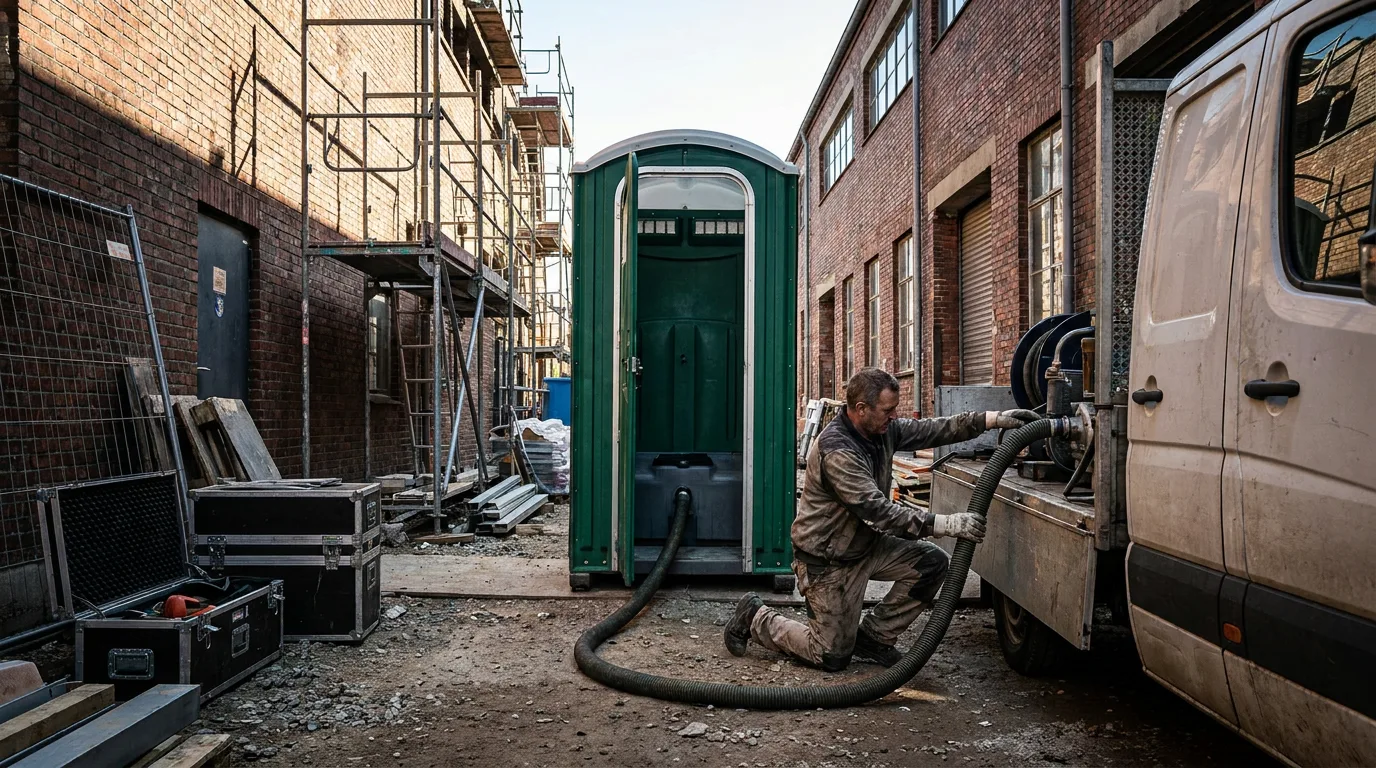
Keeping it clean through a New York summer
Book the service interval for August rather than for April. Add a unit instead of squeezing another week out of the one you have. Ask for the deodorizer dose to go up in July and come back down in October, and check the vent stack yourself once in a while.
Pricing sits on the rental cost page, with monthly hire for builds and day rates for short jobs. Cold weather brings the opposite set of problems, which the winter guide explains, and OSHA's condition requirements are on the OSHA requirements page. Coverage across the boroughs is on the service areas page, the overview at porta potty rental in New York City, and questions on the FAQ or through the quote form.
Next step
Get a delivery date
Tell us the address, the dates and the headcount. We size the order and confirm the route.