
What do I need before I call?
Have these ready and a quote takes one phone call instead of four:
- The exact address, plus the nearest cross streets. In this city the block matters more than the neighbourhood.
- Start and end dates. Approximate is fine, but say so.
- Crew size or expected attendance, and the hours. Hours drive the count on events as much as headcount does.
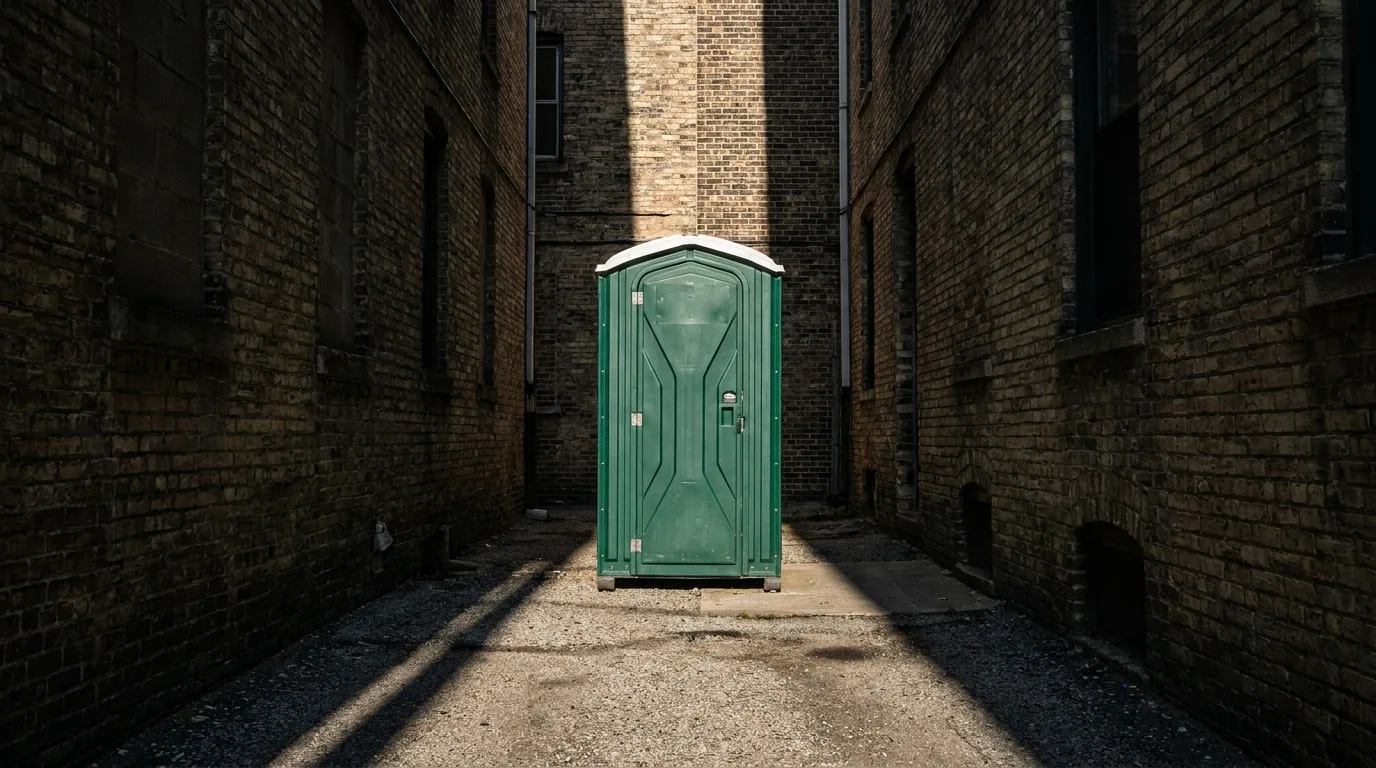
- A photo of where the unit will stand. One picture answers most of what we would otherwise ask.
- The surface. Concrete, asphalt, compacted stone, turf, deck, roof.
- Whether it sits on private property or on the sidewalk. That single answer decides the permit.
- Who needs a certificate of insurance. Building owner, managing agent, general contractor, venue.
That last one is the New York specific item. Managing agents and venues here routinely need to be named on a certificate before anything is delivered, and chasing it after the fact is what delays real jobs.
How many units should I be asking for?
Work it out before you call, then let us sanity check it. OSHA 1926.51(c)(1) requires one toilet facility on a construction site with 20 or fewer workers, one toilet seat and one urinal per 40 workers above that, and one per 50 once the site carries 200 or more. Most New York sites run above the minimum because walking time costs more than the unit does.
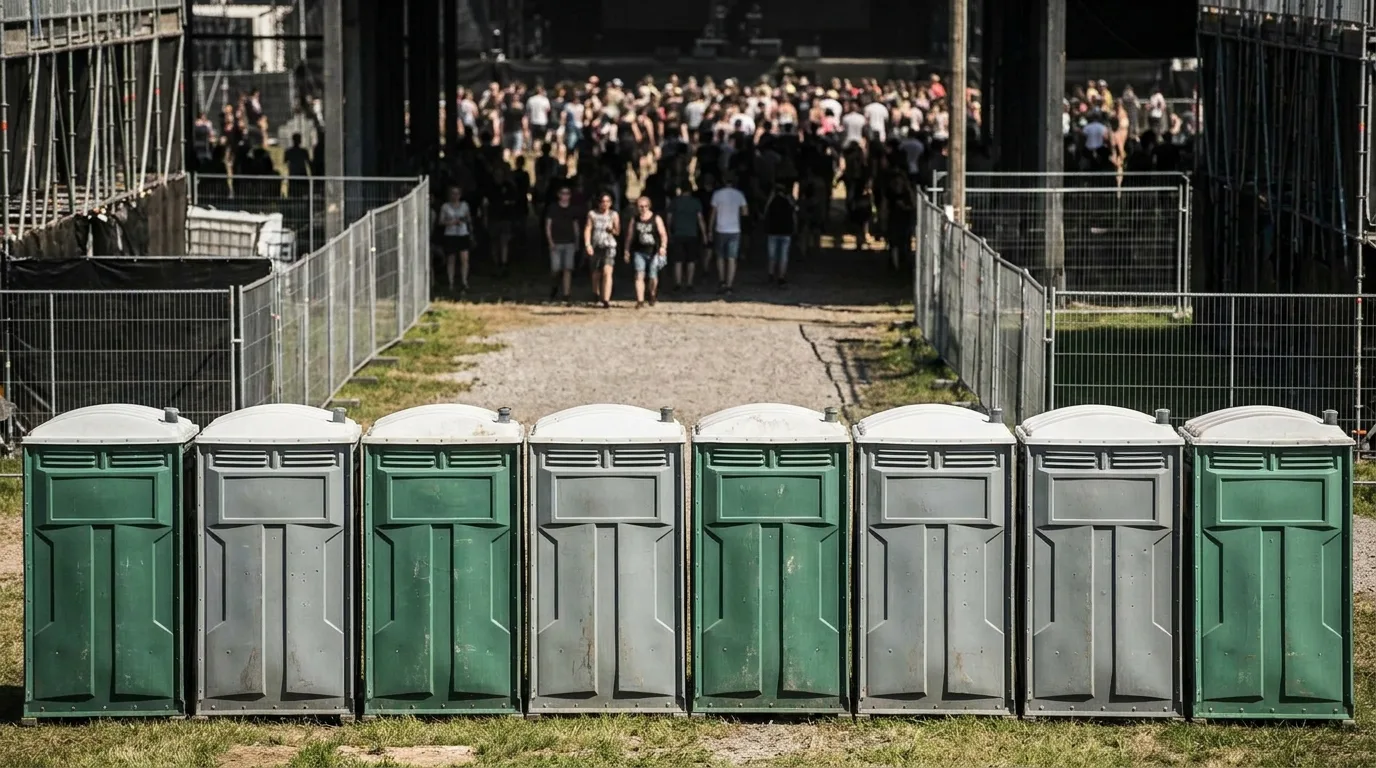
For events, size on guests multiplied by hours, then add 15 to 20 percent if alcohol is served. A crowd of 500 across six hours needs about 8 units before that adjustment, and closer to 10 with a bar. The sizing guide has the full tables for both cases.
Add the support items at the same time. A workable rule is one handwash station per two toilet units, and accessible units at 5 percent of the total with a minimum of one, which is the working figure in the US Access Board's guidance on accessible temporary events.
Which unit type fits the job?
| Job | Usual answer |
|---|---|
| Construction site, crew only | Standard unit |
| Home renovation, unit in the driveway | Home renovation rental |
| Public-facing event | Flushable deluxe unit |
| Wedding or client-facing | Restroom trailer |
| Anyone with a mobility need | Accessible unit |
| Film or TV production | Trailer for the crew |
| Long site, six months or more | Monthly rental |
| One day only | Day rate |
Get the accessible unit decided early rather than late. It is roughly five feet square rather than four, because the ADA Standards for Accessible Design require a 60 inch turning space at Section 304.3.1, and on a narrow frontage that extra foot changes what fits. The ADA requirements guide covers the rest.
What do I need to check on permits?
Only one question really matters: does any part of the unit touch the public right of way?
If it stands entirely on private property, in a yard, on a driveway, in a private lot or behind the property line on a site, no city permit is needed for the placement. If it touches the sidewalk, the curb lane, a parking space or the roadway, it needs a permit from the New York City Department of Transportation, run through borough offices by the Bureau of Permit Management and Construction Control at 55 Water Street. Turnaround ranges from about a day to several weeks depending on the borough and the type of work. Call 311 for guidance on a block.
Three related items to check at the same time:
- Event closures. A street fair or block party runs through the city's Street Activity Permit
Office, while anything inside Prospect Park, Flushing Meadows Corona Park or on Randalls Island goes through NYC Parks instead. Two offices, two calendars, and neither one is quick in June.
- Work hours. Anything outside 7am to 6pm on weekdays generally needs an after-hours variance
from the Department of Buildings, which affects delivery and service windows.
- Other kit on the same job. A roll-off container on the street has its own permit, covered on
dumpster permit requirements, and temporary fencing in the right of way follows the same logic.
The permit requirements page sets out which office handles which case.
Placement checks before delivery day
Walk the spot with this list. It takes four minutes and saves a redelivery.
- A pad of about 4 feet by 4 feet, firm and level, plus 3 feet of clear approach for the door.
- At least 36 inches of clear pedestrian width past the unit, which is the minimum clear width for an accessible route under ADA Section 403.5.1.
- Nothing over a curb ramp, an entrance, an exit, a hydrant, a subway grate, a cellar door or a tree pit.
- Somewhere a service truck can legally stop within hose reach, checked against the posted parking regulations for that side of the street.
- Overhead clear if the unit is going in by hoist, and a structural sign-off if it is going on a deck or a roof.
More detail on all of it, including park and rooftop placements, is on the placement guide.
What should the quote include?
Published market ranges give you a reference point before anyone quotes. A standard unit typically runs $125 to $400 for a weekend, roughly $130 to $500 for a week, and about $125 to $325 a month on a longer hire, with delivery commonly $50 to $150 and an additional service visit $30 to $60. Those are typical market figures rather than our quote, and dense Manhattan placements sit toward the top of each range.
What a fair quote covers as standard:
- Delivery and collection.
- The first tank charge, deodorizer, paper and sanitizer.
- Scheduled servicing at the agreed interval.
- The final pump-out on collection.
What is reasonably charged on top: extra service visits, difficult access, hoisting, winterisation, a relocation mid-hire, and damage. The cost page breaks all of that down against real market ranges.
What do I check during the rental?
Servicing is the part that decides whether the job goes well. ANSI/PSAI Z4.3 sets weekly servicing as the baseline for a standard unit in normal use, and OSHA 1926.51(c) requires facilities on a site to be kept in a sanitary condition, so it is a compliance item as well as a comfort one.
Worth checking yourself between visits:
- Paper and sanitizer stocked.
- Vent stack clear, because a blocked stack is the usual cause when a unit starts to smell. See do porta potties smell.
- Unit still level and still where it was left.
- Door latch and occupancy indicator working.
- In July, whether the interval needs to go to twice weekly. In January, whether the unit has a winter charge, which the winter guide explains.
Anything urgent goes through emergency porta potty service, and the cleaning schedule guide covers what each visit involves.
Booking a job in the five boroughs
Send the address, the dates and a photo. That is genuinely enough to start. Sizing comes from the unit count guide, compliance from the OSHA requirements page, and background on the equipment from how porta potties work.
Longer builds usually add roll-off dumpsters, temporary fencing, light towers and a storage container on the same order, which is what construction site services covers.
Coverage across the boroughs and into Jersey City and Hempstead is on the service areas page, the city overview at porta potty rental in New York City, common questions on the FAQ, and you can start through the quote form or the contact page.
Next step
Get a delivery date
Tell us the address, the dates and the headcount. We size the order and confirm the route.